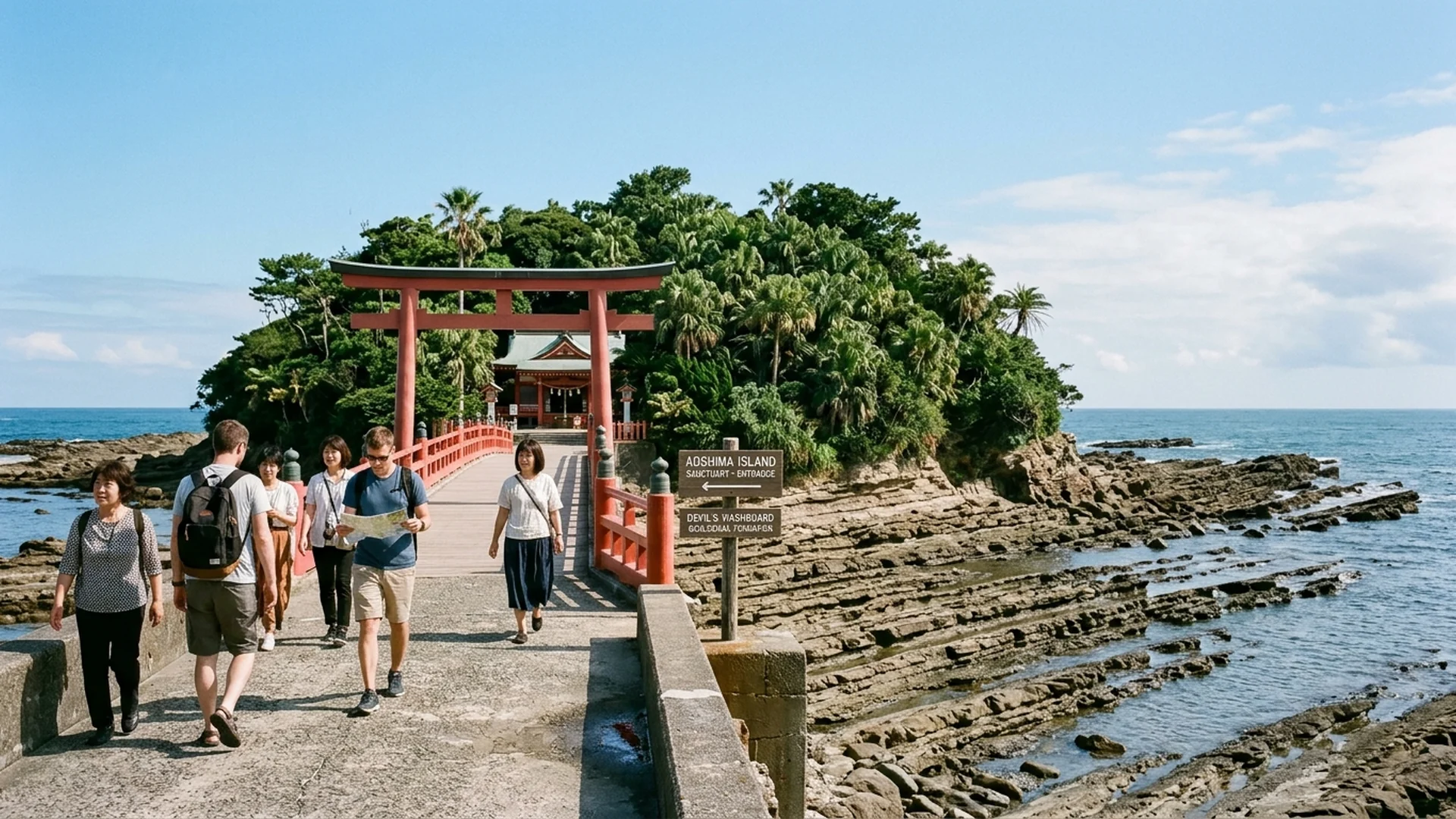
When conjuring images of sacred sanctuaries in Japan, the mind often drifts toward towering ancient cedar forests, mist-shrouded mountain passes, or austere wooden temples steeped in timeless tradition. Yet along the sun-drenched southeastern coastline of Miyazaki Prefecture on Kyushu Island, a singular destination shatters conventional paradigms entirely. Here, millennia of Shinto reverence converge effortlessly with the verdant exuberance of subtropical palms and astonishing geological formations sculpted by time itself.
Aoshima Island is a brilliant paradox where nature and mythology dance in quiet harmony. From the mainland, the bright Yayoi Bridge stretches gracefully across cobalt waters, inviting discerning travelers to cross into an insulated enclave cradled by gentle ocean swells. The soft, rhythmic whisper of native Biro palms rustling in the sea breeze sings an eternal tropical lullaby, blending seamlessly with the hushed sanctity of an ancient shrine to transport visitors far from the frenetic pace of the modern world.
The Palm-Draped Sanctuary: Sacred Roots in the Sun
The moment your footsteps clear the far terminus of the Yayoi Bridge, you are enveloped by the dense, emerald canopy of over 5,000 native Biro palms thriving across this compact 1.5-kilometer islet. Unlike decorative plantings, these towering specimens represent a primeval, self-sustaining ecosystem that has endured through centuries—standing proudly as the northernmost natural habitat for subtropical palms in the Northern Hemisphere. Their slender brown trunks rise like living pillars against brilliant green fronds, evoking the quiet majesty of an isolated Pacific paradise.
Deep within this lush, cathedral-like forest rests Aoshima Shrine, a sacred enclave intrinsically tied to the ancient Japanese imperial mythology of ‘Yamasachihiko and Umisachihiko.’ The shrine’s vivid vermilion structures provide a striking chromatic contrast against the emerald jungle, radiating an unmistakable aura of serene devotion. Celebrated throughout Japan for its potent blessings regarding romance, enduring companionship, and harmonious relationships, the shrine invites contemplative rituals—from drawing intricately shaped fortune talismans to casting clay Katashiro tokens into sacred waters to gently release misfortune and invite spiritual clarity.
The Devil’s Washboard (Oni no Sentakuita): Sixty Million Years in the Making
Encircling the island’s pristine shoreline lies one of the most breathtaking geological phenomena along the Japanese coast, capturing the imaginations of geographers and artists alike: the ‘Oni no Sentakuita,’ or the Devil’s Washboard. These symmetrical, ridged rock formations were born from alternating layers of deep-sea mudstone and sandstone laid down over five to seven million years ago. Subterranean tectonic pressures eventually thrust these ancient ocean floors upward, leaving them exposed to relentless wave action that carved the softer strata into astonishingly uniform, parallel furrows resembling an immense washboard left behind by mythical giants.
This geological masterpiece reveals its full, dramatic splendor during the lowest ebbs of the tide. Dark, striated ledges stretch outward for over a kilometer, forming a sweeping circular moat around the island that contrasts sharply with cascading white surf and shimmering sea spray. To walk thoughtfully across these ancient stone pavements as the afternoon sun casts long, amber shadows is to experience the profound, unhurried poetry of the natural world in its purest form.