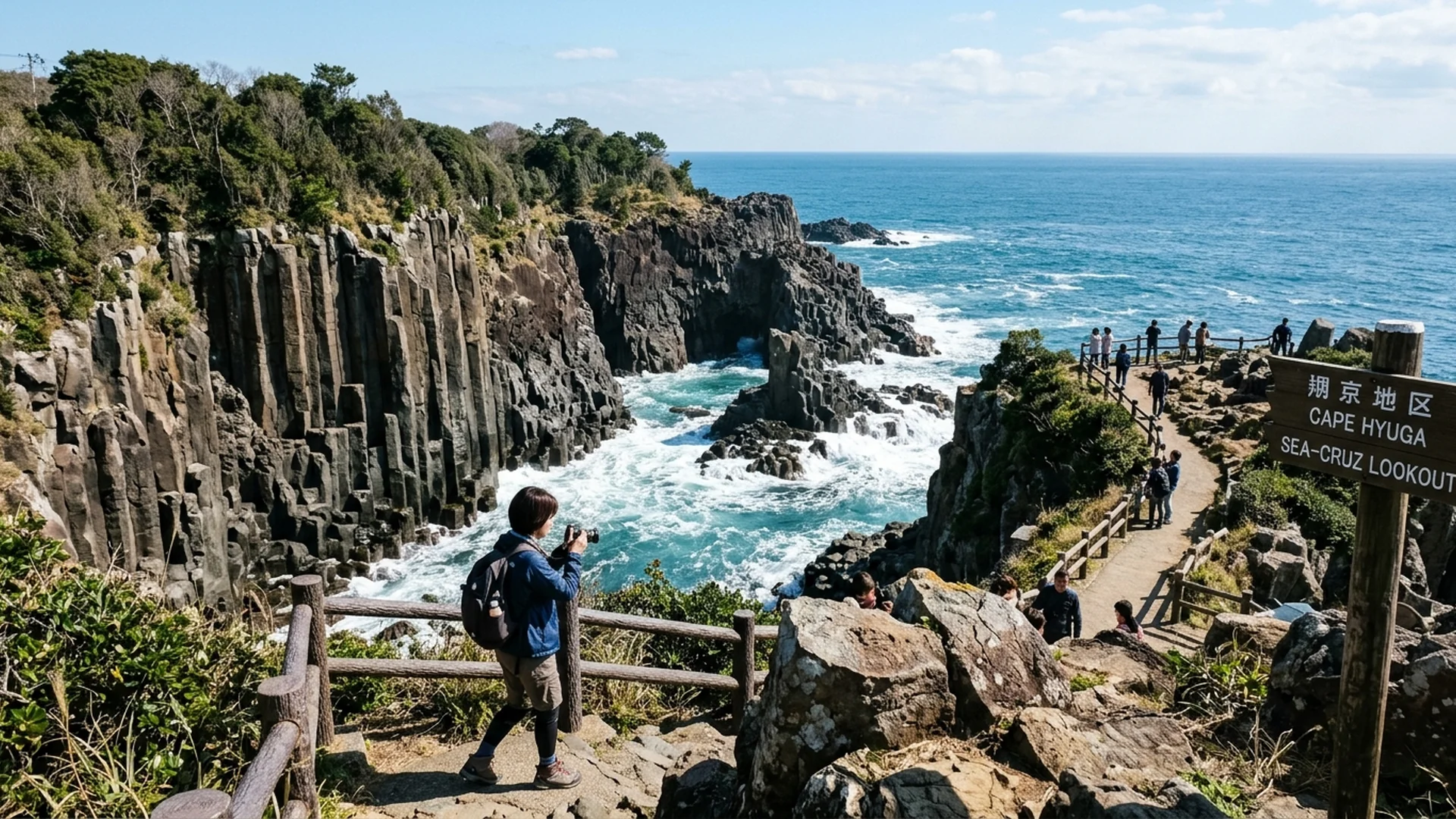
When the pristine breeze of the Pacific Ocean sweeps against the sheer precipice, the surrounding world hushes, leaving only the thunderous roar of rolling waves crashing into ancient stone. Nature has sculpted breathtaking architecture at the southernmost edge of Kyushu, where fifteen million years of relentless time have forged vertical basalt pillars that defy gravity. Combined with the timeless mythology of a sacred, cross-shaped ocean sanctuary, this destination transforms conventional impressions of Japan into a profound geological and spiritual discovery.
Nestled along the rugged coastline of Miyazaki Prefecture, Cape Hyuga feels like a secluded jewel far removed from the clamor of metropolitan life. This is not merely a destination for sweeping vistas, but a sanctuary where earth and profound devotion intertwine. For the discerning traveler seeking stillness, raw yet refined beauty, and enduring legends carved into land and sea, a pilgrimage to Cape Hyuga represents a restorative return to nature’s purest essence.
Architecture of Time: The Umagase Columnar Cliffs
Stepping into the Umagase nature reserve feels akin to journeying backward fifteen million years into antiquity. The obsidian-black basalt cliffs that stand resolute against wind and tide were born from the sudden cooling of volcanic lava, fracturing into precise geometric cylinders and towering stone columns arranged with architectural symmetry. Rising over 70 meters, these cliffs are crowned with lush subtropical foliage that contrasts sharply against the deep cobalt expanse of the Pacific, creating a visceral landscape that commands absolute attention.
The distinct pleasure of exploring Umagase lies in unhurried walks along meticulously maintained nature trails leading to the signature ‘Skelutcha’ viewpoint. Suspended on a transparent glass floor projecting out over the steep drop, visitors experience a fleeting suspension in mid-air above the crashing surf—an exhilarating perspective that awakens every sense and offers a rare angle on nature’s unbridled scale within Kyushu.
The Allure of Devotion: Sea-Cruz and the Waters of Intention
Just a short distance from the fierce majesty of the Umagase cliffs rests another wonder imbued with gentle spiritual resonance: ‘Sea-Cruz’, widely known as the cross-shaped sea. Over millennia, relentless currents and tides have carved the coastal reefs into precise geometric channels that intersect to form a perfect cross. Viewed through a cultural lens, these formations trace the traditional Japanese kanji character ‘叶’ (Kanoe), which translates to ‘wish granted’ or ‘realization.’
The beauty of Sea-Cruz extends far beyond striking aerial photography; it functions as a potent power spot where travelers deposit their deepest hopes. Perched above the viewpoint, a ceremonial bell invites visitors to ring out their aspirations. The clear, resonant chime, mingling with the perennial rhythm of the surf, creates a meditative symphony where wanderers instinctively pause to let their intentions drift out upon the ocean winds.
A Route of Wind and Heritage: Exploring Greater Cape Hyuga
An exploration of Cape Hyuga finds its natural completion in the surrounding historical landmarks. The journey begins at the pristine white Hosojima Lighthouse, standing sentinel at the cape’s highest elevation, which has guided local fishing fleets and maritime vessels for decades. From this elevated vantage point, the horizon meets the endless expanse of open water without obstruction.
Furthermore, meandering along the scenic Nippo Coast driving route reveals the quiet rhythms of local fishing communities, untouched white-sand coves, and the preserved cultural heritage of Miyazaki, remarkably free from the frantic pace of commercial tourism. For travelers seeking to recharge their vital energy amid unspoiled landscapes, Cape Hyuga remains an incomparable sanctuary.