When discussing the island of Kyushu, discerning travelers often gravitate toward the metropolitan pace of Fukuoka or the steaming therapeutic waters of Beppu. Yet, tucked away at the southernmost edge of sunshine Kyushu lies a sanctuary where time unfurls at a gentler, more deliberate rhythm. Encircled by the deep azure expanse of the Pacific Ocean and framed by subtropical palms and ancient pine groves, this coastal realm serves not merely as a haven for solitude, but as the primordial cradle of Japanese mythology.
Often overlooked by mainstream itineraries as a mere transit point, Miyazaki offers an invaluable destination for the high-net-worth traveler seeking authentic aesthetic depth. Here, the lingering breath of ancient deities still lingers along sculpted rock formations, quiet cultural traditions seamlessly blend with world-class seaside hospitality, and the peerless flavors of award-winning national champion Wagyu await discovery by those with an open heart and refined palate.
The Mythological Trail: From Aoshima’s Sacred Canopy to the Sea Caves of Udo
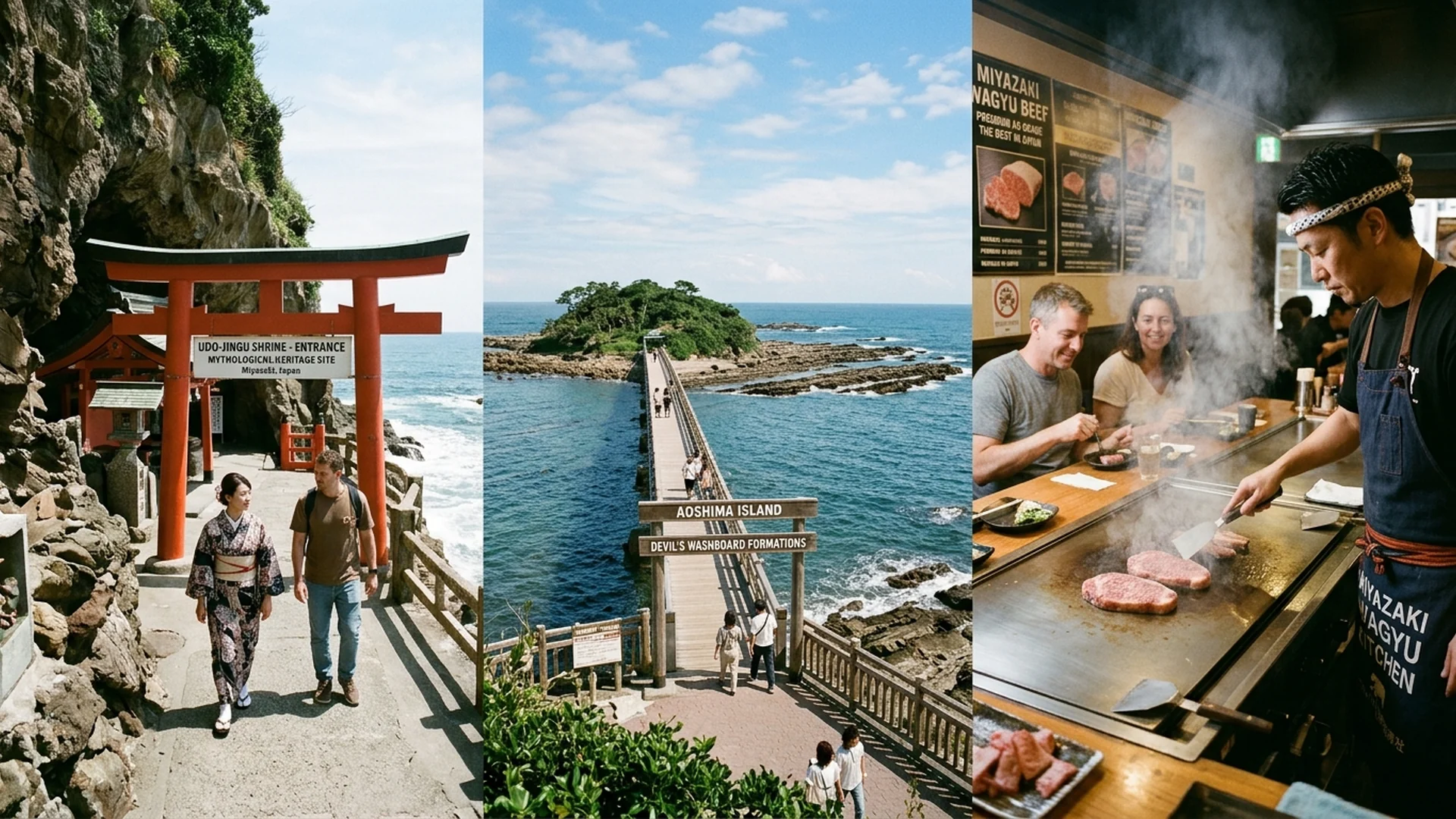
Miyazaki is widely revered as Japan’s ‘Mythological Homeland,’ with ancient chronicles such as the Kojiki and Nihon Shoki recording its shores as the stage for the creation of deities and ancestral emperors. Crossing the Naniwa Bridge onto Aoshima Island, travelers are instantly enveloped by a dense, primeval rainforest harboring over two hundred distinct subtropical botanical species. The profound silence of the canopy is gently punctuated by the rhythmic percussion of waves crashing against the ‘Oni no Sentakuita’—the Devil’s Washboard. These precisely layered ribbons of sandstone and mudstone, carved by millions of years of tidal erosion, resemble an architectural wonder crafted by human hands.
Further south along the dramatic Nichinan coastline lies Udo Jingu, an exquisite wooden sanctuary sheltered within the cavernous embrace of a wave-beaten seaside cliff. Approaching this cliffside shrine feels akin to crossing a threshold into another realm; the booming resonance of the Pacific swells blends harmoniously with ancient rituals. Visitors partake in the meditative practice of tossing clay ‘Udamatama’ spheres into sacred rock fissures, engaging in a tactile, quiet communion between human consciousness and the wild majesty of nature.
The Culinary Pinnacle: Artistic Masterpieces on a Plate of A5 Miyazaki Wagyu
If Miyazaki’s dramatic geography serves as a feast for the eyes, its gastronomy is a masterclass for the soul. Beyond yielding prized subtropical harvests such as the legendary ‘Taiyo no Tamago’ mangoes and sweet sun-kissed citrus, the region is the proud birthplace of Miyazaki Wagyu. This supreme grade of cattle has secured the Prime Minister’s Award at the prestigious national Wagyu Olympics for three consecutive competitions, offering undisputed testimony to its unmatched excellence.
The defining hallmark of Miyazaki Wagyu lies in its intricate, snow-like marbling that dissolves effortlessly upon contact with warmth. Experiencing this delicacy prepared by an expert teppanyaki artisan—who gently sears the beef over delicate heat until rich, savory aromas bloom—is an exquisite culinary journey. Served simply with natural sea salt and freshly grated wasabi, every bite reveals a profound depth of flavor and velvety texture that lingers long after the meal concludes.
Pacific Sanctuary: Seamless Luxury and Serenity at Seagaia
For the ultimate expression of restorative leisure, Miyazaki presents the iconic Phoenix Seagaia Resort complex. Rising elegantly against a backdrop of ancient coastal pine forests and the boundless horizon of the Pacific Ocean, this architectural landmark is meticulously designed for travelers pursuing absolute privacy and aesthetic harmony.
Whether refining one’s swing on the championship fairways of the Phoenix Country Club as they weave through pristine pine groves, rejuvenating the spirit within secluded natural onsen hot springs hidden among woodland glades, or sipping an artisanal cocktail while watching the ocean catch the amber glow of twilight, every element is curated to balance modern sophistication with an intuitive connection to the natural world.