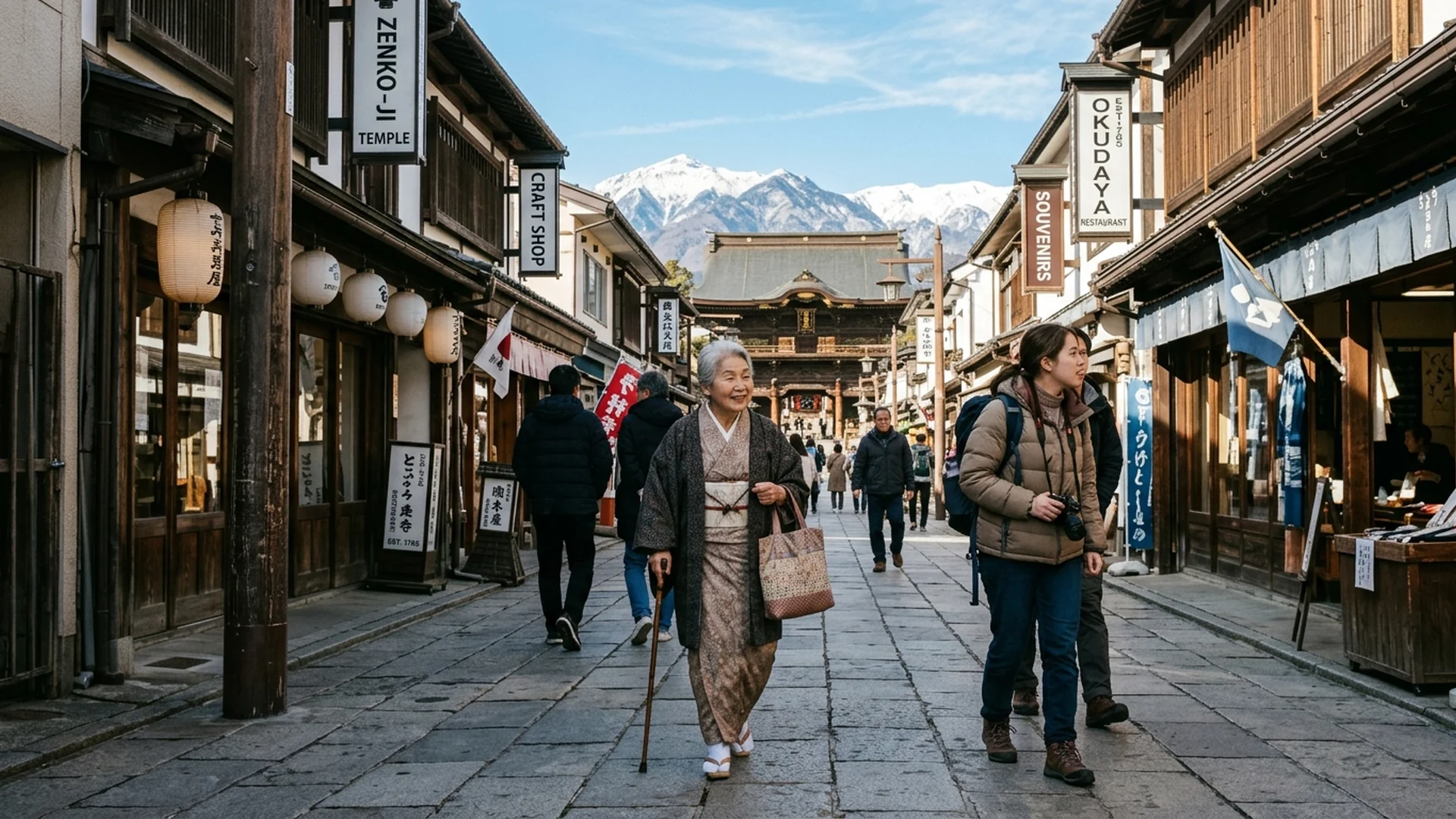
As the restless hum of Tokyo fades behind tinted carriage windows, the Hokuriku Shinkansen pierces through intricate mountain labyrinths, gently opening onto a majestic amphitheater carved by the Japanese Alps. Nagano is too often hastily dismissed as a mere transit corridor to frost-draped ski slopes or winter valleys. Yet, in its deeper dimensions, this ancient province serves as the spiritual and historical heartbeat of Japan—a realm where time purposefully decelerates, inviting the discerning traveler to rediscover the quiet cadence of their own breath.
To journey through Nagano is far more than a mere change of coordinates; it is an elevation of the traveling aesthetic. Here, the senses are awakened by the centuries-old resonance of cedar timber, the delicate mist that hovers over pristine mountain tarns, and a profound philosophy of living in effortless harmony with nature. In this sanctuary, true luxury is never measured by fleeting extravagance, but by the profound depth of experience and a stillness that remains entirely uncompromised.
Sanctuary of Faith: Historical Footprints at Zenkoji Temple
At the geographic and spiritual core of Nagano stands Zenkoji, a magnificent wooden Buddhist complex boasting a history of over 1,400 years. This revered sanctuary serves as a unifying anchor for devotees across the nation, housing the absolute first sacred Buddhist image brought to Japan during the dawn of its spiritual transmission. Passing beneath the imposing Sanmon Gate into the sacred precinct feels akin to crossing a temporal threshold into an alternate realm, where curling wisps of incense blend harmoniously with the resonant drone of morning liturgy.
The essential pilgrimage climax is the subterranean Kaidan Meguri, a pitch-black corridor hidden beneath the main altar. Guided only by tactile contact with a rough wooden wall, visitors feel their way through absolute darkness in search of the mythical ‘Key to Paradise.’ Touching this iron key within the profound void acts as a symbolic purification of the psyche—a visceral, intensely intimate experience that underscores the transformative essence of traveling through Nagano’s sacred geography.
Sacred Groves and Elemental Power: The Mystique of Togakushi Shrine
Tucked deep within a secluded mountain fold lies Togakushi Shrine, an ancient constellation of sanctuaries sheltered beneath a majestic canopy of four-hundred-year-old giant cedar trees. The pilgrimage path leading toward the upper Okusha shrine cuts through a natural arcade widely celebrated as one of the most atmospheric and revered woodland walks in all of Asia. Shafts of morning sunlight filter through the dense emerald foliage, casting intricate patterns upon lingering patches of snow and velvet moss beds, cultivating an aura of unbroken sanctity and quiet enchantment.
Historically, these very mists served as the secret training ground for the Togakure-ryu ninja lineage. Today, the convergence of historical echoes and profound alpine silence renders Togakushi an unrivaled destination for the mindful traveler seeking retreat from the modern world, offering a sublime space to contemplate nature and replenish vitality with pristine mountain air.
Aesthetics of Flavor: The Culinary Civilization of Shinshu
No exploration of Nagano can achieve completion without indulging in the culinary artistry native to the historical Shinshu province. The dramatic topography, defined by towering peaks and crystalline glacial streams, yields ingredients of peerless provenance. Shinshu Soba stands as a masterclass in culinary heritage: handcrafted noodles fashioned entirely from pure buckwheat flour and kneaded with mineral-rich mountain spring water, delivering an exquisite chew and delicate, earthy aroma served alongside meticulously brewed traditional dipping broths.
Complementing this tradition is Shinshu beef, delicately marbled through mindful feeding practices to melt effortlessly upon the palate. Paired with craft sakes brewed from pristine winter meltwater, evenings in Nagano unfold as high-end gastronomic narratives that honor the subtle cadence of the turning seasons with immaculate grace.