Deep within a steep, mist-shrouded gorge where subterranean steam cuts through pristine alpine snows, the crisp winter wind whispers through ancient cedar forests. Here, nature has sculpted a world-renowned tableau: troops of wild Japanese Macaques, universally celebrated as ‘snow monkeys,’ soaking in natural thermal springs against a pristine winter backdrop. It is an enduring image of untamed wildlife harmonizing effortlessly with the severe, beautiful elements.
Journeying to Jigokudani Monkey Park—officially known as Jigokudani Yaen-Koen—is far more than a conventional sightseeing excursion. It is an invitation to step into a tranquil sanctuary where time slows its relentless pace. Observing these primates in their natural rhythm, from playful juveniles tumbling across snow-dusted boulders to the watchful alpha keeping silent vigil, offers a profound intellectual connection to the sprawling wilderness. When paired with the restorative sanctuary of a historic ryokan nestled within a centuries-old onsen district, the experience redefines mindful, high-net-worth nature travel.
Deciphering the Wonder of Jigokudani: The Valley That Emraces Life
The name ‘Jigokudani,’ translating literally to ‘Hell’s Valley,’ derives from its rugged topography, where thermal steam and boiling mineral water violently erupt from tectonic fissures amid sheer cliffs. Yet beneath this formidable moniker lies a gentle sanctuary for a troop of over two hundred wild monkeys that have adapted to thrive in absolute freedom. This global phenomenon began in the 1960s when the macaques first learned to immerse themselves in the warmth of the thermal pools to endure the punishing winter freeze—a learned cultural behavior documented in international nature magazines and wildlife documentaries alike.
Studying the behavior of these snow monkeys offers profound insights into primate social structures. Observing intricate family dynamics, maternal devotion, and the serene stillness of the troop leader amidst rising billows of pure white steam provides a rare sense of mental clarity. Unlike a traditional zoological enclosure, Jigokudani features no cages or artificial barriers between humanity and the wild. The animals roam entirely unfettered, protected by rigorous, uncompromising conservation oversight.
The Art of Journeying: Securing Morning VIP Access
Experiencing the ethereal beauty of Jigokudani requires deliberate timing. Early morning, precisely as the park gates open in the dead of winter (around 09:00 AM), is the golden hour when travelers can experience unbroken silence, far removed from the cadence of large tour groups. The soft, oblique morning light glinting off crystalline snowflakes, paired with rising pillars of vapor, creates an unforgettable, painterly atmosphere.
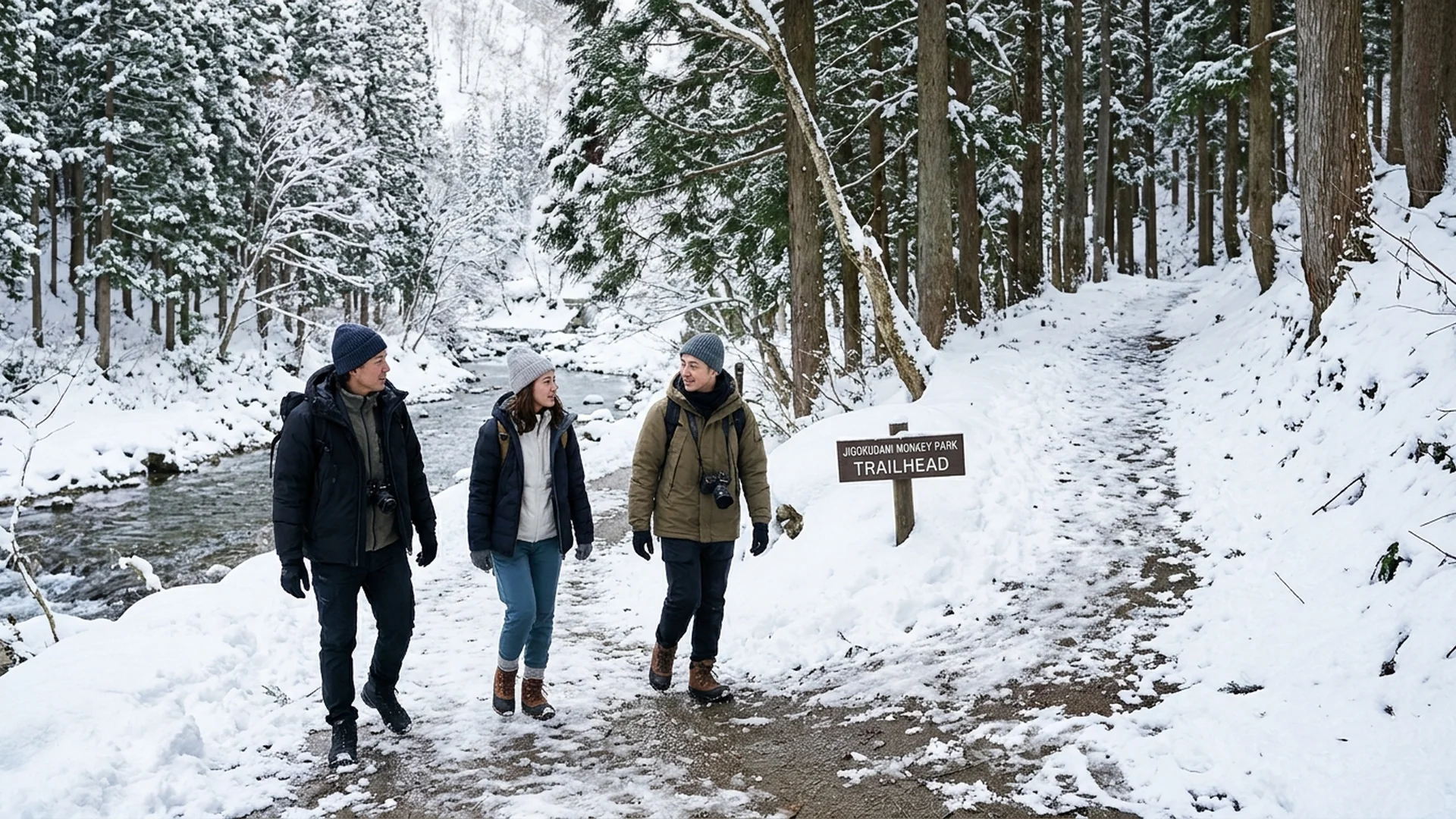
The approach to the sanctuary begins along a picturesque nature path winding through a towering cedar forest for roughly 1.6 kilometers (taking about 25 to 30 minutes each way). In winter, this pathway transforms into a soft carpet of untouched snow. Equipping oneself with proper snow boots or slip-resistant crampons is essential to ensuring a comfortable, secure passage through the wintry landscape.
The Aesthetics of Repose: Immersing in Shibu Onsen’s Timeless Charm
To fully synthesize this deep-nature journey, a visit to Nagano remains incomplete without residing within a heritage ryokan in the Shibu Onsen district—an ancient thermal enclave boasting a history spanning over 1,300 years. Traditional wooden architecture, cobblestone pathways, and glowing paper lanterns cast an evening amber glow that transports visitors effortlessly across centuries.
Discerning travelers often choose legendary establishments such as Kanaguya, a classic wooden architectural marvel celebrated for its intricate artisan craftsmanship and diverse private hot spring baths. Within these sanctuaries, guests embrace the quiet luxury of sleeping on tatami-matted floors in crisp yukata robes, strolling down lantern-lit alleys to sample the community’s nine historic public bathhouses (Sotoyu), and savoring exquisite kaiseki dinners crafted by master chefs using hyper-local Nagano seasonal ingredients, from wild mountain vegetables to peerless regional beef.