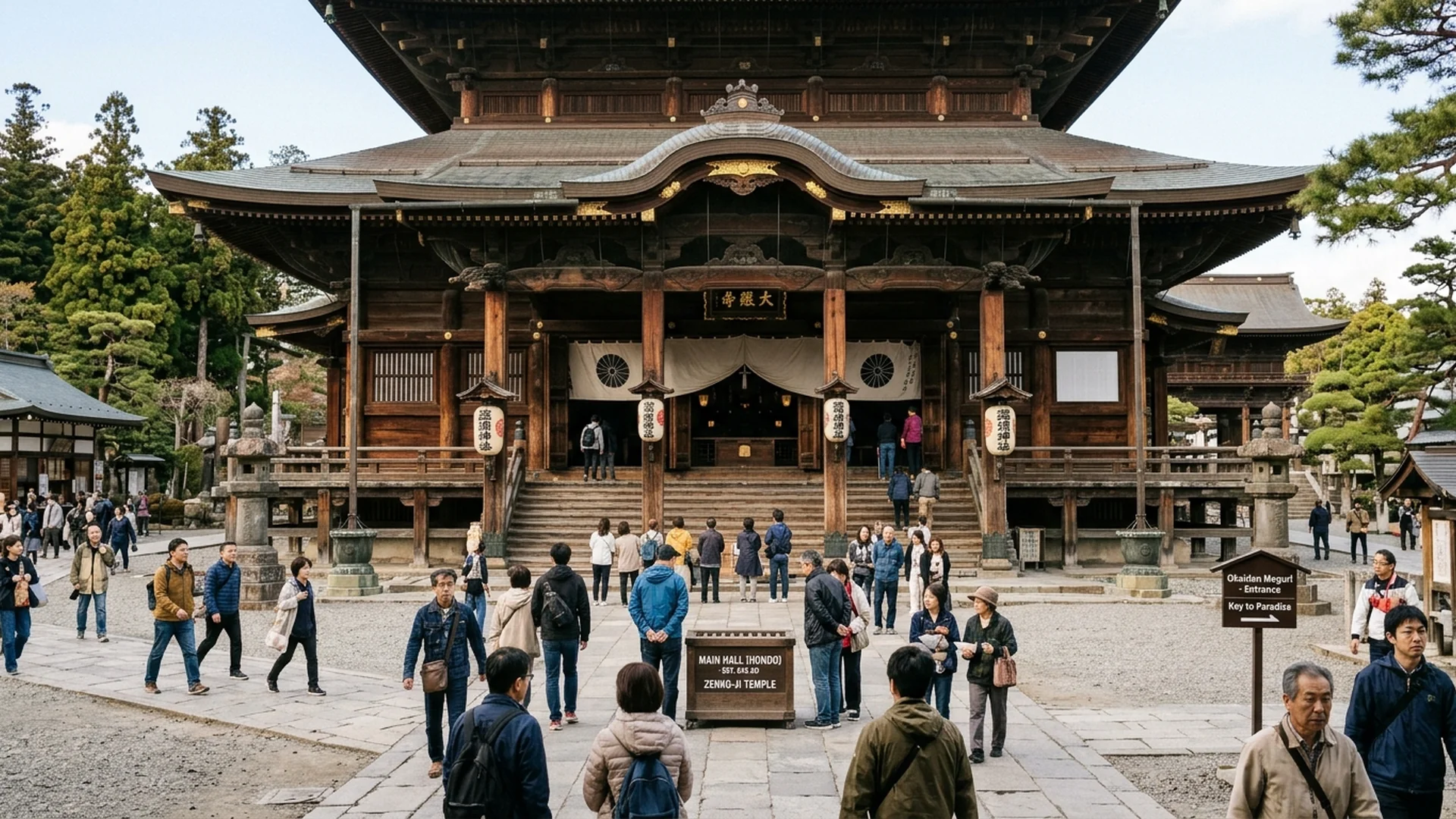
Transcending conventional tourism, a pilgrimage to Zenko-ji Temple offers an intimate immersion into the sacred heart of Nagano. For over fourteen centuries, this revered sanctuary has stood as a bastion of spiritual inclusivity, welcoming seekers across eras, classes, and lineages without sectarian boundaries. More than an architectural marvel, it preserves the living soul of Japanese Buddhism.
Here, discerning travelers can partake in transcendent rituals, from navigating the pitch-black corridors of the Okaidan Meguri beneath the national treasure hall in search of the legendary key to paradise, to partaking in the contemplative stillness of dawn prayers and the sublime art of Shojin Ryori monastic dining.
A 1,400-Year Legacy and the Philosophy of Universal Welcome
Since its founding in the seventh century, Zenko-ji has served as a profound spiritual anchor for sovereigns and commoners alike. What distinguishes this sanctuary from virtually every other Buddhist institution in Japan is its historic independence from a single sect, jointly administered by both the Tendai and Jodo lineages. This reflects a radical, timeless philosophy: that the gates of liberation are wide open to any soul seeking peace. Within the Hondo, or main hall—designated a National Treasure of Japan—rests the Hibutsu, an ultimate secret Buddha image concealed from public view for centuries. Even the highest-ranking abbot is denied access to its form, infusing every footstep through the temple grounds with an exquisite aura of mystery and sacred reverence.
Okaidan Meguri: The Trial of Darkness and the Key to Paradise
For the discerning traveler, the most transformative ritual at Zenko-ji is the Okaidan Meguri, a meditative descent into the subterranean passage beneath the central altar. Upon stepping down into the lower depths, one is enveloped in an absolute, impenetrable darkness where even a raised hand vanishes from sight. The only guide is the right hand, trailing continuously along the rough wooden wall. Amidst profound stillness, heightened sensory perception takes over. The singular mission in this velvety void is to locate the ‘Key to Paradise,’ an iron handle fastened to the wall directly beneath the heart of the principal Buddha. Tradition holds that if your fingertips brush this key, your soul is tethered to the Buddha, assuring enlightenment in the next life—an unforgettable spiritual encounter matched nowhere else on earth.
Dawn’s Awakening: The Oasaji Ceremony and the Aesthetics of Shojin Ryori
The true essence of Zenko-ji reveals itself at first light, as monks step out into the crisp morning air to lead the dawn liturgy known as Oasaji. Visitors may witness this solemn procession up close, participating in the traditional Ojuzu Chodai blessing, where presiding priests gently touch pilgrims’ heads with prayer beads to bestow auspicious grace. Following this quiet communion, experiencing Shojin Ryori—refined Zen vegetarian cuisine—at an authentic shukubo (temple lodging) rounds out the cultural immersion. Each meticulously crafted dish celebrates seasonal harvests without animal products, honoring the natural cycle of life in quiet harmony with Buddhist precepts.