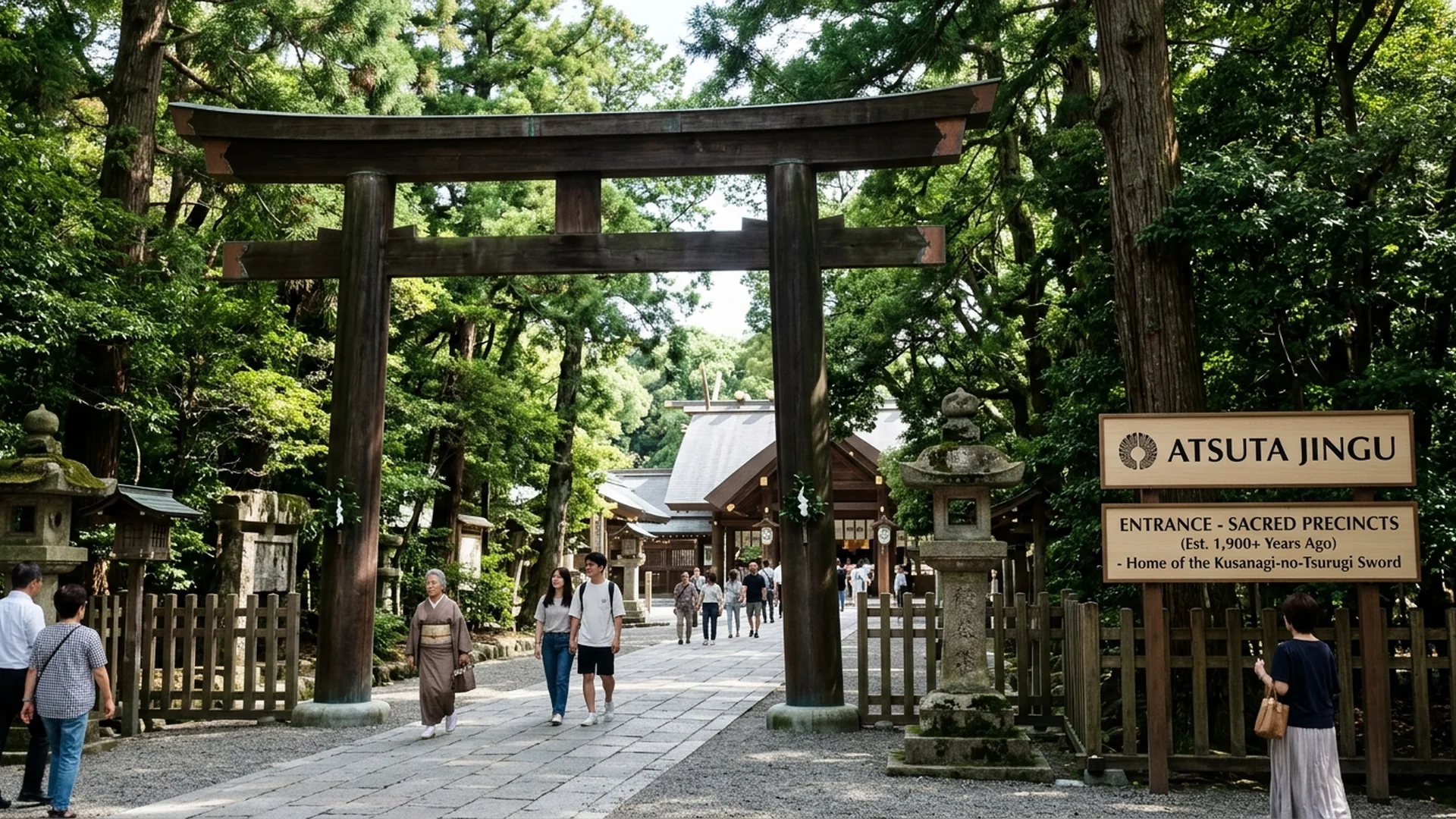
Cross the threshold of the magnificent Hinoki cypress torii gate into the ancient forest of Atsuta-no-mori, and the bustling hum of metropolitan Nagoya dissolves into profound stillness. Atsuta Shrine stands as a sacred precinct spanning more than nineteen centuries, where deep historical resonance and unyielding spiritual devotion converge into a single, breathtaking continuum. This is far more than a mere religious site; it is a vital spiritual heartland of Japan that seamlessly bridges an ancient antiquity with the modern world.
Beneath the towering canopies of centuries-old trees, the shrine proudly safeguards the Kusanagi-no-Tsurugi—one of the three sacred Imperial Regalia of Japan. While the true blade remains permanently shrouded in profound secrecy and elevated mystery, the lingering aura of legend and the serene energy radiating through the grounds are more than enough to stir the deepest layers of consciousness for travelers arriving from across the globe.
Legacy of the Gods and the Legend of the Kusanagi Sword
The roots of Atsuta Shrine run deep into the rich soil of Japanese mythology. According to ancient chronicles, the sanctuary was established during the reign of Emperor Keiko to enshrine the sacred Kusanagi-no-Tsurugi—the legendary sword retrieved by the deity Susanoo-no-Mikoto from the tail of the eight-headed serpent, Yamata no Orochi, before eventually finding its eternal home upon the sacred earth of Atsuta. The enigma of this blade lies in its absolute sanctity, protected by unbroken silence and meticulous rituals across millennia. This profound mystique establishes Atsuta Shrine as an indispensable pilgrimage for historians, scholars, and spiritual seekers yearning for a transformative encounter with Japan’s sacred past.
Timeless Architecture: From the Nobunaga Wall to Millennium Camphors
A journey through the grounds of Atsuta Shrine is akin to turning the illuminated pages of a grand historical chronicle. The eye is immediately drawn to the Nobunaga-bei, an extraordinary wall constructed from mud, clay, and slaked lime. It was dedicated by Oda Nobunaga, the formidable warlord of the Sengoku period, in profound gratitude for a miraculous victory in a decisive battle. This resilient barrier has withstood the elements and the passage of over 450 years with astonishing grace. Deeper within the inner courtyards stands a majestic camphor tree (Kusunoki) boasting more than a millennium of life, whispered to have been nurtured by the revered monk Kobo Daishi. The raw vitality emanating from its gnarled bark and vibrant foliage mirrors the flawless harmony between unspoiled nature and enduring faith.
Kusanagi-kan and the Treasure Hall: Sanctuaries of Samurai Heritage
For connoisseurs of master craftsmanship and ancient arms history, Atsuta Shrine elevates the educational voyage through the Kusanagi-kan museum. Here, visitors are invited to appreciate the exquisite form and balanced weight of replicated ancient blades, alongside authentic masterpieces forged by legendary generations of master swordsmen. Adjacent to this lies the Treasure Hall (Homotsukan), which curates over 4,000 priceless antiquities, including sacred swords, ceremonial armor, antique bronze mirrors, and foundational historical manuscripts officially designated as National Treasures and Important Cultural Properties of Japan.