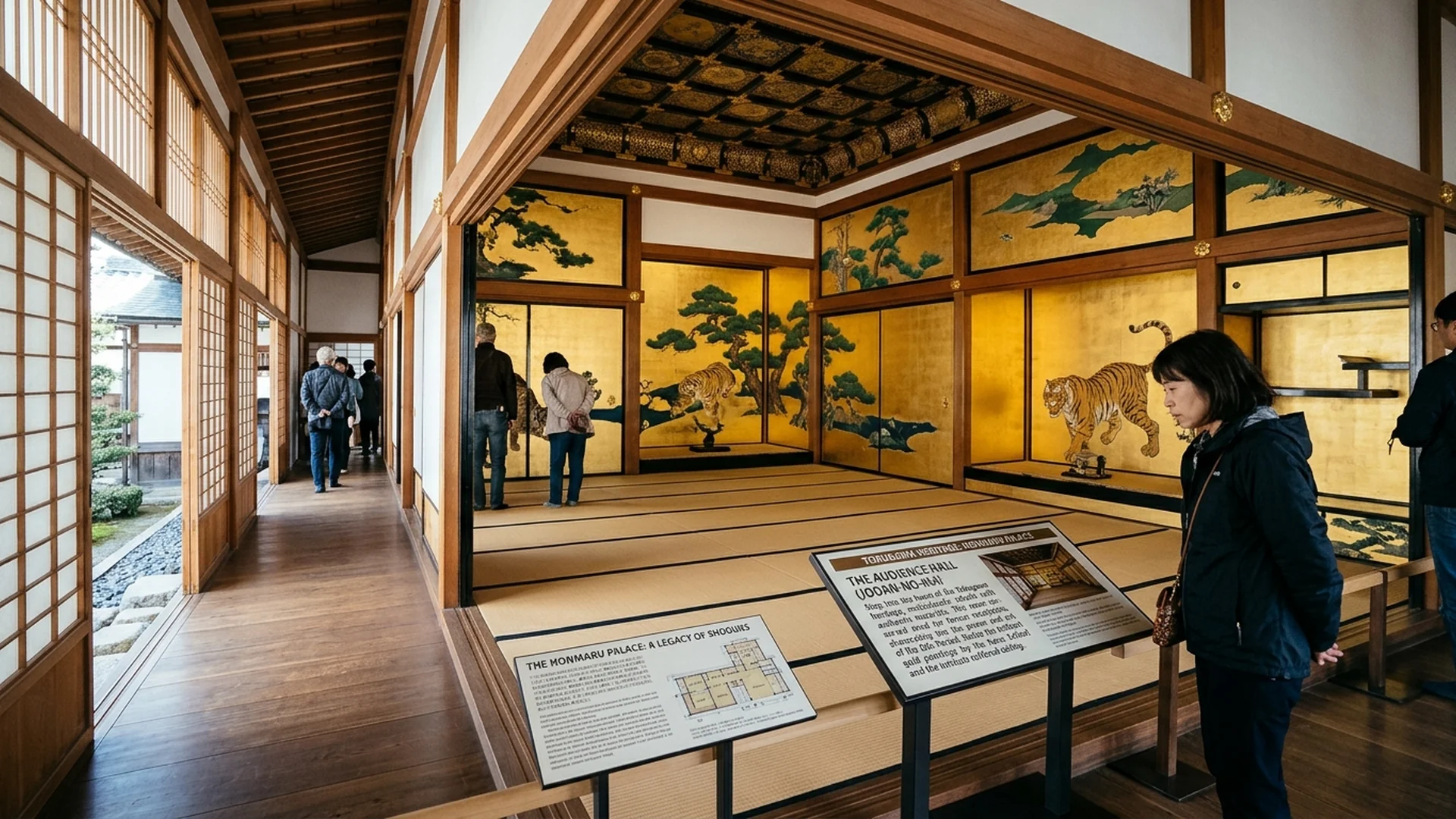
Transcend the ordinary paradigm of sightseeing towers and step into a storied epoch of unhurried elegance at Nagoya Castle, the formidable citadel of the Tokugawa clan. While the magnificent main keep (Tenshukaku) undergoes meticulous structural restoration to ensure timeless structural integrity, the true heartbeat of this historical masterpiece awaits just beyond its shadow at the Honmaru Palace—a breathtaking revival of monumental Hinoki cypress architecture brought back to life by master traditional craftsmen.
To wander these hallowed halls today is not merely to inspect an ancient monument; it is an immersive awakening of the senses to the echoes of Edo period aesthetics. The delicate aroma of indigenous Hinoki wood mingling with the ethereal shimmer of genuine gold leaf creates an atmosphere of sublime refinement. For the discerning global traveler, this is an unhurried, masterclass journey into the heart of samurai nobility and refined Japanese artistry.
Unveiling the Splendor of Honmaru Palace: Hinoki Timber and Gold Leaf Artistry
The Honmaru Palace (Honmaru Goten) stands as one of Japan’s most triumphant achievements in heritage architectural restoration. Originally commissioned in 1615 by the ruling Shogun Tokugawa Ieyasu as a luxurious residence and official reception hall, the palace suffered tragic destruction during the Second World War. Undeterred, Japanese historians and preservationists dedicated decades to reviving the structure using exclusively traditional materials, most notably fragrant Hinoki cypress.
From the moment you step across the threshold, the soothing, natural fragrance of timber enfolds you. Before your eyes unfurl expansive chambers adorned with exquisite sliding door paintings (Fusuma) and intricate sculpted plaster walls, executed in the illustrious style of the Kano School. Tigers, dragons, peacocks, and serene natural landscapes rendered upon genuine gold leaf catch the natural daylight, casting a warm, resplendent glow that eloquently mirrors the supreme wealth and boundless influence of the Tokugawa dynasty.
Emblems of Power: The Legend of Kinshachi and Tokugawa History
Look upward against the skyline, and your gaze will instantly be captured by the ‘Kinshachi’—mythological golden creatures boasting the heads of tigers and the bodies of carp, cast in solid gold and positioned gracefully at either end of the ridgepole. Historically, these golden ornaments were far more than decorative flourishes; they were revered as protective deities summoned to summon rain, extinguish fires, and safeguard the citadel from catastrophic misfortune.
The profound legacy of Nagoya Castle is inextricably linked to the Tokugawa clan, the architects of the Edo shogunate. Erected in 1612 as a vital strategic linchpin to secure the Chubu region and command the vital thoroughfares leading to the imperial capital of Kyoto, the castle’s immense scale commands respect. Traversing its deep moats, towering cyclopean granite walls (Kanseki), and defensive corner turrets (Yagura) is akin to turning the foundational pages of modern Japanese unification.
Contemporary Elegance at Kinshachi Yokocho: A Celebration of Gastronomy and Culture
Following an enriching immersion in heavyweight samurai architecture, the grounds surrounding the castle’s base invite visitors into Kinshachi Yokocho—a meticulously curated culinary and leisure quarter designed in a harmonious blend of Edo-period aesthetics and contemporary sophistication. Divided into distinct zones, it honors both ancestral culinary traditions and modern high-end gastronomy.
This is the ultimate destination for discerning gourmands eager to sample authentic ‘Nagoya Meshi’ (regional delicacies). Savor pristine bowls of Hitsumabushi—slow-grilled freshwater eel glazed in rich, secret-recipe tare—or delicately spiced Tebasaki chicken wings, prepared with meticulous attention to local ingredients and heritage techniques, all set against a tranquil backdrop of ancient stone ramparts and verdant canopy views.