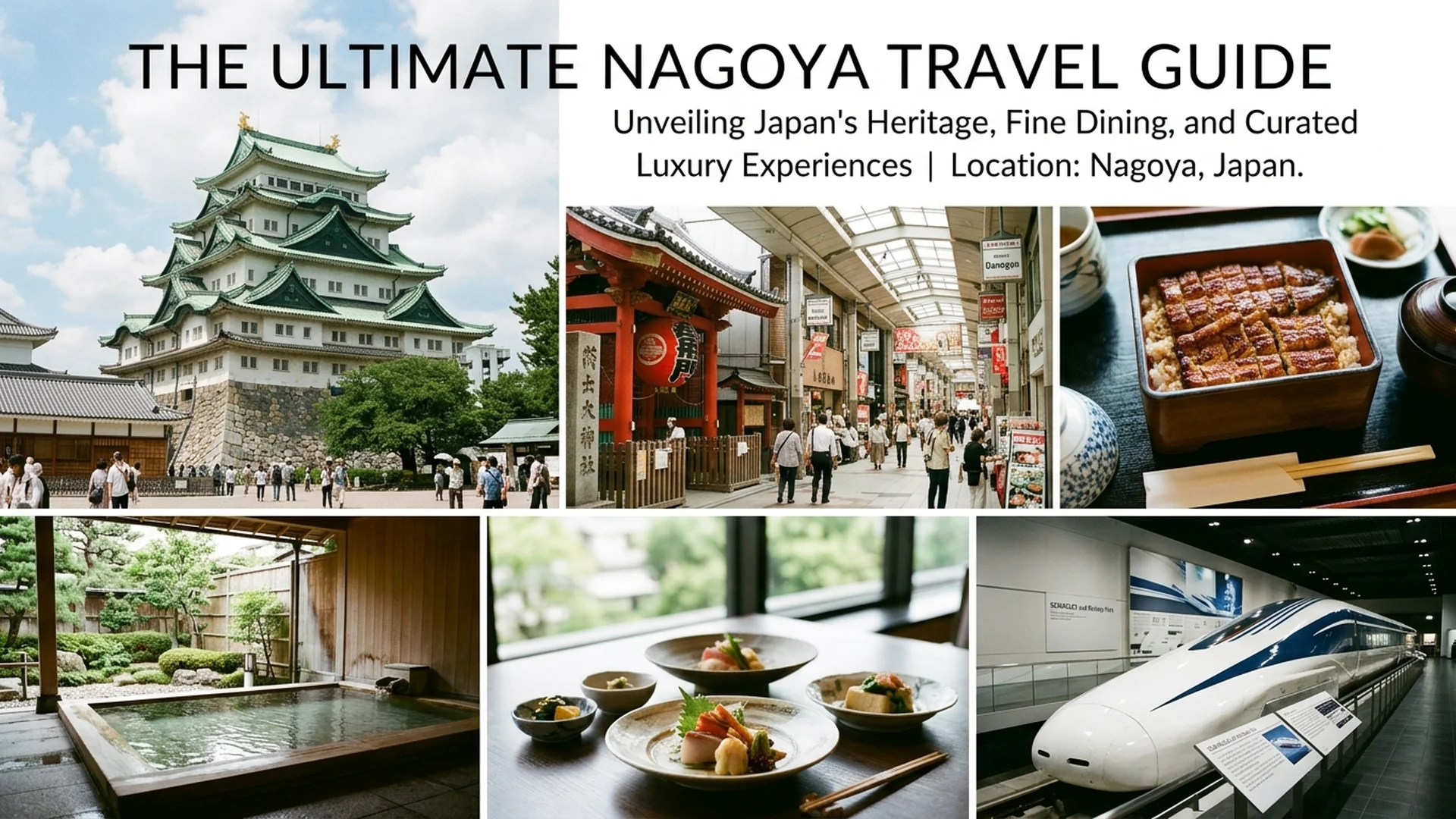
For the discerning traveler seeking depth far beyond the frantic pace of Japan’s megacities, Nagoya rests quietly as a cultural treasure waiting to be fully appreciated. While many dismiss the city merely as a transit point between Tokyo and Kyoto, Nagoya is in truth the proud heartbeat of Tokugawa history, a custodian of architectural masterpieces, and a sanctuary of fiercely distinct culinary traditions. Stepping into Nagoya in this new light transforms a fleeting journey into an immersive, classical aesthetic experience defined by grace and quiet luxury.
Guaranteed by a wealth of meticulously preserved cultural heritage—from imposing downtown fortifications to millennial sacred forests—Nagoya harmonizes antiquity with forward-thinking innovation. It offers an atmosphere of serene confidence and refined taste for high-end travelers wishing to escape the crowds and encounter the authentic soul of Japan.
The Samurai Imprint: Nagoya Castle and the Tokugawa Treasures
Nagoya’s narrative begins grandly as the seat of the Owari Tokugawa family, one of the most powerful ruling clans of the Edo period. This enduring legacy is anchored by Nagoya Castle, crowned with gleaming pure gold Shachihoko mythical creatures that catch the brilliant sunlight. Within the same historic grounds stands the Hommaru Palace, revered as one of the three supreme masterpieces of Shoin-zukuri residential architecture in Japanese history. Every square meter breathes unhurried opulence through intricate woodwork and shimmering Kano school gold-leaf sliding doors that still whisper tales of feudal magnificence.
Just beyond the city center, the Tokugawa Art Museum serves as a private treasury safeguarding over 12,000 priceless antiquities, including National Treasures and original handscrolls of The Tale of Genji. Wandering through the adjacent Tokugawa-en garden delivers a profound sense of stillness, where expansive ponds, sculpted waterfalls, and arched wooden bridges reflect an uncompromising dedication to natural harmony and landscape design.
Sacred Groves: Timeless Serenity at Atsuta Shrine
Amidst the bustling energy of one of Japan’s premier urban centers, Atsuta Shrine rests beneath the deep green canopy of an ancient sacred forest populated by centuries-old camphor trees. As one of Shintoism’s most hallowed sites, it proudly enshrines the Kusanagi-no-Tsurugi sword, one of the three sacred Imperial regalia of Japan. Stepping across the threshold into the shrine precincts immediately calms the spirit, accompanied by the gentle crunch of gravel underfoot and the delicate aroma of hinoki cypress.
Approaching Atsuta Shrine with contemplative depth offers more than devotional reverence; it invites historical discovery through its art museum and the Kusanagi-kan sword treasury, where visitors appreciate the legendary craft of samurai swordmaking. Conclude the morning with a bowl of traditional Kishimen flat noodles at the shrine’s historic, shaded teahouse, rounding out a deeply enriching cultural encounter.
The Art of Flavor: High-End Expressions of Nagoya Meshi
Nagoya’s distinctive culinary culture, known universally as Nagoya Meshi, draws profound depth from local fermentation traditions including Hatcho Miso and Tamari soy sauce. Reimagined by award-winning chefs and premier dining establishments, these regional staples have evolved into an elevated gastronomy celebrated by epicureans worldwide.
The crown jewel of this culinary landscape is Hitsumabushi: charcoal-grilled freshwater eel meticulously basted in a guarded secret tare sauce, served in a traditional lacquered wooden bowl. The dining ritual unfolds in three distinct stages—enjoying the pure eel and rice, adding aromatic condiments, and finally pouring a delicate dashi broth over the mix for an exquisite ochazuke finish. Additionally, luxury teppanyaki venues serving course-matched A5 Matsusaka Wagyu showcase a level of ingredient reverence that simply melts on the tongue.
Contemporary Aesthetics: Lifestyle and Visionary Architecture in Sakae
When twilight descends, Nagoya’s modern dimension illuminates the Sakae district, a dynamic fashion and lifestyle hub blending classic refinement with futuristic design. The area is anchored by Oasis 21, a translucent glass ‘Water Spaceship’ structure that shimmers brilliantly against the night sky, standing in elegant dialogue with the Chubu Electric Power MIRAI TOWER, Japan’s pioneer television tower now reimagined as a premium boutique hotel and observation deck.
Strolling along Hisaya-odori Park—transformed into a sophisticated linear park flanked by high-end flagship boutiques and chic architectural cafes—offers an effortlessly relaxed urban atmosphere. Here, travelers can absorb panoramic city views from elevated observation points while syncing with the sophisticated pulse of a city driven by design and innovation.