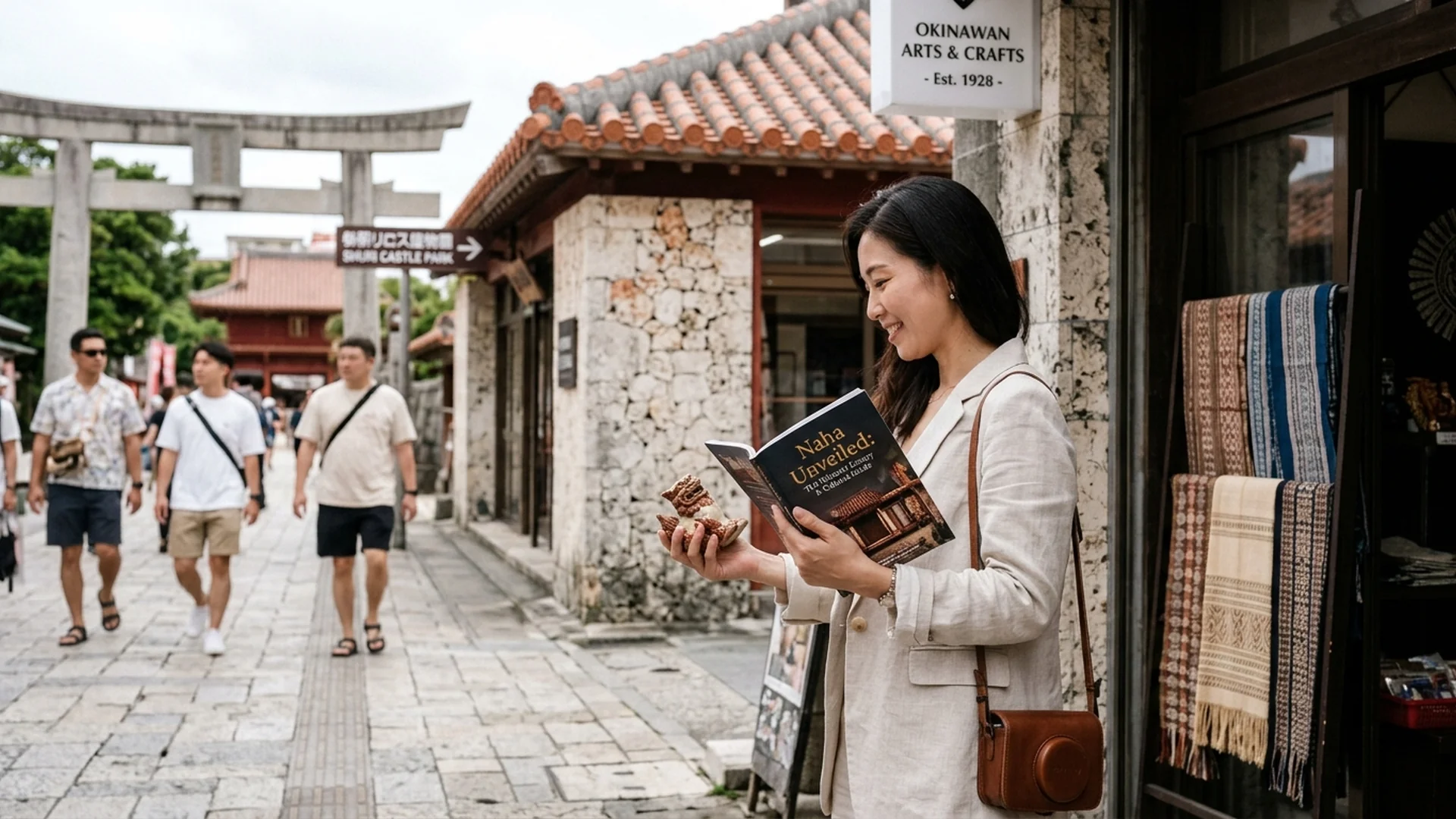
When travellers evoke Okinawa, the collective imagination typically drifts toward immaculate white sands and the brilliant turquoise shimmer of the subtropical sea. Yet, deep within the heart of Naha lies a wellspring of profound heritage rooted in the venerable Ryukyu Kingdom—the ancient maritime realm that once served as the vibrant commercial and cultural bridge connecting China, Japan, and Southeast Asia. Stepping into this historic capital is far more than a conventional island escape; it is a contemplative journey across centuries through UNESCO World Heritage architecture, master craft traditions, and an unhurried, soul-stirring island rhythm reserved for the discerning wanderer.
Naha in its most elevated manifestation is not propelled by the relentless pulse of a modern metropolis, but rather by an unhurried cadence of exquisite detail. From the rhythmic echo of footsteps upon ancient Ryukyu limestone pathways to the earthy fragrance of centuries-old climbing kilns and the meticulous artistry of royal court banquets, this chronicle invites you to experience Naha in its deepest, most luminous shades.
1. Resurrecting a World Heritage Legacy: The Grandeur of Shuri Castle
Any serious exploration of Ryukyu history begins at Shuri Castle, the soaring architectural emblem of Okinawan pride that commands panoramic views over the Naha cityscape. Designated as a UNESCO World Heritage site, the citadel showcases the distinctive gusuku architectural style—a harmonious synthesis of Chinese and Japanese design philosophies, immortalized by its striking vermilion palaces and the iconic Shureimon Gate.
Following meticulous restoration efforts, Shuri Castle once again invites visitors to admire the breathtaking intricacy of its hand-carved woodwork, traditional cinnabar lacquer techniques, and powerful dragon motifs that testify to the mastery of royal artisans of yore. To wander through its curving stone ramparts and inner sanctums is to turn the pages of a grand maritime epic, tracing the reach of Ryukyuan monarchs across the East China Sea.
2. The Rhythm of Earth and Flame: Aesthetics on Tsuboya Yachimun Street
Moving beyond the regal opulence of the court, one finds the intimate, pulsating charm of Tsuboya Yachimun Street. Spanning some four hundred meters of historic cobblestone, this lane serves as the ancestral cradle of yachimun—traditional Okinawan ceramics forged continuously for over three centuries since the golden age of the Ryukyu Kingdom.
The lane is flanked by heritage climbing kilns, atmospheric craft ateliers, and contemporary galleries showcasing both classic styles (arayaji and joyaji) and modern interpretations by visionary young makers. The true privilege here lies in conversing directly with master artisans within their sunlit workshops, observing the meditative transformation of raw clay by hand, or acquiring distinctive tableware stamped with organic motifs for your private collection. Tucked away within these narrow alleys, known locally as sujigwa, the quiet, enduring grace of traditional Naha life remains vibrantly intact amid the modern world.
3. Flavors of an Ancient Realm: The Philosophy of Ryukyu Cuisine
No cultural odyssey through Naha can be considered complete without partaking in Ryukyu Cuisine, an ancestral culinary tradition celebrated for its longevity and health-conscious philosophy. Guided by the ancient doctrine of Nunchi Suishin—the belief that food and medicine share a single source—the region’s gastronomy relies on carefully curated seasonal harvests and time-honored preparation methods.
Indulge in an exquisite multi-course dining experience within a heritage setting, where dishes are served exclusively in fine yachimun ceramics. The progression moves effortlessly from a delicate, clear medicinal pork bone broth to melt-in-the-mouth Agu pork simmered to perfection, finishing with pristine whitefish from Okinawan waters seasoned with natural sea salts and fragrant local seaweed. Each creation is not merely a delight to the palate, but a flavorful testament to intercultural exchange preserved by contemporary chefs dedicated to honoring the royal heritage.