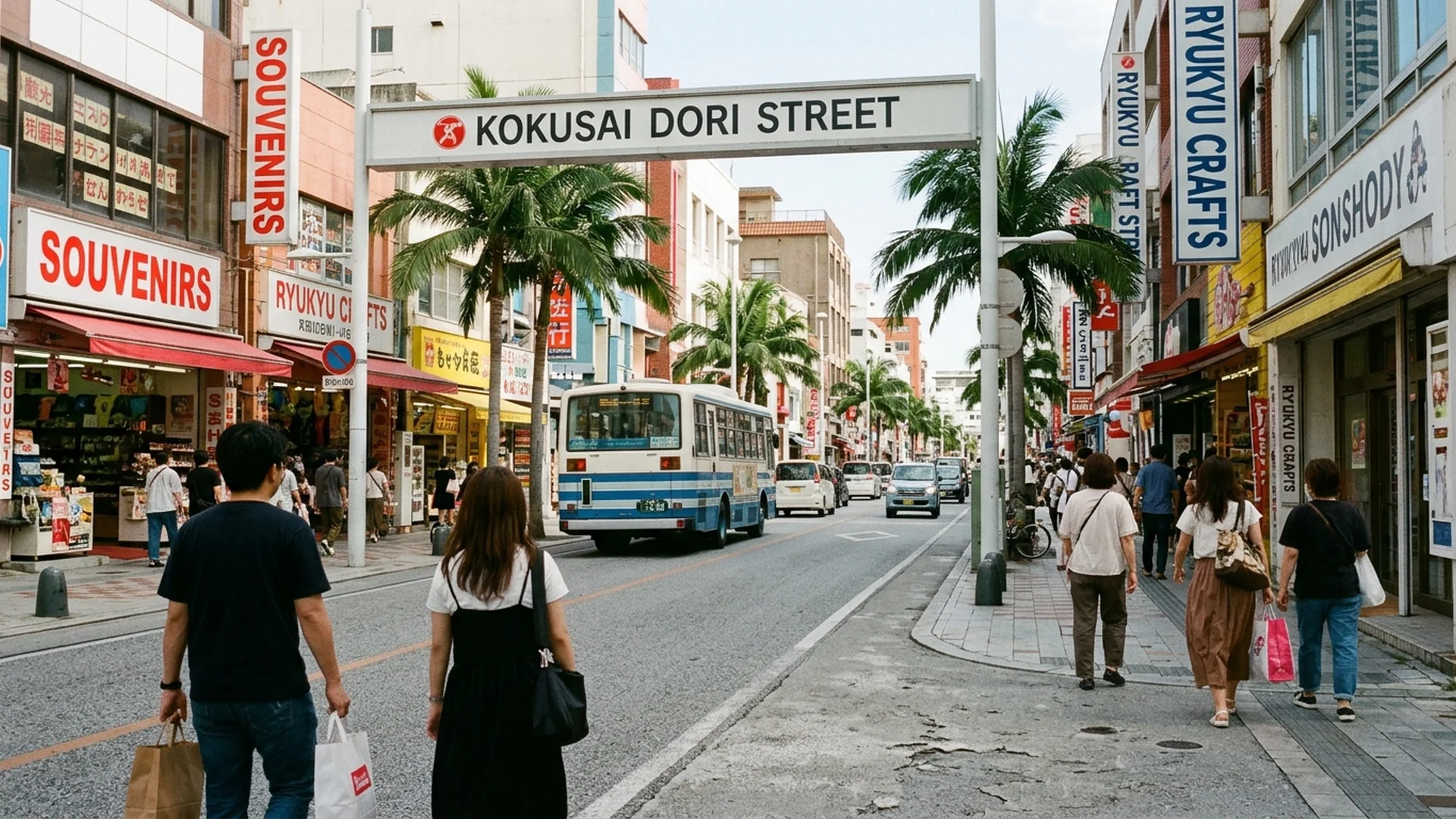
When the ashes of post-World War II devastation were swept away to pave a vibrant 1.6-kilometer thoroughfare, the moniker ‘Miracle Mile’ ceased to be mere hyperbole and became a testament to Okinawan resilience. Kokusai Dori, or Kokusai Street, gracefully harmonizes the echoes of an illustrious past with contemporary island verve.
Your first steps upon these pavements are greeted by the wistful strumming of a sanshin drifting on the breeze, mingling with the savory aroma of sizzling Okinawan Wagyu and artisanal craft brews. This is far beyond a conventional shopping strip; it is the beating heart of Naha, inviting discerning travelers to decode the ancient Ryukyuan civilization through meticulous craftsmanship, storied traditions, and culinary arts that honor ninchin—the island philosophy of longevity and profound joy.
From Ruins to the Miracle Mile: The Historical Legacy of Kokusai Dori
The narrative of Kokusai Dori began in profound emptiness. In the immediate aftermath of the Second World War, the area surrounding the former Ernie Pyle Theater lay in desolate ruins before local ingenuity and tenacity conjured the burgeoning Tairyu Shoji market. Its meteoric rise earned it the storied title of the ‘Miracle Mile.’ What sets this avenue apart is its unwavering commitment to preserving Okinawan identity. Amidst modern storefronts and contemporary architecture, the spirit of the ancient Ryukyu Kingdom endures quietly beneath terracotta roofs crowned with fierce shisa guardian lions, warding off malevolent forces and protecting the hearths below.
A Living Museum of Flavor: Makishi Market and Ryukyuan Gastronomy
True comprehension of Okinawa demands an exploration through the palate, and no place captures this better than the Makishi Public Market, affectionately regarded as Naha’s communal kitchen. The ground floor presents a dazzling mosaic of iridescent tropical reef fish, giant clams, and prized Agu pork. Travelers may select raw delicacies directly from the stalls and have the upper-level culinary artisans transform them into exquisite midday repasts, from crisp catches glazed in sweet-and-sour reductions to herbal broths steeped in ancient tradition. Along the main avenue, rustic Okinawan izakayas pour fiery yet smooth Awamori—a potent spirit descended from ancient Southeast Asian distillation techniques—paired ideally with plates of bitter melon goya champuru.
Wandering the Artisan Alleys: The Ceramic Soul of Tsuboya Yachimun
Step merely a few paces away from the bustling thoroughfare down coral-paved alleyways, and the world hushes into timeless tranquility. This is Tsuboya Yachimun Street, a three-century-old cradle of traditional yachimun pottery. Relict climbing kilns, known as noborigama, stand as monuments to the patience and artistry of generations of local ceramists. Every courtyard and atelier brims with handmade earthenware, from graceful indigo-glazed vessels to domestic guardian shisas, embodying an enduring symbiosis between island dwellers, the earth, and the creative spirit.