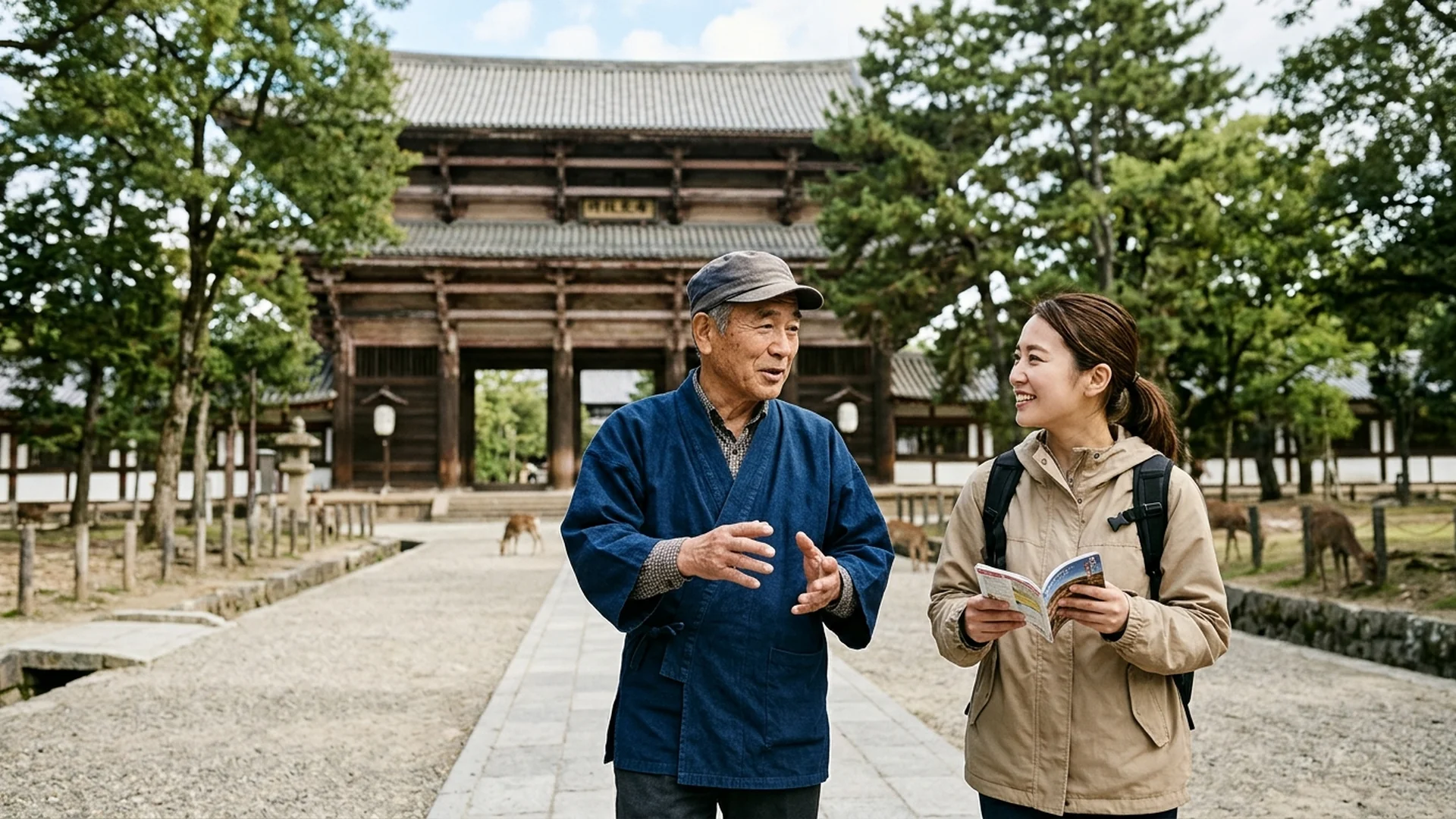
As the first morning light cuts across the ancient forests cradling Mount Kasuga, a delicate mist lingers over the tiled roofs of Japan’s earliest imperial capital. Nara is far more than a fleeting daytime stopover for photographing resident deer; it is the spiritual crucible of the nation—a sacred landscape where pristine nature, profound Buddhist artistry, and deep historical resonance merge far beyond the superficial glance of a single afternoon.
Approaching Nara through the discerning lens of slow travel breaks the breathless pace of whistle-stop itineraries. It invites the traveler to savor the crystalline silence of early dawn before the crowds arrive, to marvel at timber architecture that has endured for a millennium, and to indulge in world-class design ryokans and luxury resorts that pay profound reverence to their ancient roots.
The Threshold of Time: Nara’s Three Guardian UNESCO Heritage Sites
Comprehending the foundational roots of ancient Japan begins within the monumental sacred precincts designated as UNESCO World Heritage sites. During the eighth century, when Nara served as the imperial capital known as Heijo-kyo, Todai-ji rose as one of the world’s most colossal wooden structures, sheltering the towering bronze Daibutsu (Great Buddha), who has offered benevolent protection to generations for over a thousand years. The profound hush within this majestic wooden hall resonates with centuries of palpable history, commanding total stillness and contemplation from every visitor.
Close by, Kasuga Taisha Shrine conceals itself deep within a primeval forest preserved from logging for centuries. Thousands of bronze and stone lanterns line the mossy pathways, cultivating an atmosphere of otherworldly sanctity. When afternoon sunlight filters through the dense canopy to strike the brilliant cinnabar pillars of the shrine buildings, time seems to suspend itself. Paired with a tranquil stroll past Kofuku-ji and its graceful five-story pagoda mirrored in still waters, Nara reveals itself as a living museum where every footstep traces an invaluable historical manuscript.
The Aesthetic of Naramachi: Wooden Architecture and Artisan Traditions
Further south in the historic heart of the city lies Naramachi, the former merchant district that faithfully preserves the Edo-period urban grid and architectural heritage. Traditional wooden townhouses known as machiya define the neighborhood, distinguished by their narrow street frontages, deep interiors, exquisite timber joinery, delicate lattice screens, and the hanging red talisman dolls called ‘Migawari Saru’ tucked beneath eaves to ward off misfortune.
Today, this historic quarter enjoys a sophisticated renaissance. Countless heritage residences have been meticulously restored into artisan craft studios, organic green tea roasting houses, thoughtfully curated design cafes, and traditional sweet ateliers. Wandering these narrow, labyrinthine alleys on foot and engaging softly with local craftspeople offers an unhurried slow travel experience that captures the true essence of contemporary Nara life.
Luxury Refinement: Where Modernity Meets Ancestral Heritage
Elevating the Nara journey into a new dimension involves choosing an overnight residence, unlocking quiet nocturnal rhythms forever hidden from day-trippers. Nara now boasts sophisticated high-end properties thoughtfully engineered to harmonize with the surrounding natural topography and historical context. FUFU Nara, for instance, is an exclusive luxury sanctuary designed by renowned architects, utilizing indigenous timber textures, aromatic regional woods, and private onsen hot springs to dissolve accumulated fatigue.
Another world-class destination is Shisui, a Luxury Collection Hotel, Nara, situated along the verdant perimeter of Nara Park and envisioned by leading contemporary Japanese architect Kengo Kuma. Marrying heritage architecture with understated minimalist design amid thirty thousand square meters of lush greenery, the property delivers consummate privacy alongside exquisite dining celebrating the seasonal terroir of the Kansai region.