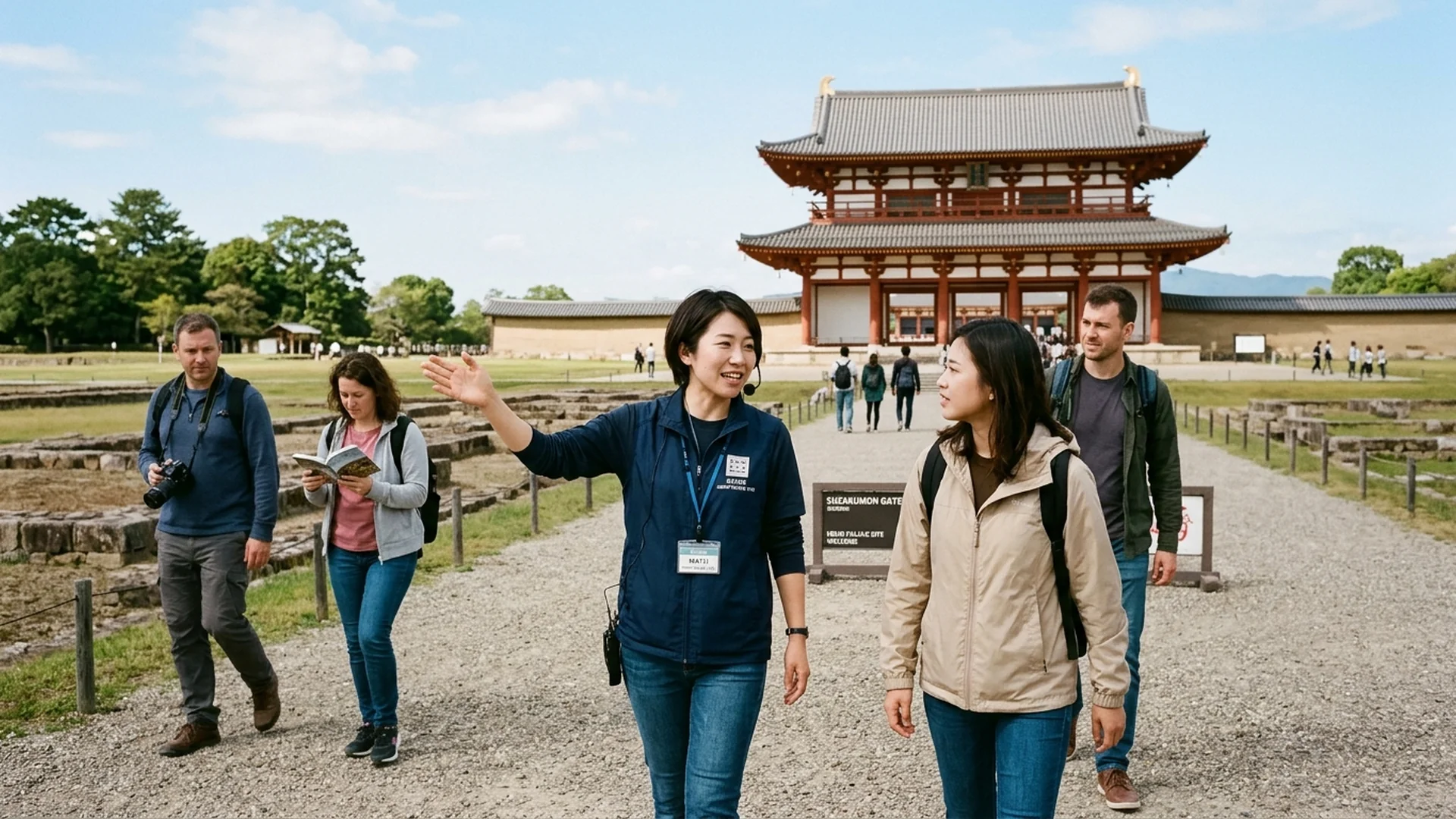
When travelers envision Nara, the enduring images are typically of gentle sika deer roaming the verdant expanses of Nara Park and the monumental bronze presence of Todai-ji. Yet, if one drifts just slightly away from the gentle bustle toward the expansive northwestern plains, an entirely different canvas of time unfolds. Here lies a vast, unhurried plaza where an illustrious epoch from thirteen centuries ago has been remarkably resurrected.
This is the Heijo Palace Site, the grand administrative heartbeat of Japan during the Nara period (710–784 CE)—an era when Japanese civilization flourished under the profound influences of the Silk Road and China’s Tang dynasty. Standing upon this historic imperial esplanade is far more than an exercise in viewing ruins; it is an unhurried pilgrimage across epochs through meticulously restored wooden architecture that embodies the pure, sublime aesthetic of the Tenpyo era.
1. Roots of Civilization: When Heijo-kyo Anchored the Eastern World
Back in the 8th century, Emperor Gemmei made the momentous decree to shift the imperial capital to the Nara basin, establishing Heijo-kyo along the majestic grid lines of ancient Chang’an. The Heijo Palace was far more than a sovereign residence; it was a grand crucible where culture, politics, and spirituality converged, openly embracing continental innovations brought along the ancient Silk Road. Though centuries have elapsed and capitals have shifted, the deep-seated historical strata beneath this expansive terrain have been carefully excavated and restored, emerging as one of Asia’s most profound historical milestones.
2. The Grandeur of Tenpyo Architecture: Daigokuden and Suzakumon
The emotional core of any pilgrimage to the Heijo Palace is encountering the Suzakumon Gate—an arresting vermilion portal that once welcomed foreign emissaries and dignitaries. Beyond it stands the Great Hall of State, or Daigokuden, an imposing timber pavilion reconstructed with absolute fidelity to ancient master carpentry techniques. Inside, a replica imperial throne and cosmological ceiling murals depicting the twelve signs of the zodiac evoke the metaphysical worldview of the epoch. Every curved wooden beam and polished lacquered column speaks volumes of ancient Japanese artistry.
3. Imperial Solitude: Garden Aesthetics and Modern Archives
Beyond the inner palace precincts, the Toin Teien—the palace’s royal retreat garden—offers a masterclass in Nara-era landscape design. The sweeping views over the expansive pond, timber pavilions, and carefully placed contemplative stones evoke a rare, meditative stillness. This quiet reflection pairs harmoniously with the Nara Palace Site Museum, which curates priceless excavated artifacts alongside sophisticated interactive displays, grounding scholarly imagination in tangible historical reality.