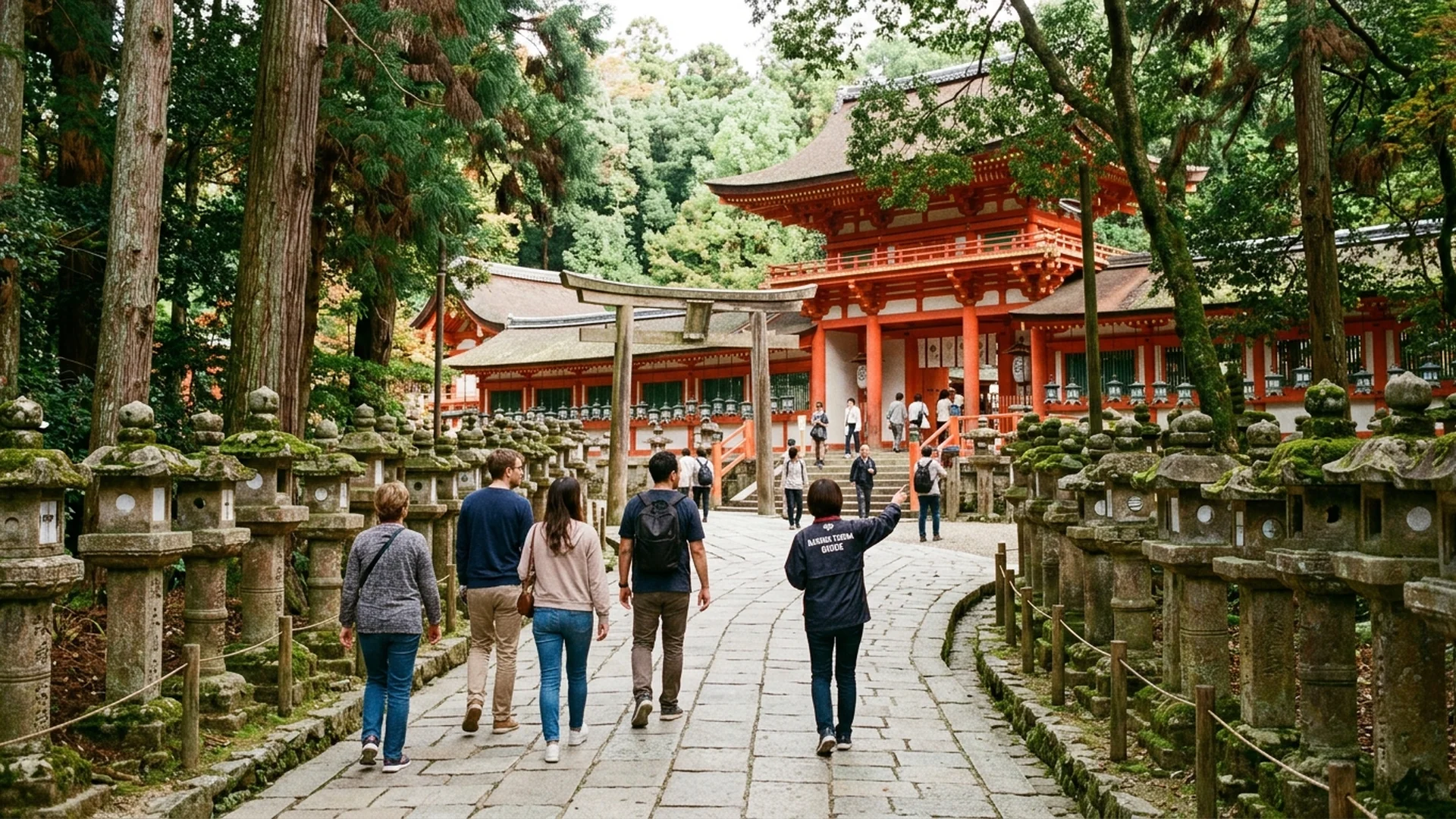
Mention the ancient capital of Nara, and most imaginations immediately drift toward the gentle, roving sika deer that graze its expansive verdant parks. Yet, stepping beyond the fringes of the modern city and deep beneath the ancient canopy of the Kasugayama sanctuary, the worldly murmurs gradually soften. Here, one is left with only the breath of the wilderness and the echoes of a millennium of quiet devotion. Kasuga Taisha Shrine is far more than a mere historical landmark; it is the beating spiritual heart forged by the influential Fujiwara clan, a realm where history, art, and Shinto reverence intertwine seamlessly beneath the shifting shadows of thousands of bronze and stone lanterns.
To wander the pristine white gravel pathways of Kasuga Taisha is to journey effortlessly across the centuries. Flanked by countless weathered lanterns standing sentinel through the mossy gloom, the atmosphere is profoundly solemn yet serene. It offers discerning travelers an immersive cultural pilgrimage, inviting deep contemplation far removed from the hurried pace of conventional sightseeing.
Vermilion Architecture and the Legacy of the Fujiwara Clan
Kasuga Taisha was established at the dawn of the Nara period by the Fujiwara family, the most formidable aristocratic dynasty in Japanese political history, to enshrine the protective deities safeguarding the imperial capital. The primary shrine buildings showcase a brilliant vermilion palette that strikes a dramatic contrast against the deep emerald foliage and pristine white timber framing. Beyond its undeniable aesthetic brilliance, the crimson lacquer was historically believed to ward off malevolent spirits and impurity. The distinct ‘Kasuga-zukuri’ architectural idiom, characterized by its steeply pitched sloping roofs thatched in fragrant hinoki cypress bark, bears enduring testimony to master imperial carpentry handed down through generations.
The Enchantment of Three Thousand Lanterns
Perhaps the most iconic and mesmerizing feature of the shrine grounds is the staggering collection of lanterns scattered across the sacred precincts. These comprise roughly 2,000 moss-covered stone lanterns (ishi-doro) lining the woodland trails and upwards of 1,000 hanging bronze lanterns (tsuri-doro) suspended from the eaves of the vermilion corridors. Historically donated by humble pilgrims, powerful shoguns, and nobility alike, these fixtures embody centuries of whispered prayers. During the biannual ‘Mantoro’ festivals, every single lantern is illuminated simultaneously, bathing the archaic courtyards in an ethereal, golden glow that feels entirely suspended in time.
The Sacred Kasugayama Forest and Four-Legged Envoys
Another extraordinary dimension of Kasuga Taisha is its unbroken communion with the surrounding ecosystem. Immediately behind the shrine lies the Kasugayama Primeval Forest, where strict religious prohibitions against logging have been enforced since ancient times. This unprecedented preservation has kept the forest’s ecological integrity remarkably intact. Moreover, free-roaming sika deer inhabit the grounds; according to foundational shrine lore, the primary deity of Kasuga arrived at Mount Mikasa riding a magnificent white deer. Consequently, the deer of Nara have been fiercely protected and honored as divine messengers down to the present day.