As you step past the lively gathering of deer roaming Nara Park, the weathered vermilion timber and soaring silhouette of ancient pagodas slowly emerge against the indigo sky. These structures are more than mere architecture; they are the living breath of a thirteen-century legacy at Kofuku-ji Temple. Here lies not just a sanctuary of faith, but a enduring monument to the absolute power, refined patronage, and profound devotion of the Fujiwara clan—the most influential aristocratic lineage in early Japanese political and cultural history.
To visit Kofuku-ji is to open the grand annals of the Heijo-kyo era, when the ancient capital flourished in exquisite detail. The temple safeguards an extraordinary collection of masterworks and national treasures, inviting the discerning traveler to pause and commune with a spiritual aesthetic widely regarded as the absolute zenith of the Tenpyo period.
Roots of Power: From Kyoto to Nara and the Fujiwara Dynasty
The narrative of Kofuku-ji begins when Buddhist civilization was first taking deep root in the Japanese archipelago, spearheaded by the Fujiwara family, architects of an enduring political and cultural golden age. Originally founded in Kyoto before its relocation to the imperial capital of Nara in 710 CE, this grand monastery’s migration reflected a deliberate fusion of secular dominance and spiritual authority. Within its sprawling precincts, over a hundred edifices once stood as the beating heart of aristocratic devotion. Throughout its storied history, the complex endured devastating fires and feudal conflicts; yet, sustained by unwavering faith and meticulous generational restorations, its world-class beauty continues to defy the passage of time.
Tenpyo Artistry and the Enigmatic Grace of the Ashura Statue
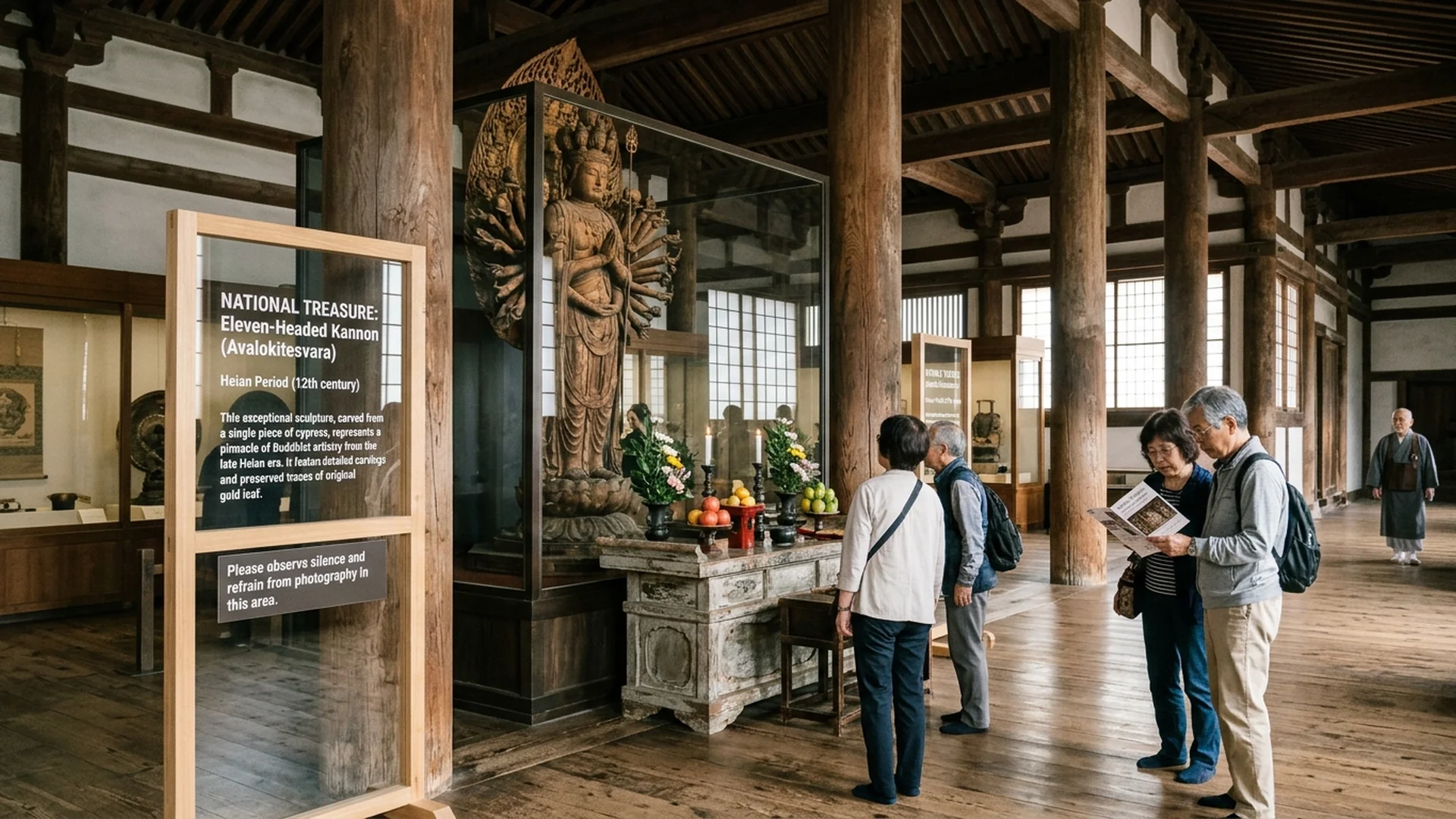
If faith is the heartbeat of Kofuku-ji, its soul resides quietly within the National Treasure Museum (Kokuhokan), home to some of Japan’s most revered antiquities. At the center of this collection stands the Ashura Statue, drawing historians and art connoisseurs from across the globe. Crafted in 734 CE using the dry-lacquer (dakkatsu-kansatsu) technique, this three-faced, six-armed deity captures a complex array of emotions—sorrow, deep contemplation, and gentle grace—conveying the universal human condition and the pursuit of spiritual liberation. The museum is further enriched by guardian deities and bodhisattvas, each testifying to the supreme mastery of ancient artisans who carved lifelike fluidity into raw timber and dry lacquer.
Legendary Architecture: The Central Golden Hall and the Five-Story Pagoda
Exploring the grounds of Kofuku-ji is akin to walking through an open-air museum of traditional Japanese craftsmanship. The Central Golden Hall (Chukondo), meticulously reconstructed according to traditional methods, stands as the grand centerpiece, housing principal Buddhist icons and rare architectural joinery techniques seldom seen today. Meanwhile, the Five-Story Pagoda—soaring over fifty meters and having miraculously survived repeated conflagrations—serves as an elegant, enduring symbol of Nara. The rhythmic layering of its eaves and the sophisticated, nail-less interlocking wooden joinery reflect an extraordinary synthesis of ancient engineering and artistic brilliance.