When the first light of dawn sweeps across the ancient forests of Nara, the bronze chime of a historic bell awakens a storied landscape. This is Todai-ji Temple, the epicenter of Buddhism in the Nara period that has stood resilient against the tides of time for over a millennium. More than a mere testament to colossal timber construction and monumental bronze casting, this sacred ground preserves a profound legacy of unwavering faith, refined artistry, and tranquil Zen spirit fused into one harmonious realm.
Crossing the threshold through the imposing Nandaimon Gate feels akin to stepping backward into the golden age of Japanese civilization. The subtle fragrance of aged pine, the crunch of gravel beneath steady footfalls, and roaming herds of wild deer accompanying modern pilgrims conjure an atmosphere steeped in quiet mystique. It invites the discerning traveler to step away from the clamor of the contemporary world and sink deep into an enduring internal stillness.
The Daibutsu-den and the Marvel of Ancient Wooden Architecture
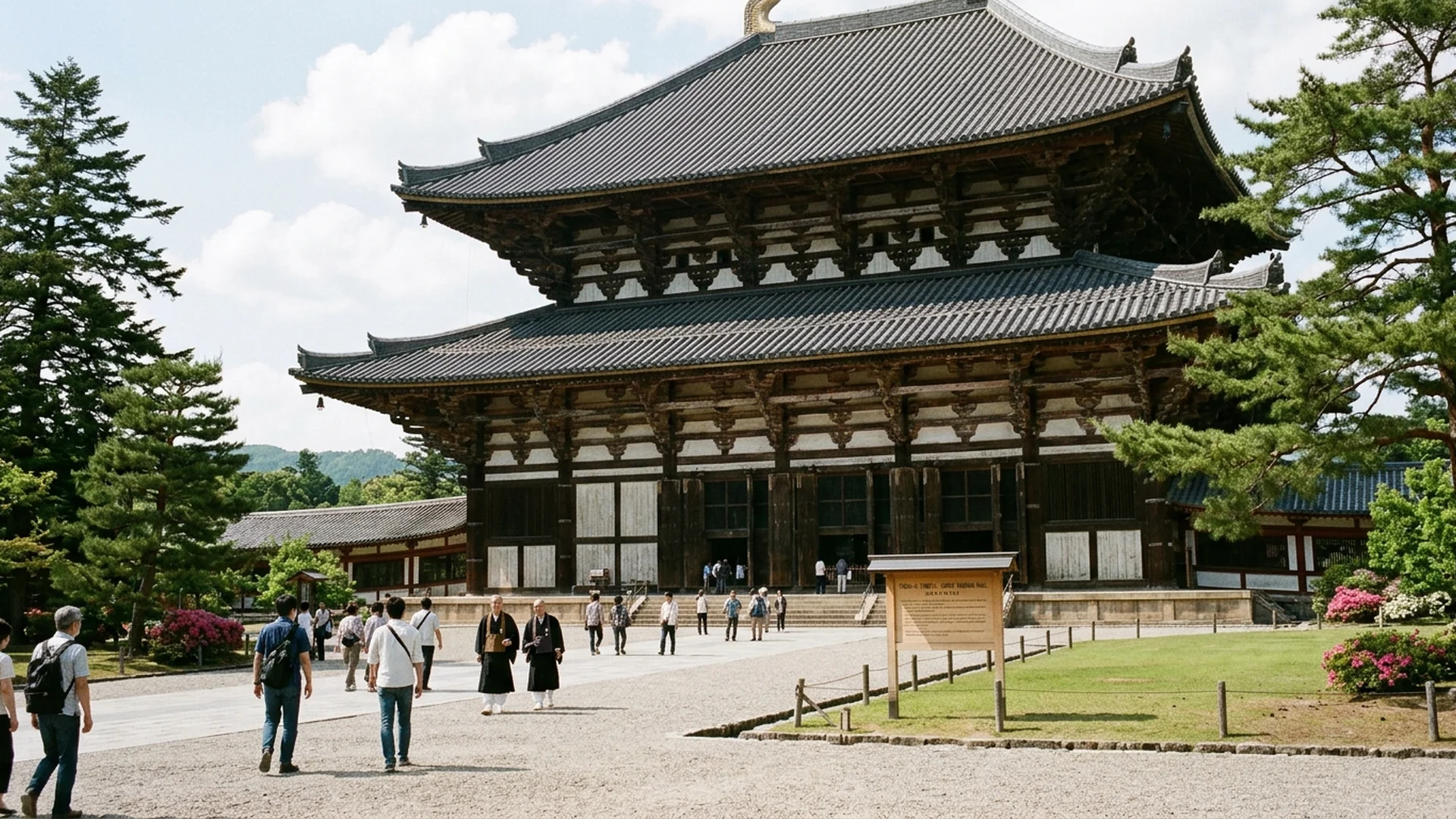
The Daibutsu-den, or Great Buddha Hall, serves as the spiritual heart of Todai-ji and reigns as the largest wooden building on earth. Although the current structure spans roughly two-thirds of its original 8th-century footprint due to historical fires and calamities, this architectural masterpiece continues to inspire awe through traditional interlocking joinery executed entirely without metal nails. Within the hall resides the legendary Nara Great Buddha, known as Rushana Butsu, a colossal seated figure towering over 15 meters and weighing hundreds of tons. His serene, compassionate expression reflects the pinnacle of imperial craftsmanship, seamlessly wedding high engineering with profound faith. Surrounding the deity are immense timber pillars featuring the famous pillar aperture; local legend holds that those who successfully navigate this narrow opening will attain enlightenment and lifelong fortune.
The Nandaimon Gate and Its Ferocious Guardian Kings
Before entering the sacred precinct of the main hall, visitors encounter the formidable Nandaimon Gate, reconstructed during the Kamakura period and hailed as a zenith of Tempyo-inspired artistic revival. Flanking the soaring archway stand two towering Nio guardian statues, carved by the legendary master sculptor Unkei and his son Kaikei. The hyper-realistic musculature, prominent veins, and fierce, protective glares project an intensity that transcends centuries, remaining remarkably preserved today. It stands as an essential pilgrimage point for art historians and connoisseurs eager to analyze every meticulous detail of classical Japanese sculpture.
Nigatsu-do and the Serene Vantage Above Nara
For those seeking to escape the bustle and touch the contemplative dimensions of Todai-ji, a quiet stone pathway winding up the wooded hillside leads directly to Nigatsu-do. This hall not only hosts the sacred Shuni-e ceremony, popularly known as the Omizutori fire festival, which has endured unbroken for over 1,250 years, but its broad wooden veranda also serves as an exceptional panoramic viewpoint. From here, the tranquil rooftops of Nara and the verdant canopies below unfold in seamless harmony. As twilight descends, the golden rays gently brushing against weathered roof tiles evoke an unmatched spiritual resonance.