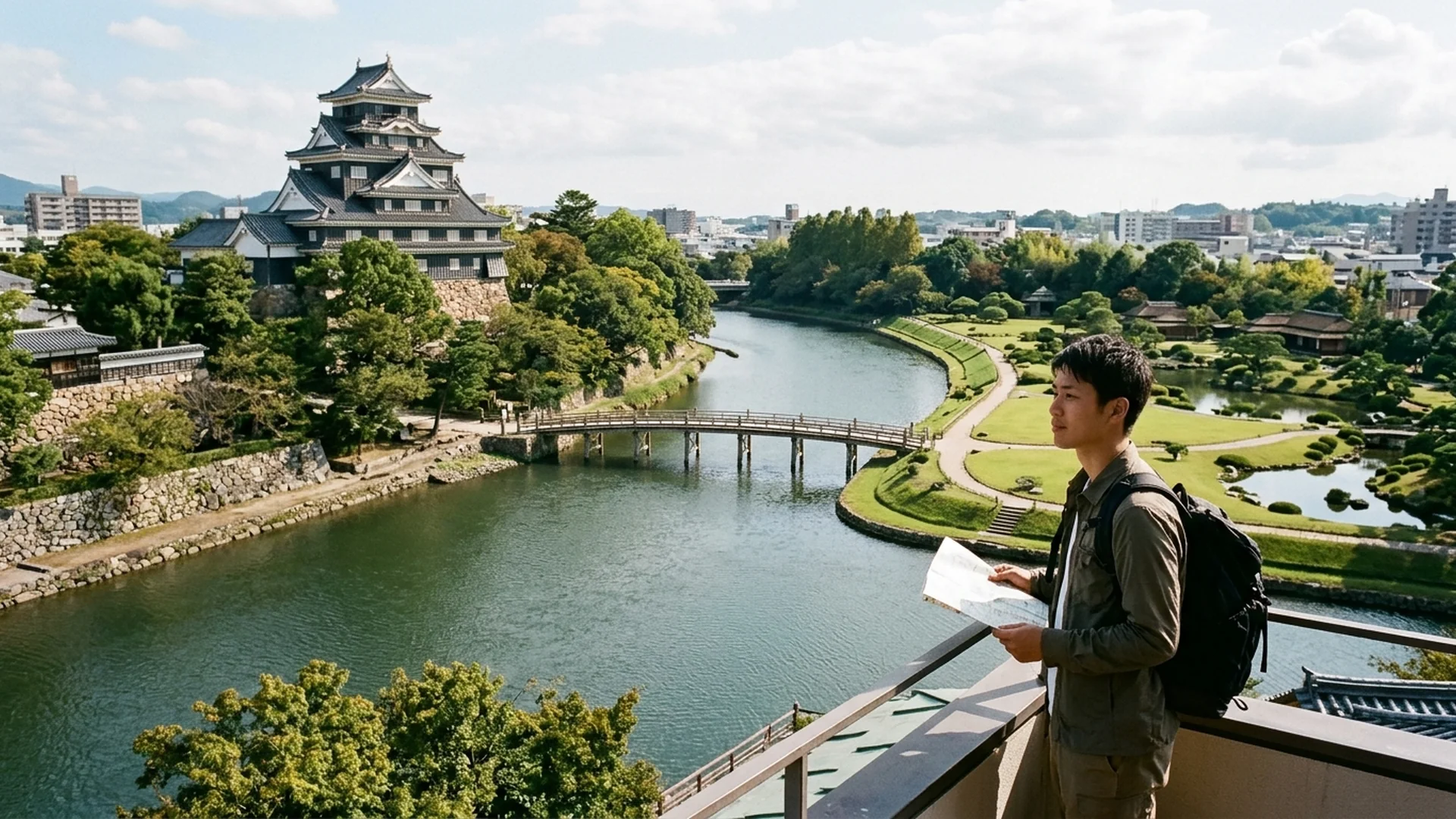
When romantic itineraries in the Land of the Rising Sun are discussed, travelers invariably gravitate toward the well-trodden metropolises. Yet, nestled quietly away, there exists a sanctuary bathed in gentle warmth throughout the year, earning its esteemed moniker as the Land of Sunshine. Okayama is far more than a mere transit station along the Shinkansen high-speed rail network; it is a profound frontier of aesthetic refinement, seamlessly weaving centuries of historical opulence with meticulous daily grace.
Approaching Okayama through the discerning lens of a global traveler invites you to surrender to an unhurried cadence. Watch the glistening waters of the Asahi River mirror ancient architectural masterpieces, and awaken your senses to a natural world cultivated with uncompromising devotion. Here, true beauty is never rushed—it is revealed patiently through the enduring, elegant passage of time.
Korakuen Garden and the Black Crow Castle: A Dialogue Between Architecture and Nature
The heart of Okayama is cradled by one of Japan’s most treasured landscape legacies. Completed in the year 1700 by the regional lord Ikeda Tsunamasa, Korakuen Garden stands as the quintessential expression of a kaiyushiki—or strolling garden. Every meticulously composed element, from expansive emerald lawns and crystal-clear ponds to ancient tea houses and venerable pine groves, carries profound philosophical resonance. Gazing across the tranquil expanse of the Asahi River, one encounters the striking presence of Okayama Castle, locally celebrated as Ujo or the Black Crow Castle. Distinguished by its midnight-black wooden walls and contrasting gilded roof tiles, the harmonious juxtaposition of the verdant landscape garden and the obsidian fortress delivers a powerful visual poetry in every season.
The Epicurean Aesthetic: Okayama as a Royal Kingdom of Fruit
Blessed with minimal rainfall and abundant, gentle sunshine throughout the year, Okayama is rightfully celebrated as the premier fruit kingdom of the archipelago. The prefecture’s orchards yield harvests cultivated with extraordinary, artisanal care. The coveted Okayama white peach is renowned for its silken, melt-in-the-mouth texture, luscious sweetness, and enchanting aroma. Similarly, pristine regional grapes such as Shine Muscat and Pione offer a seedless, exceptionally crisp, and intensely sweet profile. For the discerning gastronome, experiencing these seasonal delicacies straight from the branch or elevated into artisanal confections in quiet local cafes remains an unforgettable sensory journey.
The Kurashiki Bikan Historical Quarter: An Oil Painting Along Ancient Canals
A brief journey beyond the urban core transports you directly into the embrace of the past at the Kurashiki Bikan Historical Quarter. Formerly a vital merchant hub and granary district during the Edo period, this enclave features willow-lined waterways, silent wooden flat-bottomed boats gliding upon glassy canals, and historic storehouses adorned with distinctive black-and-white tiled mortar walls known as namako-kabe. Today, these heritage structures have been thoughtfully revitalized into intimate art galleries, serene design cafes, and fine craft boutiques. Strolling along the polished stone pathways amid timeless architecture feels akin to stepping inside a living, breathing classical masterpiece.