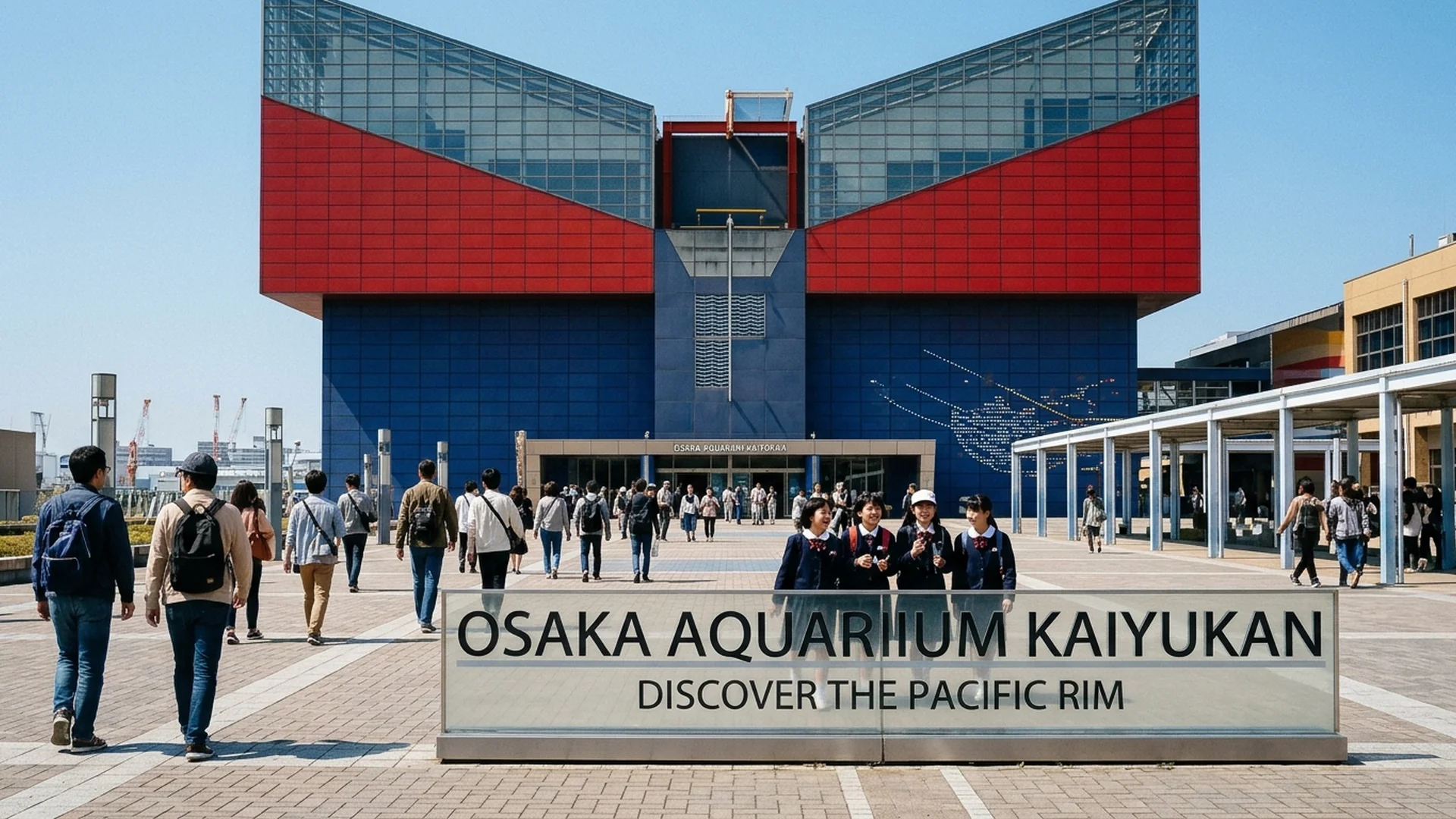
As the neon glow of the Osaka Bay casts long, contemplative reflections across the calm surface of the water, quiet giants of the Pacific glide effortlessly within a striking geometric edifice of vermilion and ochre. Osaka Aquarium Kaiyukan transcends the conventional aquarium, functioning instead as a monumental endeavor to cradle the intricate ecosystems of the Pacific Rim under a single, soaring roof. Guided by the philosophical frameworks of the ‘Ring of Fire’ and the ‘Ring of Life,’ the museum weaves together the majestic narrative of earth and ocean in seamless harmony.
Crossing the threshold into Kaiyukan is akin to descending into the profound abyss of the open sea without the encumbrance of a diving suit. From the welcoming embrace of the Aqua Gate—a luminous underwater tunnel alive with darting schools of chromatic reef fish—visitors embark upon a continuous spiral pathway. Designed to wind downward tier by tier like a hypnotic ocean swell, the route gently alters atmospheric pressures, ambient lighting, and simulated water temperatures, shepherding travelers seamlessly from tropical rainforest canopies to the freezing, crystalline vastness of the Antarctic.
The Ring of Life Architecture and the Eight-Tier Spiral Pathway
At the beating heart of Osaka Aquarium Kaiyukan lies a revolutionary structural design that completely reimagines the traditional aquarium layout. The main building is engineered around a gargantuan central tank boasting a volume of 5,400 cubic meters, encircled by an extensive, downward-sloping spiral ramp that spans hundreds of meters. This architectural marvel draws profound inspiration from the geological ‘Ring of Fire’ and the corresponding ‘Ring of Life,’ delineating the planet’s most active volcanic belts and oceanic trenches. Strolling slowly down this descending gradient evokes the sensation of an epic coastal expedition, beginning along the shores of Japan before drifting past the lush rainforests of Ecuador, the windswept coasts of Australia, the icy expanse of Antarctica, and finally descending into the deepest trenches of the Pacific.
The Pacific Realm and the Legacies of Whale Sharks Kai and Yu
The undisputed centerpiece of the institution is the Pacific Ocean Tank, plunging nine meters in depth and stretching thirty-four meters across to form a self-contained miniature ocean where thousands of distinct marine species thrive in delicate equilibrium. The undeniable crown jewels of this aquatic realm are the whale sharks—the largest fish in the ocean—which traverse the blue expanse with timeless, effortless grace. Following in the footsteps of legendary predecessors such as Yuji, the current residents Kai and Yu are tended to with meticulous devotion by an expert team of resident veterinarians and marine biologists. Standing in absolute stillness before the thick acrylic viewing panels as a colossal whale shark glides past, accompanied by manta rays flapping their vast fins like subterranean birds, induces a breathtaking suspension of time.
Nocturnal Dimensions: The Night Aquarium and Sensory Zones
As the sun dips below the horizon and exterior illumination begins to softly glow, Kaiyukan undergoes a dramatic metamorphosis into its ‘Night Aquarium’ persona, offering an entirely distinct sensory atmosphere. Interior lighting is thoughtfully dimmed to mirror the natural nocturnal cadence of the marine life, while subdued musical soundscapes and gentle refractions from the illuminated tanks cultivate an air of profound tranquility and mysterious allure. Furthermore, open-air habitats such as the simulated Maldives shores and the rugged Chilean Park invite visitors to catch the calls, earthy aromas, and playful behaviors of sea lions, rockhopper penguins, and seabirds just as they might encounter them in their native coastal habitats.