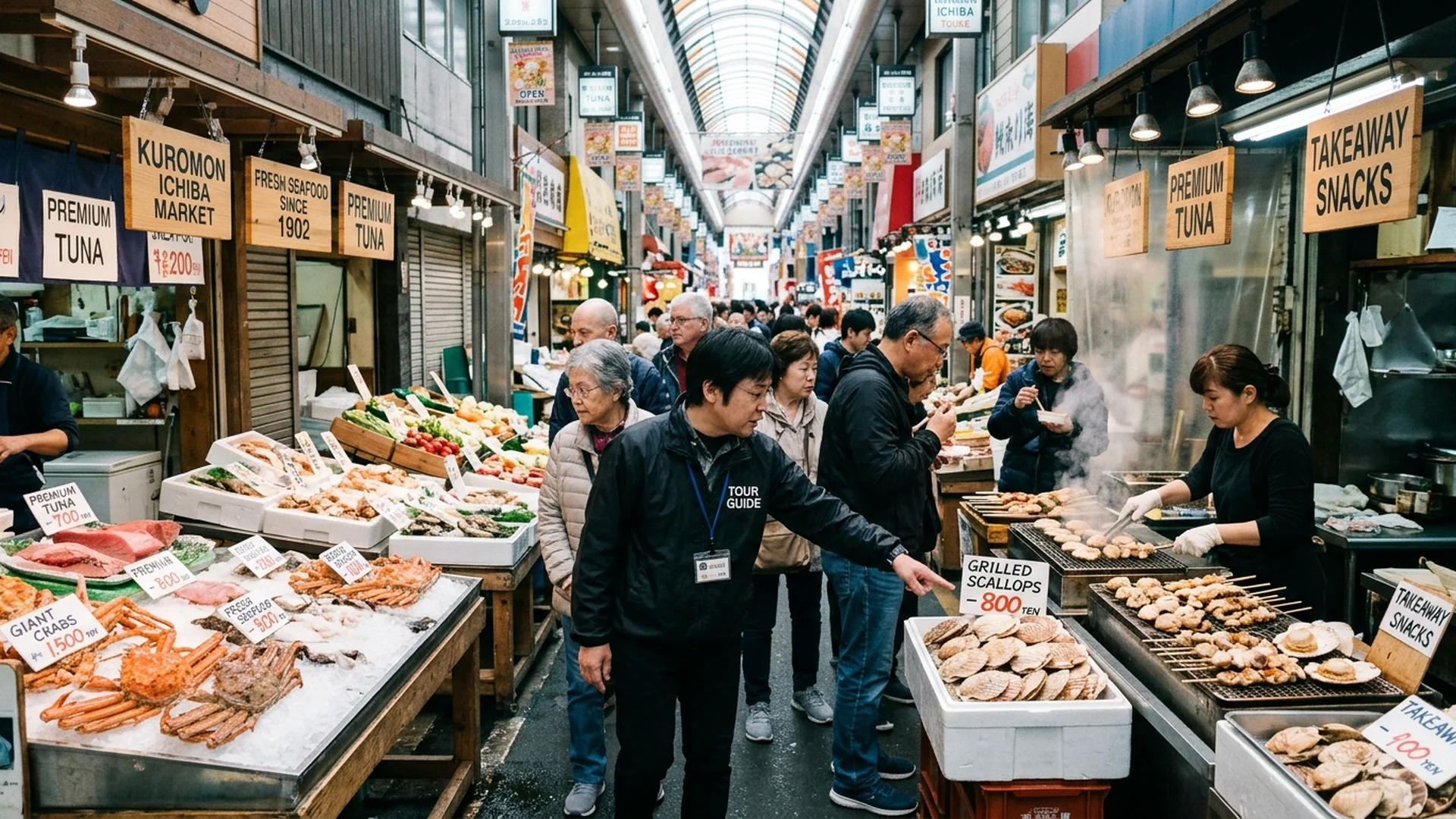
When exploring the spirited philosophy of kuidaore—Osaka’s famous ethos of eating oneself into ruin for the sake of gastronomic excellence—the true heartbeat of the city is found not within gilded dining rooms, but beneath the curving vaulted ceilings of Kuromon Ichiba Market. Stretching over 580 meters, this storied bazaar serves as an exquisite treasure trove of premium ingredients that has nourished master chefs and discerning locals for well over a century.
Tracing its origins back to the early 19th century as a modest marketplace surrounding Enmyoji Temple, Kuromon has evolved into the celebrated ‘Kitchen of Osaka.’ Far from an ordinary wholesale market, it represents a harmonious convergence of time-honored artisanal mastery and vibrant gourmet street culture. Crossing its threshold in the early morning hours feels akin to stepping into a grand backstage kitchen, where the charcoal-scanted aroma of grilled eel, the decadent richness of melting bluefin tuna, and the resonant calls of vendors auctioning the day’s finest catches converge into an unforgettable sensory masterpiece.
The Roots of Naniwa’s Kitchen: Evolution from Temple Grounds to Chef’s Pantry
The name ‘Kuromon’ traces back to the kuro-mon, or ‘black gate,’ that once distinguished Enmyoji Temple nearby. Although the original temple and its historic portals were lost to a devastating fire in 1912, the name and the unwavering spirit of commerce endured. During its golden eras, the market routinely welcomed hundreds of thousands of daily visitors. Today, while its storefronts have gracefully adapted to modern sensibilities across some 150 independent stalls, its core identity as an uncompromising sanctuary for the finest seafood and provisions remains entirely intact. Every dawn, head chefs from Osaka’s most celebrated dining establishments arrive to personally hand-select their catches and heirloom produce—a definitive testament to a professional standard rarely found elsewhere.
Gourmet Coordinates: From Melt-in-the-Mouth Otoro to Charred Wagyu
Navigating Kuromon Ichiba at its most sublime requires a purposeful pilgrimage to its legendary specialty counters. Begin at Maguroya Kurogin, a premier purveyor of pristine bluefin tuna renowned for theatrical live-filleting demonstrations. Signature selections such as kamatoro, the delicately marbled collar cut, and melt-on-the-tongue otoro sashimi deliver an evanescent texture that dissolves instantly upon the palate.
Weiter along, Kuromon Sanpei presents a dazzling bounty of glistening seafood rice bowls and charcoal-roasted king crab legs. For connoisseurs of fine meats, the gourmet journey extends to elite Wagyu counters like Niku wa Kobeya, where beautifully marbled cuts of Kobe and regional Wagyu are seared to absolute perfection over open flames right before your eyes. The experience is further elevated by flawless seasonal fruits, including honey-sweet melons and meticulously graded strawberries hand-selected one by one.
The Art of the Market Stroll: Etiquette and Timing for Mindful Discovery
Savoring the atmosphere of Kuromon Ichiba with refined grace while honoring local customs requires adhering to a golden rule: purchase and consume your delicacies directly in front of the stall or within the designated eat-in zones provided. Japanese culinary etiquette discourages walking along narrow market corridors while eating, ensuring that delicate sauces or stray morsels never disrupt fellow travelers.
Equally vital is the timing of your visit. Arriving during the serene morning hours between 9:00 AM and late morning (around 11:00 AM) reveals the market at its freshest, before the arrival of the bustling midday crowds. Dedicating an unhurried hour or two to wandering these covered alleys offers a rare opportunity to converse with expert mongers and absorb the vibrant pulse of authentic Osaka life.