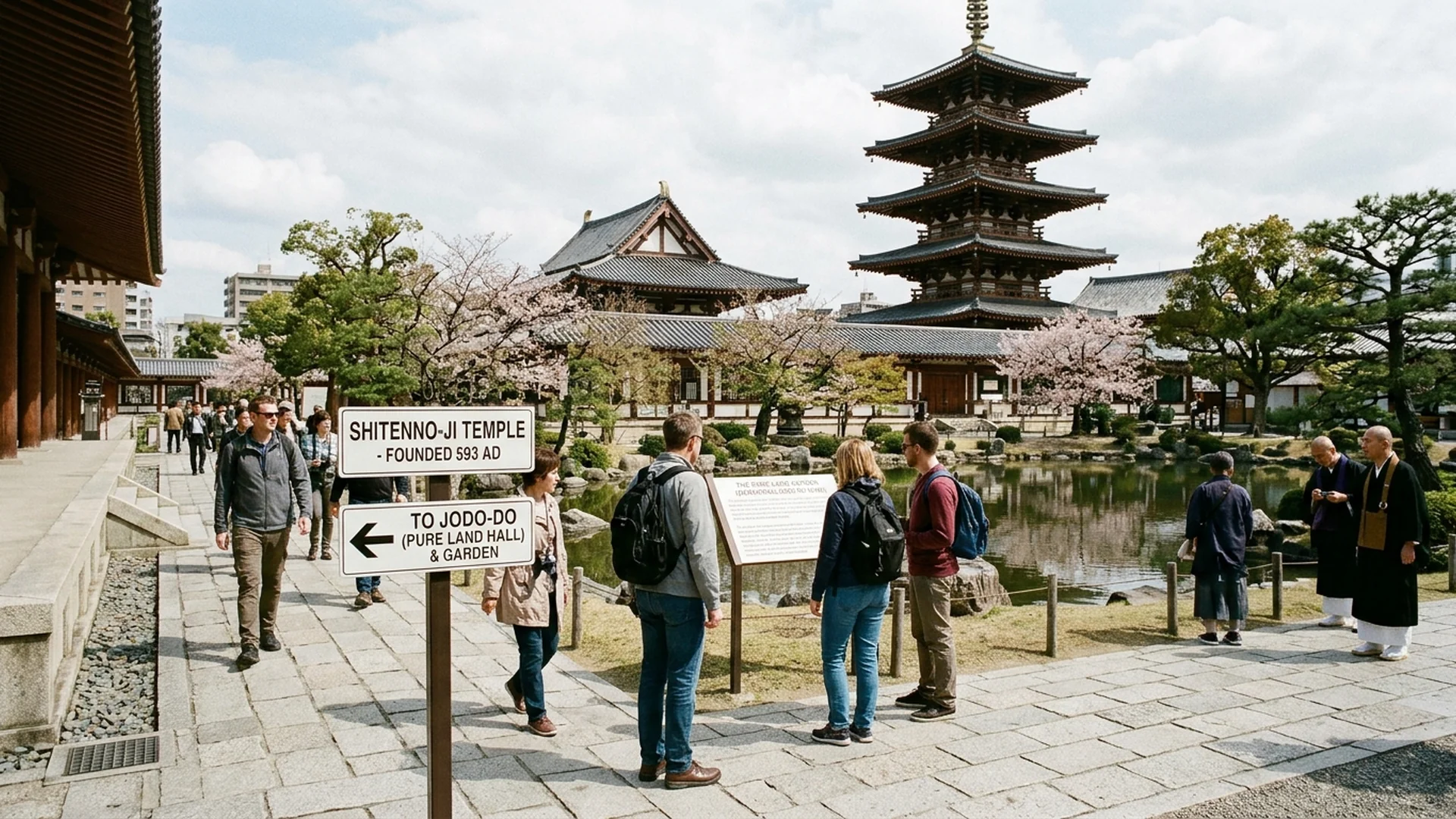
When conjuring the essence of Osaka, the mind often gravitates toward the luminous neon glow of Dotonbori, the savory aroma of sizzling takoyaki, and the exhilarating pulse of a metropolis that never sleeps. Yet, amid the swift rhythms of the Tennoji district, an extraordinary realm of profound stillness endures across fourteen centuries: Shitenno-ji Temple, a venerable spiritual cornerstone marking the official inception of Buddhism in the Land of the Rising Sun.
Tracing its origins back to 593 AD, this hallowed ground was envisioned by Prince Shotoku—a visionary statesman and staunch patron of Buddhist philosophy—as a votive offering to the Shitenno, the Four Heavenly Kings who guard the cardinal directions. Crossing the ancient stone torii gates and temple walls feels less like a simple sightseeing excursion and more like a gentle passage through the veil of time, transporting the traveler from the modern epoch into the profound cultural roots that continue to shape the Japanese soul.
Dawn of the Buddhist Cosmos: Prince Shotoku’s Sixth-Century Legacy
The chronicle of Shitenno-ji stretches back to the Asuka period, an era when Buddhist teachings were first striking root in Japanese soil. According to enduring legend, Prince Shotoku engaged in a decisive conflict against powerful factions resisting the new faith. Carving small effigies of the Four Heavenly Kings, he vowed that ultimate victory would be consecrated by the construction of a grand monastery dedicated to these divine protectors. Upon triumphing, Shitenno-ji was born as the nation’s inaugural imperial temple.
While the ravages of time, conflict, and the devastating fires of the Second World War repeatedly claimed the original wooden structures, each restoration has been executed with uncompromising reverence for historical fidelity. To walk these grounds today is not merely to observe ruins, but to experience an architectural lineage kept vibrantly alive by the meticulous hands of master traditional craftspeople.
Asuka Architecture: The Sacred Geometry of the North-South Axis
The architectural heartbeat of Shitenno-ji resides in its Shitennoji-shiki layout, the oldest extant template for Buddhist temple construction in Japan. Standing at the southern gate and looking northward toward the Kondo (Golden Hall) and Kodo (Lecture Hall), every structural element is arrayed in rigorous symmetry along a single central axis, embraced by an orderly covered cloister.
At the heart of the pristine white gravel courtyard stands the striking vermilion and white Five-Story Pagoda. Uniquely, visitors are invited to ascend the interior timber staircases, offering a rare opportunity to view sacred murals, pay homage to enshrined deities, and gaze out through delicate lattice windows across the contemplative temple courtyards—an immersive architectural intimacy rarely granted in historic Japanese sanctuaries.
Gokuraku-jodo Garden: A Pure Land Paradise Amid the Urban Rhythm
Beyond the formal temple precincts, the landscape softens into the lush serenity of the Gokuraku-jodo Garden. Conceived in strict accordance with Mahayana Buddhist sutras, this exquisite sanctuary serves as an earthly representation of the Western Pure Land of Amitabha Buddha.
Expansive ponds mirror weeping flora and vermilion arched bridges, inviting travelers to shed the clamor of the modern city. The garden transforms gracefully with the seasons—from delicate spring cherries and irises to the blazing amber and crimson of autumn leaves that catch the amber glow of the setting sun. It is a masterclass in contemplative landscape design, offering an oasis of meditative quietude rarely found in the heart of a bustling global metropolis.