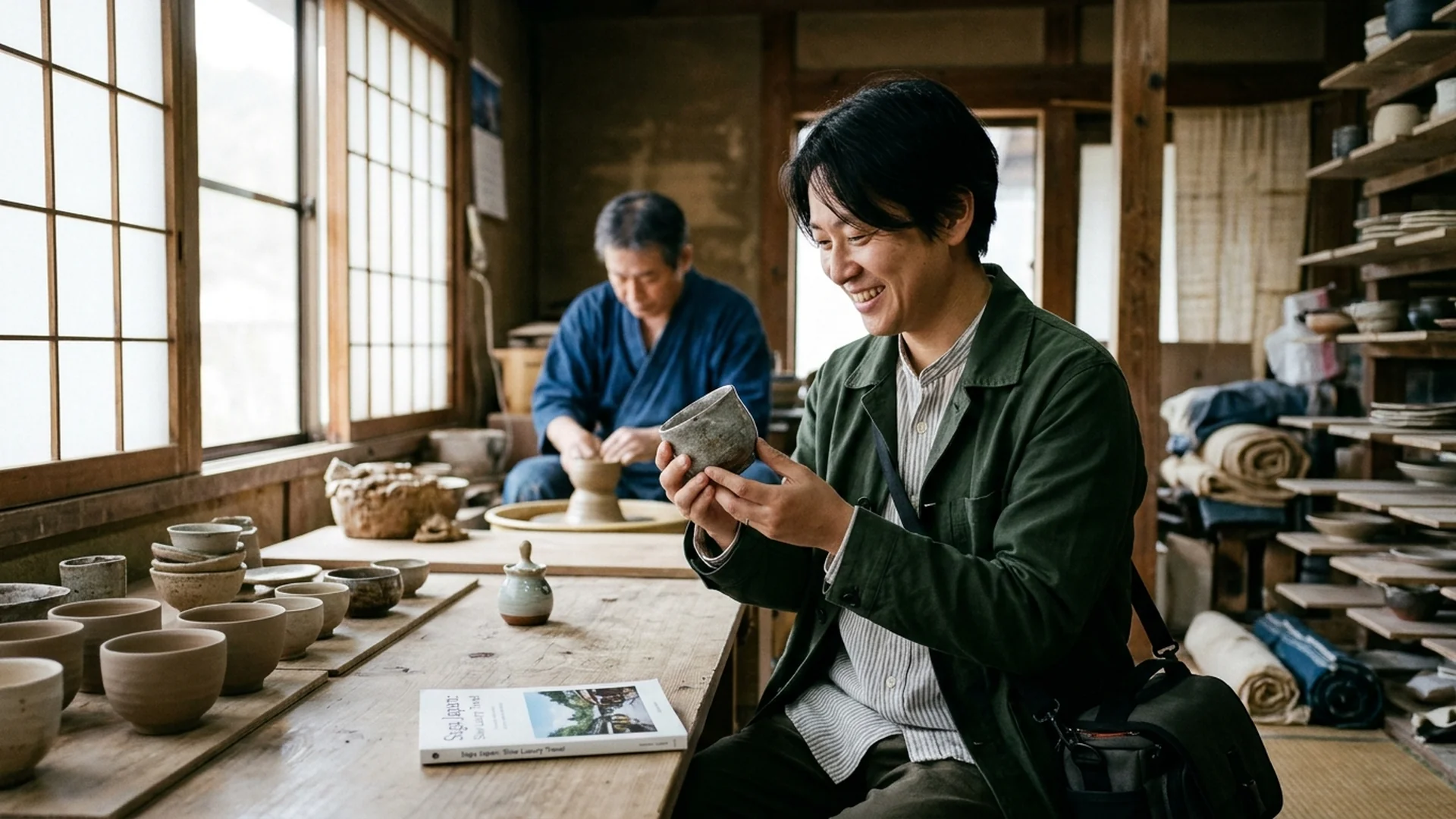
As the restless currents of modern tourism draw crowds toward bustling metropolises, a profoundly serene sanctuary remains hidden upon the island of Kyushu. Saga presents itself as an unpolished jewel awaiting the discerning traveler seeking to recalibrate the rhythm of time. Here is a destination where luxury is not measured by ostentation, but rather by simplicity, meticulous refinement, and a deep, harmonious tether to the natural world. From the quiet fires of ancient kilns burning for over four centuries to the masterful artistry of marbled beef and mineral-rich thermal waters embraced by emerald tea plantations, Saga invites us to quiet our steps and engage all five senses in the truest expression of slow luxury.
The Aesthetics of Craft: A Four-Centuries Legacy in Arita and Imari
The roots of Saga’s artistic soul extend back to 1616 with the discovery of porcelain stone at Mount Izumineyama in Arita. Ever since, these kilns have resonated across the globe, establishing Japan as a producer of fine ceramics once coveted by European royal courts. Strolling through the historic alleys of Arita’s Shirakabe district evokes a palpable journey back to the Edo period. Black brick walls constructed from pottery fragments and ancient brick chimneys still trail faint ribbons of smoke, whispering of enduring artistic breath. Connoisseurs with refined tastes can spend entire days hand-selecting delicate teacups, cobalt-blue porcelains, and brilliantly glazed tableware from contemporary artisan studios that seamlessly merge heritage with modern design.
The Science of Healing: The Allure of Silky Onsens in Ureshino and Takeo
No sojourn through Saga is complete without retreating to a mist-veiled luxury ryokan in Ureshino Onsen, revered as one of Japan’s premier thermal destinations for skin rejuvenation. The crystalline waters here are exceptionally rich in sodium bicarbonate, imparting a silky, milk-like texture upon the skin that earned it the moniker ‘beauty bath.’ Meanwhile, Takeo Onsen carries over a millennium of historical prestige, distinguished by its classic wooden gateway designed by a renowned Meiji-era architect. Soaking in these natural thermal springs amidst the quietude of bamboo groves and historic architecture represents the ultimate restoration of vitality.
A Symphony of Flavors: The Signature of A5 Saga Beef and Harmonious Teas
Saga’s pristine natural abundance and unpolluted climate cultivate exceptional ingredients coveted by Michelin-starred chefs worldwide. A5-grade Saga beef stands as the crown jewel of Japanese cattle, benefiting from mild climates and pure mountain spring water that allow fat to disperse with exquisite, marble-like intricacy. When gently seared over charcoal, the meat virtually dissolves upon the palate. Furthermore, Saga is the homeland of Ureshino tea, distinguished by traditional pan-firing techniques that yield a uniquely soothing flavor profile and a deep, lingering aromatic sweetness.