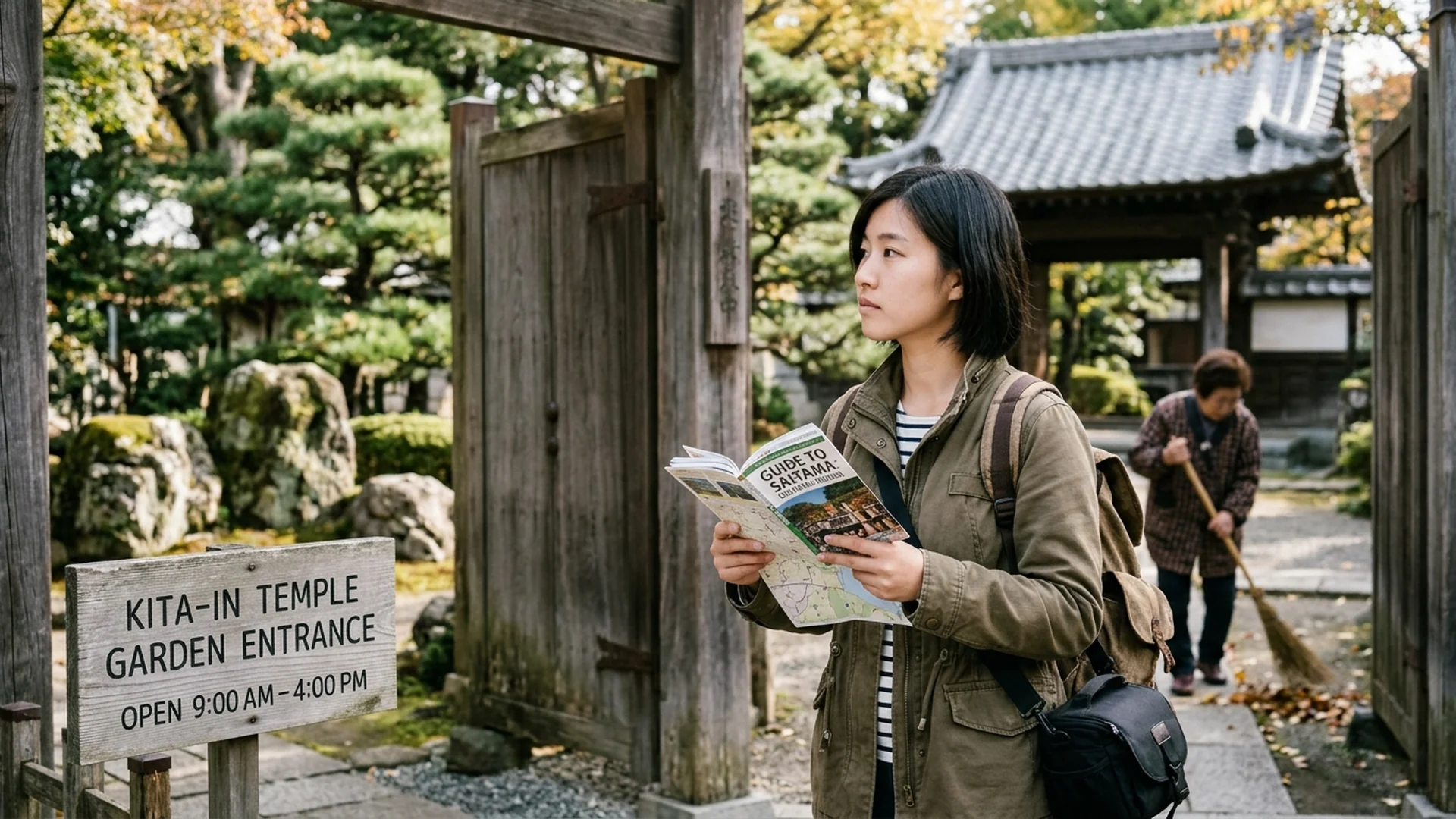
As the restless horizon of Tokyo fades behind a gentle breeze whispering through ancient timber structures and profound stillness, Saitama reveals itself. Long misconstrued merely as a conduit to distant prefectures, this cultural sanctuary harbors masterpieces sculpted across centuries. Situated a mere hour beyond the capital, Saitama redefines slow travel with consummate grace and refined aesthetics.
To approach Saitama through the eyes of a discerning global traveler is to unseal a quiet, compelling chapter of history. Here, living heritage, age-old artisanal crafts, and vernacular architecture breathe in effortless harmony with contemporary life. There is no frantic rush, only an unhurried rhythm inviting the heart to absorb intimate details tucked away within historic alleyways and venerable botanical courtyards.
Returning Through Time in Kawagoe: The Legacy of Little Edo
If Tokyo’s relentless momentum represents the future, Kawagoe stands as its exquisite counterpoint—an echo of the past preserved with pristine devotion. Owing to its strategic proximity to the shogunate capital, this city flourished as an indispensable economic and commercial hub during the Edo period. The defining visual signature is its unbroken alignment of Kura-zukuri architecture: fire-resistant storehouses distinguished by heavy, midnight-black clay walls lining the historic avenues. A morning stroll here before the arrival of day-trippers evokes the undeniable sensation of stepping backward in centuries. The resonant peal of the Toki no Kane bell tower, marking the hours with rhythmic precision, underscores an unbroken continuum of time. To complete the sensory journey, artisanal sweet potato confections and roasted delicacies from generations-old purveyors offer an authentic taste of local heritage.
The Art of Infinite Patience: Inside the Sacred Omiya Bonsai Village
Deep within the Omiya district lies the revered Omiya Bonsai Village, established in the wake of the devastating 1923 Great Kantō Earthquake when master bonsai artisans migrated from Tokyo’s Dangozaka neighborhood. They discovered that the pristine earth, pure sands, and unpolluted waters of this plateau formed the ultimate environment for cultivating miniature arbors. Today, the enclave transcends mere cultivation, standing as a global pinnacle of high aesthetic spirituality. Entering The Omiya Bonsai Art Museum—the world’s inaugural municipal institution dedicated to the craft—invites guests to contemplate the philosophical nuances behind meticulous pruning, which mirrors natural life cycles and profound Zen principles. The museum’s contemplative courtyards display centenarian masterpieces tended across generations within an atmosphere of unbroken meditation.
Riverside Tranquility and Contemporary Design
Beyond its traditional legacies, Saitama conceals restorative spaces where contemporary design merges seamlessly with the natural world. Expansive parks encircled by historic moats contrast gracefully with striking museums and libraries envisioned by renowned architects, inviting natural light to sculpt shifting emotional dimensions for every visitor. For travelers seeking profound quietude, an evening stroll or gentle boat ride along the Arakawa River—where golden sunlight shimmers across tranquil waters—reveals an utterly romantic, unhurried facet of Saitama far removed from the city’s pulse.