When stepping beyond the familiar urban rhythms of Sapporo, deep within the serene embrace of Nopporo Forest Park, lies the Hokkaido Museum—affectionately known as Mori no Charenga, or the Red Brick Forest. This distinguished brick edifice is far more than a mere repository of antiquities; it serves as a portal in time, transporting the discerning traveler back through 1.2 million years of northern heritage.
Here, the pristine alpine air and the whispered cadence of primeval woodlands intertwine with the epic convergence of diverse life and ancient civilizations. From prehistoric mammoth fossils to the profound, animistic spirituality of the indigenous Ainu people, visiting the Hokkaido Museum transcends traditional exhibition viewing. It becomes a contemplative pilgrimage into the core meaning of Japan’s northernmost frontier, observed through the refined lens of anthropology and natural science.
Tracing 1.2 Million Years: The Convergence of North and South
Upon crossing the threshold into the museum’s grand foyer, visitors are greeted by towering skeletal reconstructions of woolly and Naumann’s elephants, standing in stately confrontation. This magnificent display is more than a triumph of paleontological curation; it stands as a profound symbol of Hokkaido’s unique geography—an island serving as the natural crossroads for fauna and cultures originating from both the forbidding north and the temperate south. The exhibits here unfold through expansive geographical mapping and rare fossils, offering a fresh perspective on how Hokkaido has long functioned as a biological bridge linking the diverse ecosystems of Northeast Asia.
The Ainu Spirit: An Indissoluble Bond with Nature and Cosmos
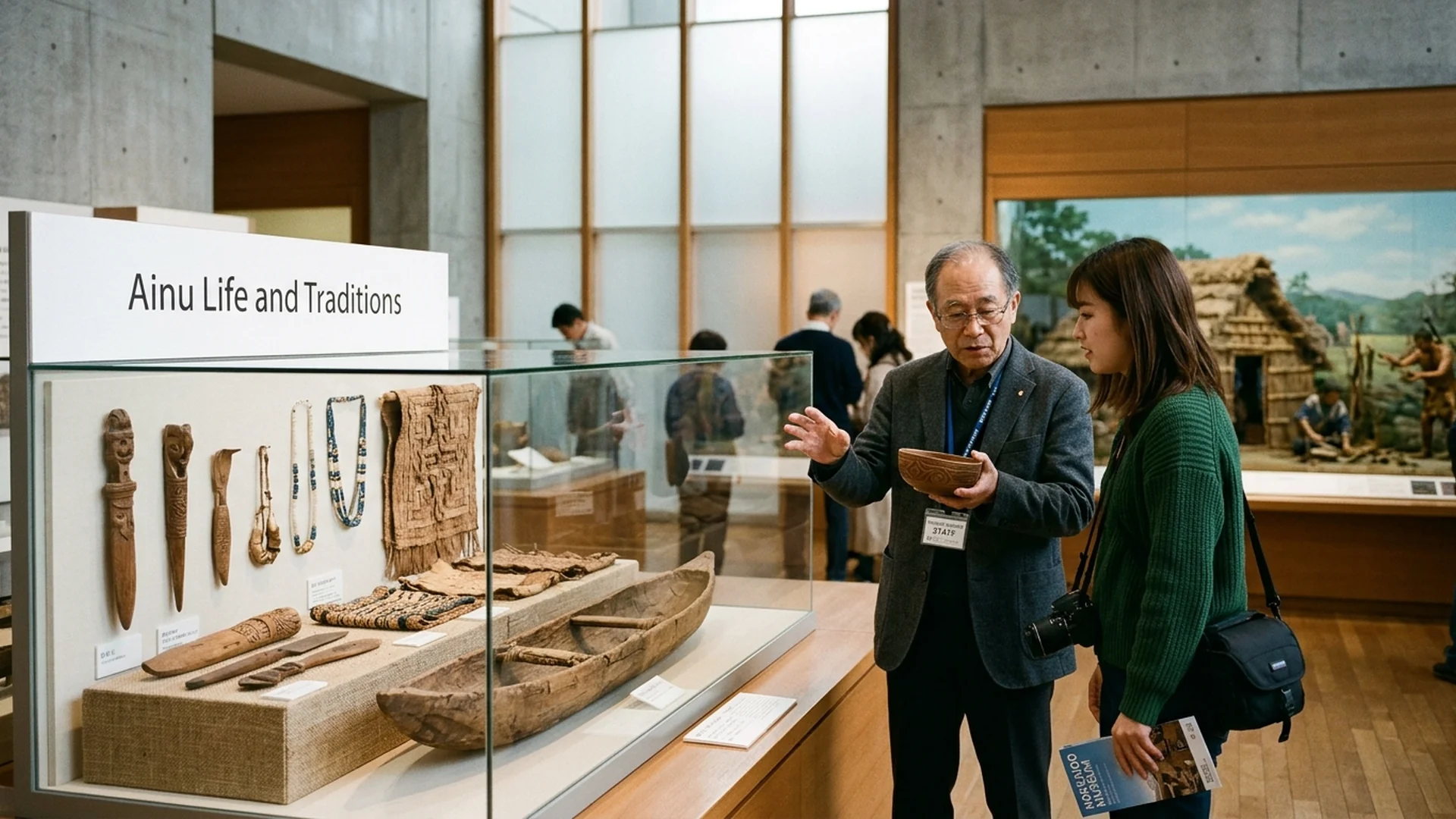
Among the most treasured dimensions of the museum is its dedicated exploration of Ainu culture, the indigenous people of Hokkaido. The exhibitions eloquently convey an existence lived in complete concert with the natural world, featuring meticulous recreations of traditional homesteads known as Kotan, authentic hunting gear, and garments adorned with intricate geometric embroidery. The Ainu maintain an animistic worldview wherein every element of nature—from towering peaks and rushing rivers to wild beasts—possesses its own sacred spirit worthy of deep reverence. Contemplating these ritual artifacts yields a profound appreciation for a sustainable philosophy of environmental coexistence, one that endures as the cultural DNA of the island.
Pioneer Eras and the Metamorphosis into Modern Society
Beyond ancient roots, the museum chronicles the monumental societal shifts of the Meiji period, when settlers from Honshu began flowing northward to carve out new habitations. The curated displays recreating pioneer lifestyles, early transportation networks, and nascent industries reflect the unwavering resilience and fortitude of those who confronted the formidable northern climate. This intricate synthesis of indigenous traditions and modern statecraft has ultimately forged Hokkaido’s singular identity and progressive society we witness today.