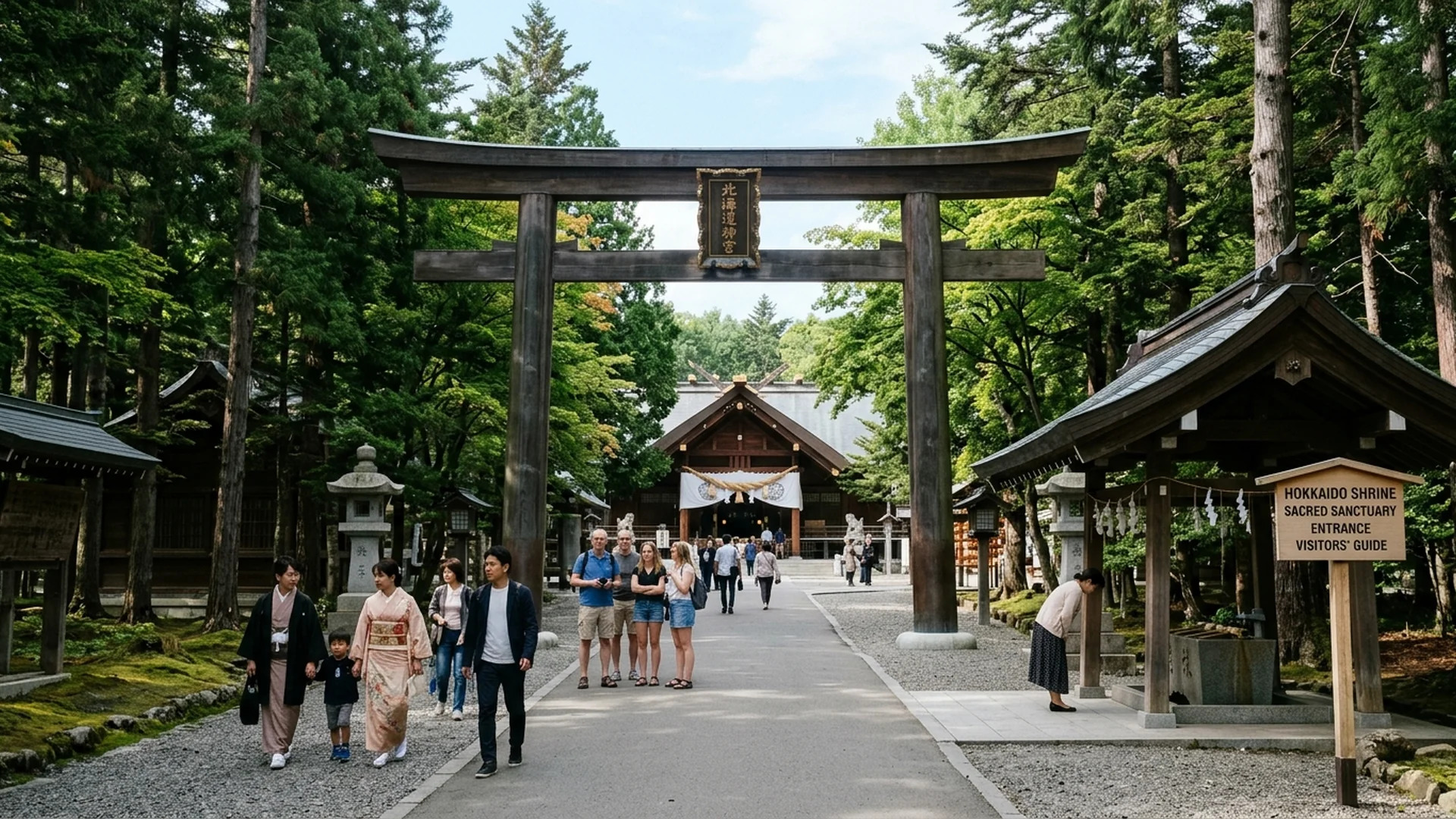
When stepping past the weathered timber torii gates standing sentinel beneath the heavy canopy of Maruyama Park, the restless hum of Sapporo abruptly dissolves, as though absorbed by a quiet veil of time and silent devotion. Hokkaido Shrine is far more than the northern island’s oldest and most consequential Shinto sanctuary; it serves as the beating spiritual heart that has infused vitality and stillness into generations for over a century.
This is a sacred threshold between the human realm and the divine, where the pioneering history of the frontier intertwines with a profound reverence for the natural world. Every footstep upon the immaculate gravel pathway not only leads one toward refined timber architecture but initiates an inner journey of spiritual contemplation amidst a forest canopy that shifts its magnificent palette with the turning of the seasons.
Roots of the Frontier and the Guardian Deities of the North
The narrative of Hokkaido Shrine began alongside the birth of modern Sapporo. In 1869, Emperor Meiji issued an imperial edict to enshrine the deities protecting the colonization and development of the Hokkaido territory upon these distant lands, offering spiritual solace and fortitude to those facing the unforgiving forces of the wild. Later, in 1964, the venerated spirit of Emperor Meiji himself was enshrined within the sanctuary, elevating its significance to become the paramount spiritual nucleus of the region.
The principal architecture reflects the profound simplicity of Shinto philosophy—devoid of superfluous ornamentation yet exuding an austere elegance through timber structures that harmonize seamlessly with the surrounding landscape. The encompassing Maruyama primeval forest has been rigorously preserved, transforming the sanctuary into a sacred sanctuary rich in woodland birds and native squirrels that frequently greet travelers like gentle emissaries of the wild.
The Art of Purification and Ancient Veneration Protocols
To truly comprehend Hokkaido Shrine is to understand the graceful rituals preserved across millennia. The journey commences with a respectful bow before passing beneath the torii gate, followed by a stop at the water purification basin (Temizuya) to cleanse both hands and rinse the mouth with pure water—an act designed to purify physical and spiritual defilements before approaching the divine.
Upon reaching the main sanctuary hall (Haiden), the act of prayer unfolds in quiet mindfulness: tossing a coin into the offering box with a pure intention (avoiding the 10-yen coin, which phonetically suggests severance), bowing twice, clapping hands sharply twice to summon the attention of the deities, offering a silent prayer with utmost humility, and concluding with a deep final bow. These customs transcend mere formality; they serve as mindful disciplines anchoring the traveler fully within the present moment.
Four Seasons of Splendor and the Dimensions of the Power Spot
Hokkaido Shrine exhibits an evolving beauty that shifts mesmerically with the turning seasons. In spring, the grounds transform into one of Sapporo’s most breathtaking venues for simultaneous cherry blossom and plum blossom viewing, where delicate pink petals contrasting against dark architectural eaves create an indelible visual memory. As summer arrives, the Maruyama forest bursts into lush vibrancy, offering crisp, pristine air and soothing shade.
With autumn, the foliage transitions into rich amber and fiery crimson, and when winter descends, heavy blankets of white snow envelop the precinct, muting exterior sounds into a sacred silence. This ethereal ambiance earned the shrine its esteemed reputation as an exceptional power spot—a place that restores mental clarity, dissolves fatigue, and reinstates equilibrium to the soul of the weary wanderer.