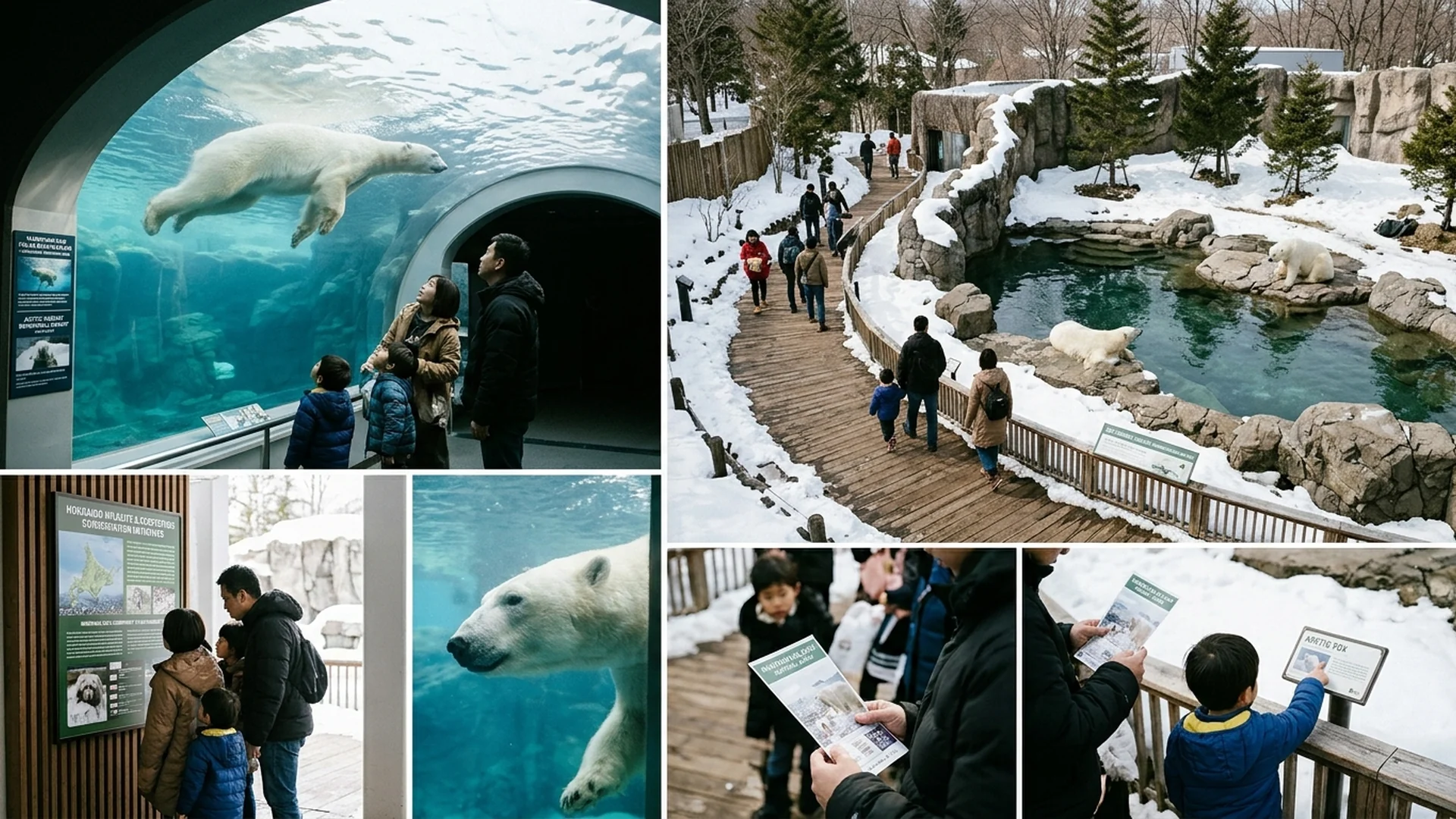
When the morning mist dissipates over the ancient primeval forests in the heart of Sapporo, the whispers of nature emanate not merely from towering pines, but from the quiet boundary where urban civilization meets untouched woodland. Here, Maruyama Zoo redefines the coexistence between humanity and the animal kingdom. Rather than a conventional exhibition space for idle amusement, it serves as an expansive open-air academy reflecting the refined philosophies of eco-architecture and uncompromising animal welfare.
Stepping into Maruyama Zoo Sapporo is akin to crossing a threshold into another dimension, where the tranquil atmosphere of Hokkaido melds seamlessly with meticulous Japanese attention to detail. Eschewing traditional confinement, the sanctuary functions as a simulated natural realm. It invites discerning travelers to lock eyes with majestic polar bears from an unprecedented vantage point: a seamless underwater tunnel engineered to minimize animal stress while delivering an immersive, breathtaking encounter.
Architecture of Life: Designing Spaces for Wildlife Freedom
The conceptual evolution guiding the modernization of Maruyama Zoo over the past decade has fundamentally transformed outdated perceptions of Asian zoological facilities. The internal architecture embraces ‘Landscape Immersion,’ effectively dissolving the visual boundaries between observers and natural animal habitats. The crown jewel, the Polar Bear Pavilion, not only cemented the institution’s reputation as a vanguard of polar conservation but also stands as an engineering masterpiece rooted in animal behavioral science. The exhibit’s aquatic expanse connects directly to an ultra-thick acrylic glass tunnel, granting visitors the surreal sensation of standing beneath swimming polar bears and seals as if descending into the subzero Arctic Ocean, yet enveloped in an atmosphere of profound respect for life.
From Primeval Forest to Sapporo’s Heart: Linking Culture and Nature
What elevates Maruyama Zoo above standard tourist destinations is its peerless geographical setting. Nestled against the wooded foothills of western Sapporo, the zoo immediately abuts Maruyama Park and protected ancient woodlands. The journey to the entrance begins the moment one passes beneath the sacred torii gate and ancient cedar avenues of Hokkaido Shrine. This interplay between spiritual reverence and a temperate forest ecosystem instinctively slows one’s internal rhythm, preparing the traveler’s mind for the contemplative wildlife encounters that follow.
The Aesthetics of Learning: Premium Eco-Exhibits
Beyond the polar exhibits, the zoo’s secondary habitats are executed with equivalent curatorial finesse. The expansive Asian Elephant Facility recreates a humid tropical glade amidst falling northern snows, while native Hokkaido zones house the elusive Blakiston’s fish owl and red foxes thriving in authentic seasonal climates. Signage and educational programming are intentionally subdued, blending harmoniously into the surrounding topography without jarring the senses or disrupting the overarching tranquility. It is an ideal sanctuary for travelers seeking intellectual enrichment paired with unhurried repose.