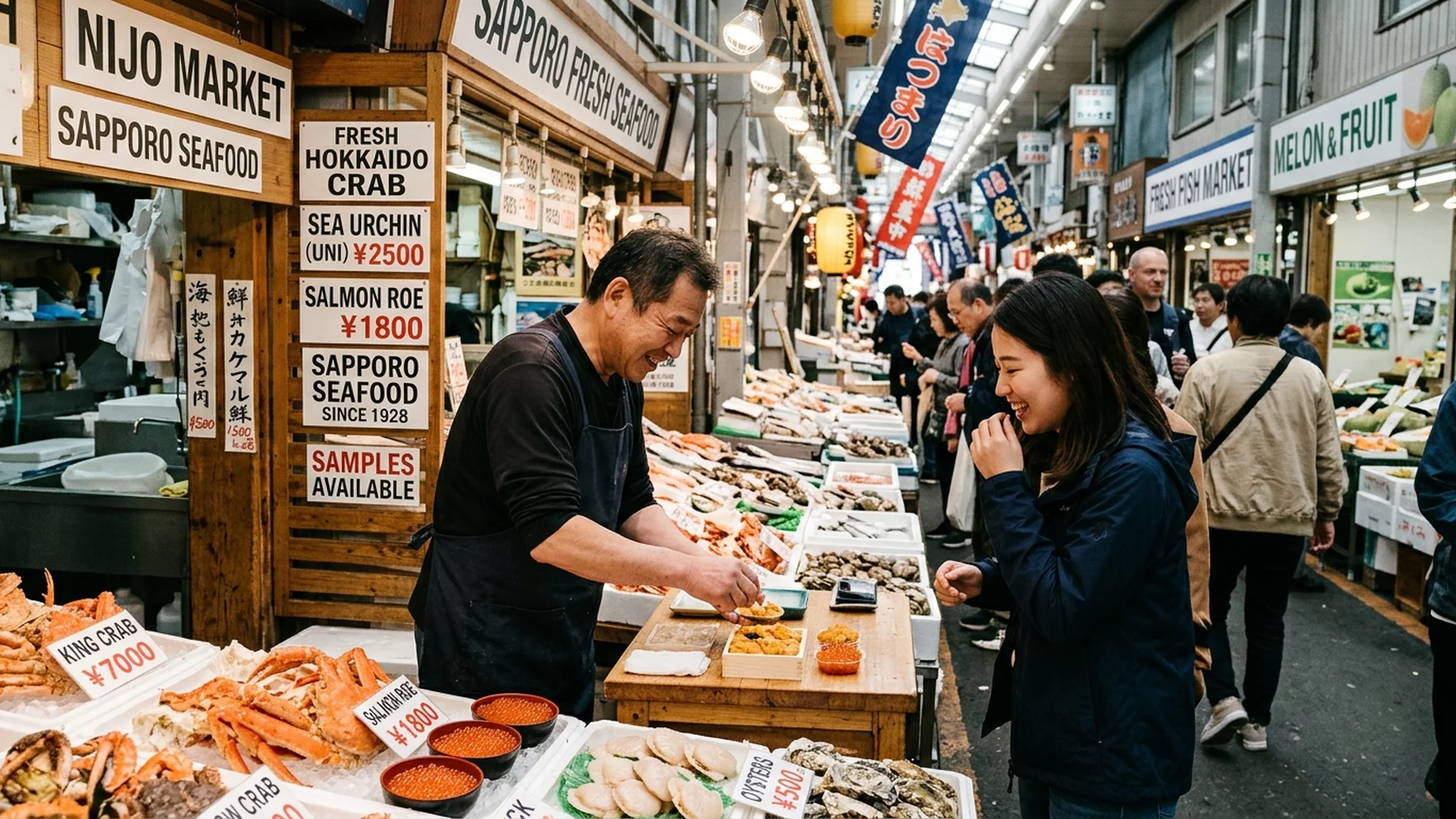
When the first golden light of dawn spills over the skyline of Sapporo, the vibrant pulse of Hokkaido’s capital does not begin with towering skyscrapers or the roar of engines. Instead, it awakens quietly within narrow, fragrant alleys at Nijo Market—a century-old sanctuary for discerning seafood lovers. Far more than a conventional fish market, this historic enclave serves as the beating heart of a culinary culture that seamlessly bridges the nutrient-rich, icy currents of the Pacific Ocean and the Sea of Japan directly to the table.
Stepping into Nijo Market in the early morning hours feels akin to turning the pages of a living manuscript dedicated to reverence for nature and provenance. The delicate, saline tang of the ocean breeze mingles with the enthusiastic greetings of purveyors whose families have honed their craft across generations. Amidst stalls brimming with colossal king crab legs, luminous golden sea urchin, and translucent ruby salmon roe, the market whispers secrets and insider rituals to those who truly appreciate the nuances of exceptional flavor.
A Century-Old Legacy: From Canal-Side Stalls to a Gastronomic Haven
The chronicle of Nijo Market began in the early Meiji era, when intrepid fishermen from the Ishikari Bay brought their freshly caught bounty ashore along the banks of the Sosei River, gradually coalescing into a permanent trading hub. Although time has marched forward and Sapporo’s urban landscape has dramatically evolved, the market’s irreplaceable vintage charm—defined by weathered timber architecture and narrow pathways running parallel to the canal—remains meticulously preserved. Nijo Market acts not merely as a marketplace, but as a living bridge connecting the glorious heritage of Hokkaido’s coastal fishing communities with the sophisticated vibrancy of the northern island’s modern capital.
The Golden Triangle of Flavor: Kaisendon, King Crab, and Uni
The fundamental pillar that secures Nijo Market’s esteemed reputation among international connoisseurs is the uncompromising quality of its hyper-seasonal harvest.
Kaisendon, the quintessential seafood rice bowl, represents a delicate exercise in balance. Plump, perfectly steamed Japanese rice seasoned with bespoke vinegar is crowned with an opulent mosaic of ocean treasures: sweet, pristine scallops (Hotate), melt-in-the-mouth fatty tuna (Maguro), and delicate salmon roe (Ikura) that release a clean, briny freshness upon the palate.
King and Snow Crab—whether magnificent Tarabagani or sweet Zuwaigani—are offered steamed to order directly at storefronts. The flesh yields a natural, oceanic sweetness that requires no superfluous seasoning whatsoever.
Uni (sea urchin) harvested from the pristine waters surrounding Hokkaido is legendary for its rich, custard-like sweetness devoid of any metallic harshness. Bafun Uni, in particular, yields a deep amber hue and an intensely velvety profile that rivals the finest artisanal creams.
Vespertine Dimensions: When Neon Reflects the Noren Alleys
As the sun dips below the horizon and the bustling energy of the morning gives way to evening stillness, Nijo Market reveals a deeply atmospheric alter-ego through ‘Noren Yokocho’ and the surrounding labyrinthine lanes. These intimate alleyways house decades-old izakayas glowing with the warm amber light of paper lanterns against the backdrop of drifting evening snowfall or gentle rain. It is a profoundly welcoming space where travelers can converse quietly with local chefs while sipping exceptional artisanal sake sourced from independent breweries across the island, accompanied by charcoal-grilled seafood delicacies.