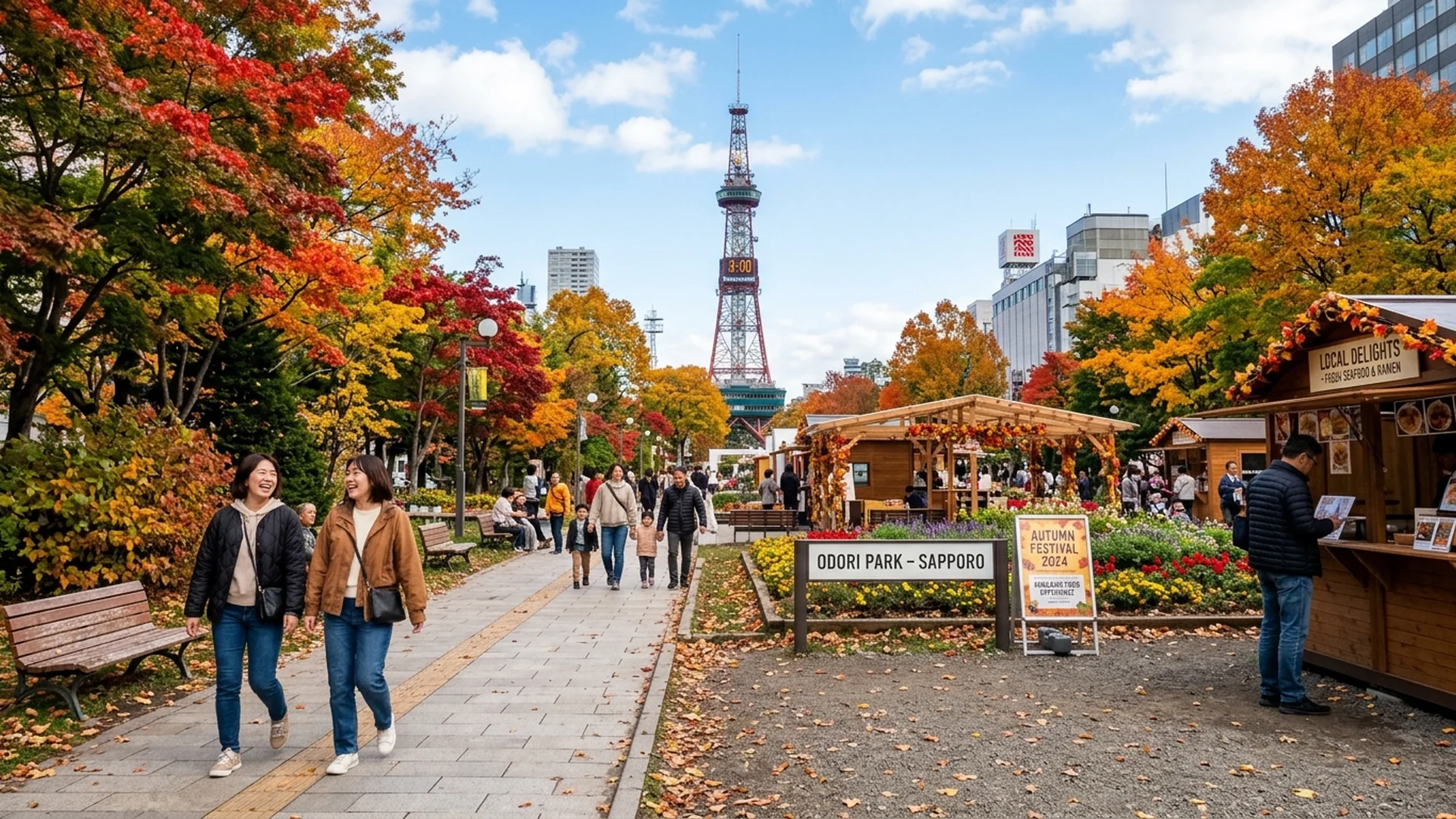
To the casual observer, Odori Park may appear simply as a meticulously manicured strip of greenery stretching some one and a half kilometers through the grid of central Sapporo. Yet, for the discerning traveler, this linear sanctuary is far more than a public park—it is the living pulse and historical core of Hokkaido’s urban identity. Originally conceived in 1869 not as a place of leisure, but as a sweeping firebreak intended to divide the governmental northern district from the commercial southern wards, it has since evolved into an iconic civic canvas.
Over the decades, this former defensive scar has been lovingly transformed into an urban oasis cradled by more than 4,700 trees representing 92 distinct species. It is a space where the echoes of frontier history seamlessly merge with contemporary metropolitan life, inviting both locals and global wanderers to pause, reflect, and witness the unhurried passage of the seasons.
Decoding the 12-Block Grid: From Sapporo TV Tower to the City Archive
To truly appreciate Odori Park, one must read its urban coordinates through the traditional block system known as ‘chome’. The journey begins at its easternmost boundary, Nishi 1-chome, proudly dominated by the Sapporo TV Tower. Standing at an elevation of 147.2 meters since its completion in 1957, this venerable landmark offers travelers an unmatched panoramic vantage point, framing the entire emerald corridor of the park as it cuts cleanly through the city.
As one strolls westward through the central blocks, the landscape unfolds into rhythmic dancing fountains, seasonal floral beds, and striking public art installations such as the ‘Black Slide Mantra’—a bronze masterpiece by acclaimed sculptor Isamu Noguchi that invites tactile interaction with modern art. The promenade ultimately concludes at Nishi 13-chome, home to the Sapporo City Archive Museum. Constructed in 1926 from rugged Ishiyama stone, this magnificent neoclassical structure formerly served as the Court of Appeals before being thoughtfully repurposed to chronicle the architectural and cultural maturation of Sapporo.
Four Seasons, Four Palettes: The Festivals That Drive the City
Odori Park serves as a grand open-air stage, shifting its theatrical backdrop in breathtaking harmony with nature’s cycle. In spring, as the soil warms around May, the air fills with the delicate fragrance of blooming lilacs during the Sapporo Lilac Festival, honoring the city’s official floral emblem with cultural exhibitions and outdoor wine gatherings.
As summer arrives, the park erupts into its most vibrant incarnation with the Odori Beer Garden, one of Japan’s largest and most celebrated outdoor celebrations. Here, residents and visitors gather beneath a canopy of mature elms to toast the fleeting yet glorious northern sun. Autumn brings the Sapporo Autumn Fest, a culinary pilgrimage celebrating the finest agricultural bounty from across Hokkaido’s fertile plains and coastal waters.
When winter casts its pristine white veil, Odori transforms into the ethereal main stage for the Sapporo Snow Festival. Towering ice sculptures and intricate snow art draw millions of admirers, eventually glowing under the enchanting illuminations of the Sapporo White Illumination, bringing warmth to the crisp polar nights.
Legendary Street Food and the Art of Insider Leisure
A sensory immersion in Odori Park is incomplete without savoring its signature seasonal street delicacies. Chief among them is ‘Toukibi’, fresh Hokkaido corn grilled over open coals and brushed with rich, aromatic butter, filling the crisp air with an unmistakable fragrance. Equally cherished are piping-hot jacket potatoes topped with locally churned creamery butter—simple yet profound tributes to Hokkaido’s agricultural excellence.
For discerning travelers seeking privacy and effortless refinement, selecting a residence overlooking the tree-lined promenades and the glowing TV Tower offers an exquisite private view. From these vantage points, one can seamlessly descend into the underground pedestrian network, Chi-Ka-Ho, allowing for seamless exploration of the city regardless of winter’s chill or summer’s warmth.