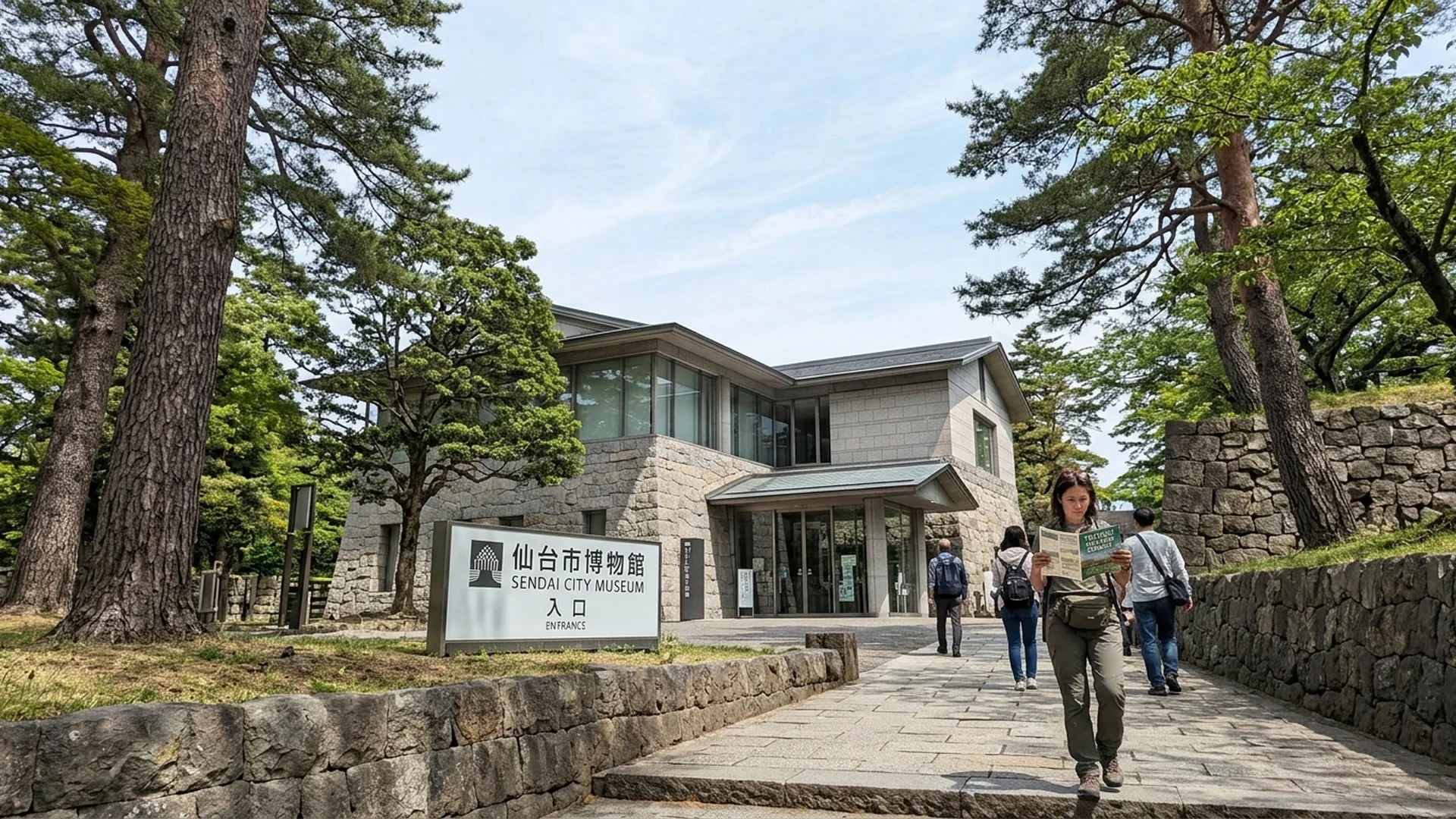
When the relentless rhythm of the metropolis yields to the gentle rustling of emerald foliage, Sendai emerges as the dignified heart of the Tohoku region—a city deeply imbued with ancestral memory and refined contemporary living. Revered as Mori no Miyako, or the ‘City of Trees,’ this northern sanctuary is far more than a mere transit stop; it is a tapestry woven with the formidable legacy of Date Masamune, the legendary ‘One-Eyed Dragon’ whose visionary leadership shaped the cultural bedrock of northern Japan.
To journey through Sendai is to unlock a profound and contemplative dimension of travel. Here, magnificent historical architecture such as the luminous Zuihoden mausoleum stands in serene dialogue with untouched natural landscapes and world-class mineral springs. This editorial invites discerning travelers to look beyond the ordinary and immerse themselves fully in the peerless elegance of Sendai.
Footprints of the Dragon: The Heritage and Architecture of the Date Clan
The narrative of Sendai unfurls in the early 17th century, when the charismatic warlord Date Masamune established this domain as the political and cultural epicenter of northern Japan. Echoes of that formidable era still resonate at the Sendai Castle Ruins, locally known as Aoba Castle. Though the primary timber structures no longer stand, the commanding clifftop vantage point offers sweeping panoramas of the modern metropolis below, silently bearing witness to the enduring vision of its founder.
Just a short distance away lies Zuihoden, the breathtaking final resting place of Masamune. Executed in the opulent Momoyama architectural style, the mausoleum is a masterpiece of intricate wood carvings embellished with rich lacquer and gold leaf. Nestled amid towering, centuries-old cryptomeria trees that cast a perpetual, reverent shade, this sacred site stands as a breathtaking monument to an era of unbridled artistic flourishing.
A Symphony of Taste: Charcoal-Grilled Beef Tongue and Artisanal Sakes
No exploration of Sendai is culturally complete without experiencing Gyutan, the city’s legendary charcoal-grilled beef tongue. Born in the post-World War II era, this local delicacy has been elevated to an art form by master culinary craftsmen. Specially selected cuts of beef tongue are meticulously sliced to precise thicknesses, seasoned with proprietary blends of salt and spices, and flame-grilled over binchotan charcoal until smoky and tender. Served alongside savory barley rice, rich oxtail broth, and piquant miso-pickled green peppers (Miso Nanban), it delivers an unforgettable harmony of texture and depth.
Furthermore, Sendai serves as a gateway to pristine mountain waters and fertile rice fields, yielding some of Japan’s most celebrated artisanal sakes. Enjoying a glass of premium junmai daiginjo from a local historic brewery, paired with freshly caught seafood harvested from nearby Matsushima Bay, offers a sensory journey that captivates the sophisticated palate.
Akiu Onsen: A Quiet Sanctuary Within the Forested Valley
Venturing westward into the tranquil mountain valleys reveals Akiu Onsen, a thermal spring sanctuary with a history spanning over a millennium, once frequented by emperors and feudal samurai alike. Today, this storied valley has evolved into a premier destination for holistic wellness, where design-forward boutique ryokans and luxury hot spring resorts integrate seamlessly with the surrounding wilderness.
Soaking in an open-air rotanburo bath while crisp autumn foliage blazes overhead or pristine winter snow blankets the landscape—accompanied by the gentle murmur of the Natori River—provides a deeply restorative form of natural therapy. This is complemented by the immaculate, intuitive hospitality of traditional omotenashi, offering an authentic expression of Japanese grace.