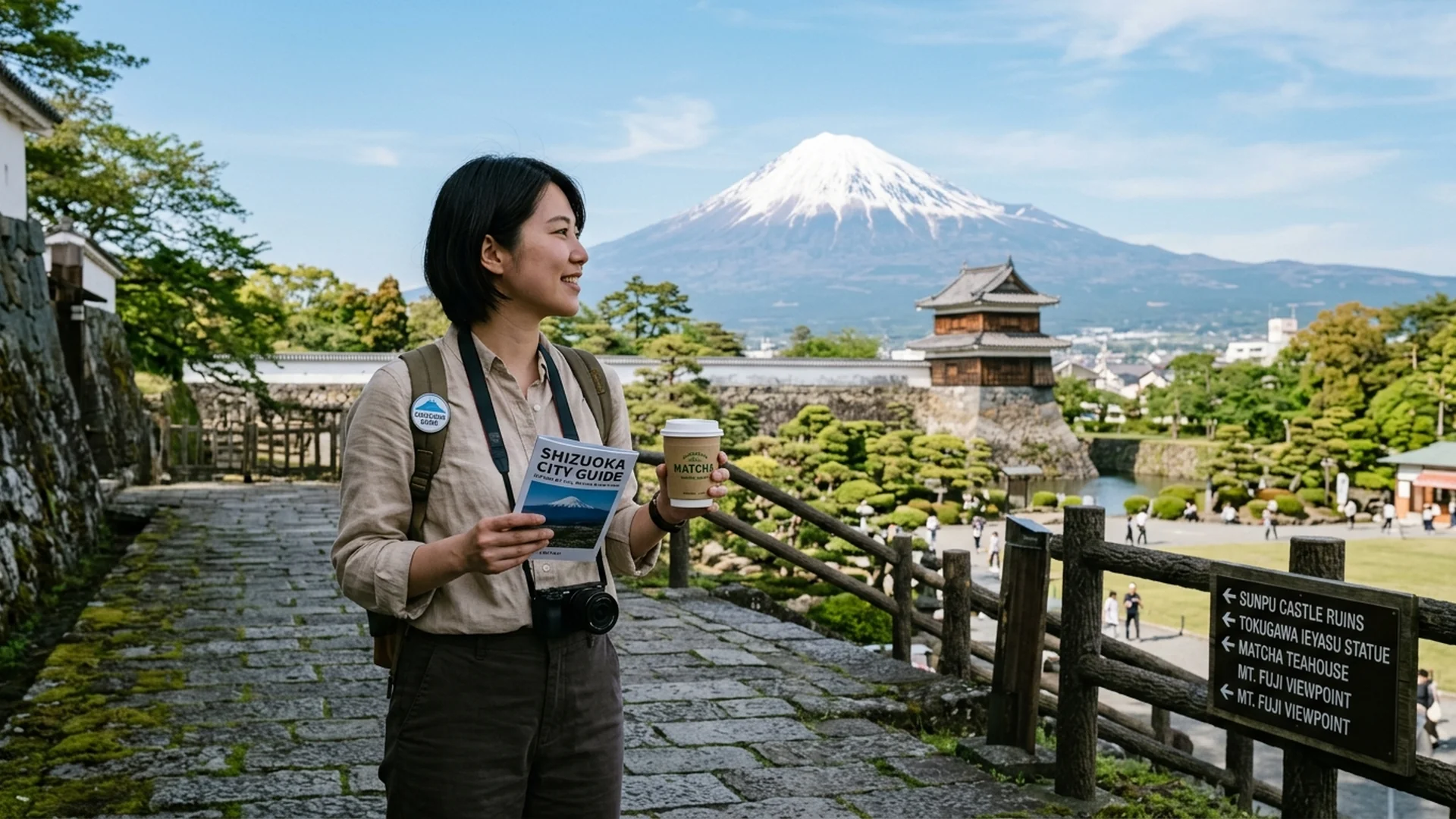
To many global travelers, Mount Fuji appears merely as a fleeting, snow-capped silhouette glimpsed from the window of a speeding Shinkansen. Yet, there exists a sacred territory that more intimately embraces the sublime geometry of this legendary peak than any other. Shizuoka is often casually dismissed as a mere transit stop, yet for the discerning traveler seeking unhurried, contemplative luxury, it reveals itself as a masterpiece painted by both nature and history.
As the morning mist lifts across the horizon, Shizuoka unveils breathtaking panoramas of Fuji-san casting its serene reflection upon tranquil bays and ancient pine forests. This visual poetry converges with the stately echoes of Edo-period samurai heritage and the delicate, grassy aroma of premium green tea drifting gently on the mountain breeze. Here lies an invitation to step beyond the hurried pace of modern tourism and immerse oneself in a refined Japanese journey of profound spiritual and aesthetic resonance.
Architecture of the Horizon: Where Kengo Kuma Frames Mount Fuji
Appreciating Mount Fuji in Shizuoka transcends mere sightseeing; it is an intimate engagement with architecture designed to converse seamlessly with the natural world. The journey begins fittingly at the Nihondaira Yume Terrace, a hilltop observation sanctuary conceived by world-renowned architect Kengo Kuma. Crafted from locally sourced cedar, this elegant octagonal structure dissolves boundaries, offering seamless transitions between interior stillness and expansive exterior vistas. Ascending to the rooftop viewing platform reveals a magnificent 360-degree panorama encompassing Suruga Bay, the bustling port of Shimizu, and the commanding presence of Fuji-san, standing like a timeless ink-wash painting against the sky.
Not far away lies Miho no Matsubara, a legendary seven-kilometer shoreline embroidered with emerald-green pine trees against black volcanic sands, with Mount Fuji providing an immortal backdrop. This ethereal landscape has stirred the souls of poets and painters for centuries. To stroll beneath the canopy of ancient pines while listening to the rhythmic percussion of gentle waves is to experience the true essence of tranquil retreat from the modern world.
The Imprint of Power: Remembering Shogun Tokugawa Ieyasu
Shizuoka’s allure extends far beyond its natural topography; it remains a hallowed ground of Japanese political history. As the final residence and retirement sanctuary of Tokugawa Ieyasu—the visionary warlord who unified Japan and established the Edo shogunate—the region is deeply intertwined with the nation’s dynastic roots.
Perched dramatically upon a steep coastal cliff, Kunozan Toshogu Shrine serves as the original resting place of Ieyasu. The complex showcases exquisite Gongen-zukuri architecture, adorned with intricate lacquered wood carvings and brilliant gold leaf that reflect the opulent aesthetics of the era. Ascending the thousand winding stone steps through ancient woodlands imparts a palpable sense of stepping back into the age of the samurai. Meanwhile, in the urban heart of the city, Sumpu Castle Park preserves the historic moats and formidable stone ramparts alongside an ancient citrus tree personally planted by Ieyasu, offering a quiet, contemplative sanctuary steeped in bygone eras.
The Gastronomy of Shizuoka: Volcanic Soil and Tidal Riches
The exceptional bounty of Shizuoka is eloquently expressed through a culinary culture deeply anchored in its unique geography. As Japan’s premier and most prolific green tea producer, the region benefits from sloping hillside plantations caressed by gentle sunlight and pure mountain mists originating from Mount Fuji. This terroir bestows upon Shizuoka tea leaves a complex, harmonious flavor profile characterized by deep umami and lingering sweetness. Engaging in a traditional tea ceremony amidst rolling emerald plantations offers a sensory meditation found nowhere else.
Beyond green tea, Shizuoka is the proud birthplace of Japan’s finest wasabi, cultivated meticulously using crystal-clear spring water filtered through volcanic strata. Grated authentically upon traditional sharkskin boards, fresh wasabi yields a delicate, fragrant pungency with subtle natural sweetness. Paired with pristine marine harvests—most notably the translucent pink Sakura shrimp of Suruga Bay, harvested only twice a year—the dining experience celebrates the quiet, seasonal perfection of local ingredients.