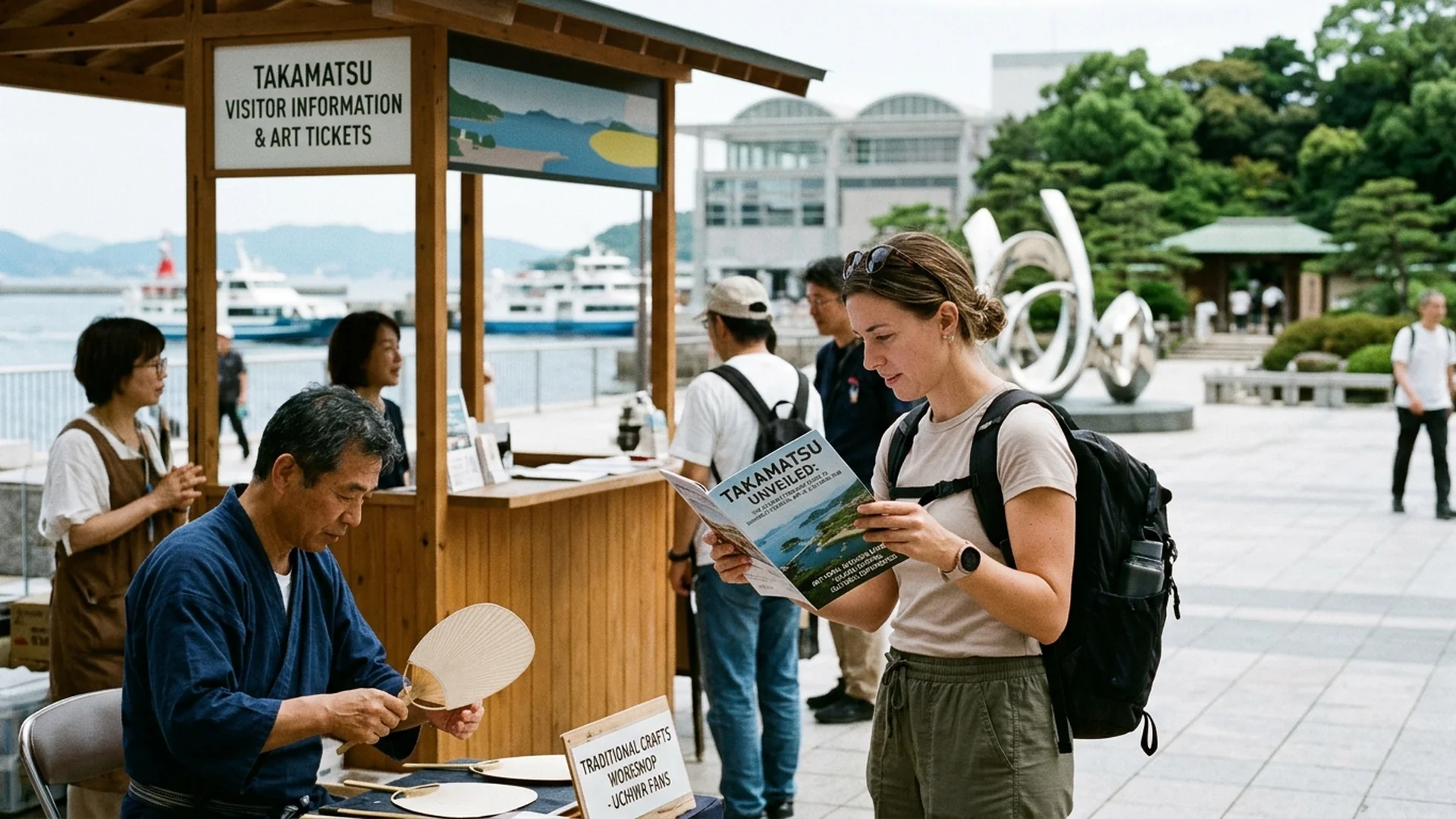
For too long, Takamatsu has been viewed merely as a fleeting transit hub on the rugged island of Shikoku—a convenient bridge connecting high-speed Honshu to the magnetic art islands of the Seto Inland Sea. Yet beneath its quiet coastal facade lies a profound spirit of craftsmanship polished over centuries. From shimmering waters dotted with emerald islets and Michelin-starred landscape gardens that unfold like living scrolls, to sleek contemporary architecture harmonizing effortlessly with ancient traditions, Takamatsu is far more than a stopover. It is a premier destination for discerning travelers ready to slow down and immerse themselves in the quiet rhythm of the coast.
To experience Takamatsu with genuine depth is to embrace wabi-sabi, the aesthetic of understated grace. The tranquil, glass-like expanse of the Setouchi Inland Sea serves as a natural canvas for world-class installations, while the genuine warmth of its people and legendary culinary heritage imbue every footstep with meaning. Crossing into Takamatsu is like opening a grand doorway to the true, unhurried beauty of Shikoku.
Ritsurin Garden: A Poetic Symphony of Edo-Era Landscape and Living Art
If art is the deliberate arrangement of emotion, Ritsurin Garden is a literary masterwork written in pine, water, and stone. Spanning centuries of meticulous care since its daimyo era origins, this expansive strolling garden leans against the forested slopes of Mount Shiun. Designed around the chisen-kaiyushiki style—a grand pond-centric circuit—every footstep across arched stone bridges, past moss-draped stone lanterns and centuries-old pines meticulously pruned by master gardeners, reveals a cinematic shift in perspective.
The pinnacle of experiencing Ritsurin in high luxury is pausing at Kikugetsutei, the historic teahouse perched gracefully over the primary pond. Here, sipping freshly whisked matcha paired with seasonal confectionery while watching gentle ripples mirror the sky and weeping canopies offers a suspended moment in time, where every sense harmonizes completely with the surrounding natural world.
The Setouchi Gateway: Contemporary Art Amidst an Archipelago of Glass
From the shores of Takamatsu, the Seto Inland Sea acts as a cultural silk road stretching toward legendary art islands such as Naoshima and Teshima. Boarding a private yacht or premium ferry from the central harbor, travelers glide across mirror-calm waters to reach sanctuaries where Tadao Ando’s subterranean concrete architecture merges seamlessly with open-air installations.
The true privilege of basing oneself in Takamatsu is the duality it offers: the comfort of refined urban amenities by night, paired with meditative encounters with secluded museums, fishing villages turned gallery spaces, and pristine coastal dining. It is an ideal cadence for the global connoisseur in search of enduring creative inspiration.
An Aesthetic of Taste: From Sanuki Udon Heritage to Seaside Kaiseki
Kagawa Prefecture is celebrated across Japan as the undisputed kingdom of udon, with Takamatsu reigning as its culinary capital. Sanuki udon is celebrated for its legendary koshi—a firm, springy texture achieved through the ancestral technique of foot-kneading dough and precise temperature control. Savoring high-craft Sanuki udon is an intimate exploration of simplicity, from atmospheric neighborhood mills to pristine culinary ateliers serving bowls enriched with deeply umami iriko (dried sardine) broth.
As evening descends, Takamatsu’s culinary scene expands into refined kaiseki dining, highlighting the immaculate bounty of the Setouchi Sea. From wild red sea bream (tai) and pristine Sakaide oysters to olive-fed hamachi—a prized local yellowtail raised on nutrient-rich olive leaves—the flavors here are unmatched anywhere else in the archipelago.