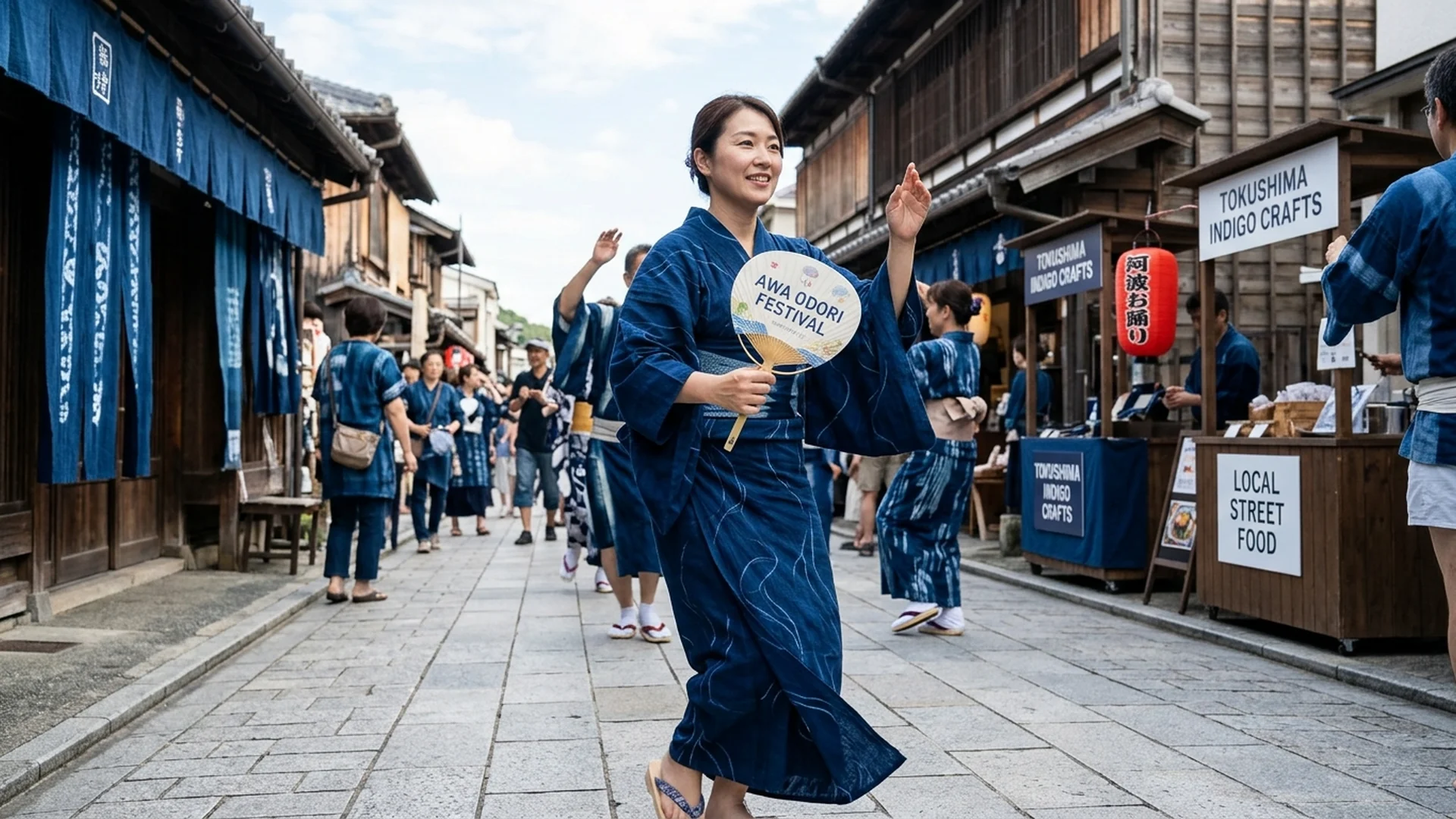
As the gentle breezes of Shikoku sweep across the tranquil waters of the Yoshino River, the resonant beat of the taiko drum and the hauntingly clear notes of the shinobue flute rise in an intoxicating cadence. This is the living breath of Tokushima, a destination that transcends the ordinary notion of a transit point to serve as the cultural heartland of the island, elegantly weaving ancient heritage with the present. Framed by emerald mountains and preserved architecture, this venerable city invites discerning travelers seeking profound cultural meaning to step into a rhythm driven by centuries of artistic wisdom.
To journey through Tokushima is to open a gateway to an unblemished dimension of Japan, where the restless pace of the modern world surrenders to exquisite craftsmanship in every detail. Whether it is the expressive folding fans and iconic footwork of a world-renowned folk dance, the natural botanical indigo heritage globally revered as Japan Blue, or sweeping panoramic vistas stretching from misty mountain peaks across island-dotted waters, Tokushima awaits those willing to decode the quiet beauty hidden beneath graceful simplicity.
The Rhythm of the Soul: Awa Odori and the Undying Heritage of Joy
The classic adage—“Fools who dance and fools who watch are equally foolish; since both are fools, why not dance?”—captures the fiercely joyful, egalitarian spirit of the Awa Odori festival. While this legendary summer celebration draws millions of revelers to the streets every August, the Awaodori Kaikan provides a sanctuary for travelers visiting outside the festival season to commune with these cultural roots. Within this cultural nexus, visitors enjoy intimate performances by professional troupes, experience the visceral heartbeat of traditional instrumentation, and learn the characteristic ‘Yattare-yattare’ footwork under the guidance of dedicated cultural custodians, deepening one’s appreciation for the psychological and historical resilience of the local people.
Hues of Time: Awa Ai and the Enigmatic Allure of Japan Blue
If Awa Odori is the auditory pulse of Tokushima, then Awa Ai—the natural indigo of the Yoshino River basin—is its visual poetry. Historically prone to flooding, the river valley yielded mineral-rich alluvial soils ideal for cultivating indigo plants, transforming Tokushima into Japan’s paramount indigo-producing region. The arduous fermentation process of dried indigo leaves, known as sukumo, demands profound patience, generational intuition, and an intimate dialogue with the elements. Today, artisan indigo workshops welcome connoisseurs to dye textiles by hand, revealing the soft tactile luxury and mesmerizing deep oceanic hues that Western admirers famously termed Japan Blue, embodying a philosophy of austere yet powerful elegance.
Aerial Perspectives and Local Terroir: Mount Bizan and Regional Gastronomy
Comprehending Tokushima’s geographic soul begins by boarding the Mount Bizan Ropeway to the summit of the solitary peak rising directly behind the urban core. The elevated vantage point unfurls a cartography of the city embraced by the branching tributaries of the Yoshino River, stretching toward the distant folds of the Shikoku mountain range and the glittering sea. On crisp days, this landscape bathes in a soft golden luminescence, engendering a profound sense of stillness and visceral connection to the surrounding topography.
As twilight descends, the cultural odyssey finds its natural extension in the region’s distinctive culinary identity. Tokushima ramen stands apart through its rich, slow-simmered pork bone broth infused with deep soy sauce notes, traditionally crowned with sweet-savory braised pork belly and a raw egg yolk to temper its robust flavors. Furthermore, the maritime bounty of the coastal location provides pristine seafood, yielding seasonal masterpieces from prized local shellfish to delicate coastal catches.