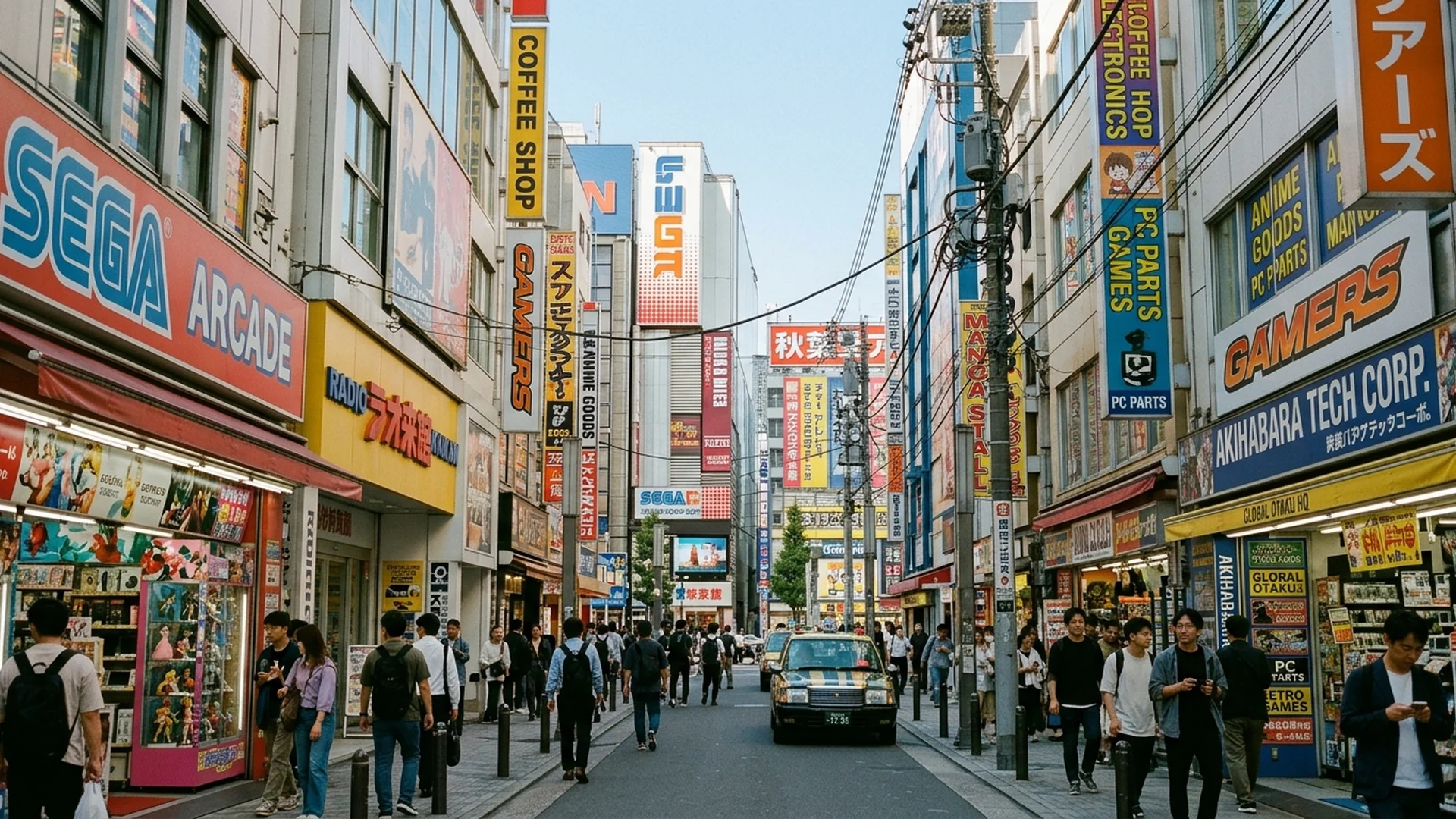
Stepping into Akihabara, one is immediately enveloped by a symphony of luminescent neon and the energetic resonance of towering cinematic displays, feeling as though one has crossed the threshold into a distant tomorrow. Yet beneath the hyper-modern veneer and the globally resonant currents of pop culture lies a lineage born directly from the scarred landscape of post-war Tokyo. What began as humble roadside stalls trading scavenged vacuum tubes and radio components along the railway tracks has burgeoned into one of humanity’s most influential crucibles of technology and subculture.
To truly comprehend Akihabara is to embark on an unhurried journey across the strata of time. Here, the enduring Japanese philosophy of artisan craftsmanship and meticulous invention—monozukuri—has merged with the boundless imagination of anime, manga, and cybernetics. The result is a profound paradigm of contemporary cultural travel that discerning voyagers with an eye for refined nuance simply cannot overlook.
Centuries in the Making: From Vacuum Tubes to Technological Frontier
The narrative of Akihabara unfurled in the late 1940s amidst the ruins of post-war reconstruction. Beneath the rail bridges spanning Kanda and Akihabara, makeshift stalls congregated to trade surplus military radio components and electrical supplies left behind by United States forces. Students from Tokyo Technical Institute frequented these makeshift markets to source raw materials for their studies, gently guiding the area’s transformation into a thriving black market and, eventually, Japan’s preeminent legal electronics marketplace.
As the decades shifted into the 1970s and 1980s, Akihabara blossomed into the quintessential ‘Electric Town.’ It stood as the pioneering ground where residents first encountered domestic electric rice cookers, color televisions, and pioneering personal computers. This fervent obsession with technical innovation served as the primordial fuel for the subsequent birth of ‘otaku’ culture, as forward-thinking engineers and young inventors began casting their creative sights toward animation, computer gaming, and bespoke circuit design.
The Pop Culture Metropolis: Hunting Masterpiece Rarities
Today, when connoisseurs speak of Akihabara, the domestic kitchen appliances of yesteryear have yielded to multi-story monoliths brimming with contemporary pop culture artifacts. Yet one must avoid the superficial assumption that this district caters solely to fleeting youth trends. For the high-net-worth collector, Akihabara functions as a contemporary archaeological vault. Establishments such as the sprawling Mandarake Complex and the modern incarnations of Radio Kaikan harbor hidden relics ranging from first-edition manga printed in the 1960s to hand-crafted, limited-edition resin model figures, alongside immaculate vintage analog cameras and rare European lenses polished to absolute perfection.
The uncompromising curation practiced by independent boutiques tucked away in Akihabara’s side alleys reflects the rigorous standards of Japanese collectors. Every component, every box condition, and every original certificate of authenticity undergoes painstaking scrutiny. Consequently, acquiring a collectible here transcends conventional shopping; it becomes an intimate act of appreciating preserved milestones of cultural history.
Layered Architecture and the Social Tapestry of Anime City
A deeply rewarding exploration of Akihabara requires looking far beyond the glowing storefront signboards. The district’s architectural anatomy is fascinating in its verticality. A single commercial building often contains entirely disparate, micro-cosmic worlds: a subterranean basement might house rare anime soundtrack vinyl, the first through third floors may showcase contemporary masterwork figures, while the uppermost tier could conceal an intimate enthusiast café or a custom mechanical keyboard workshop.
The cadence of human life here pulses with rapid momentum yet remains anchored by profound discipline and an innate respect for personal space. Whether observing seasoned gamers lingering over vintage arcade cabinetry or younger generations adorned in avant-garde street fashion intertwined with subtle cosplay, every human element propels the district forward as a living, breathing organism that refuses to sleep.