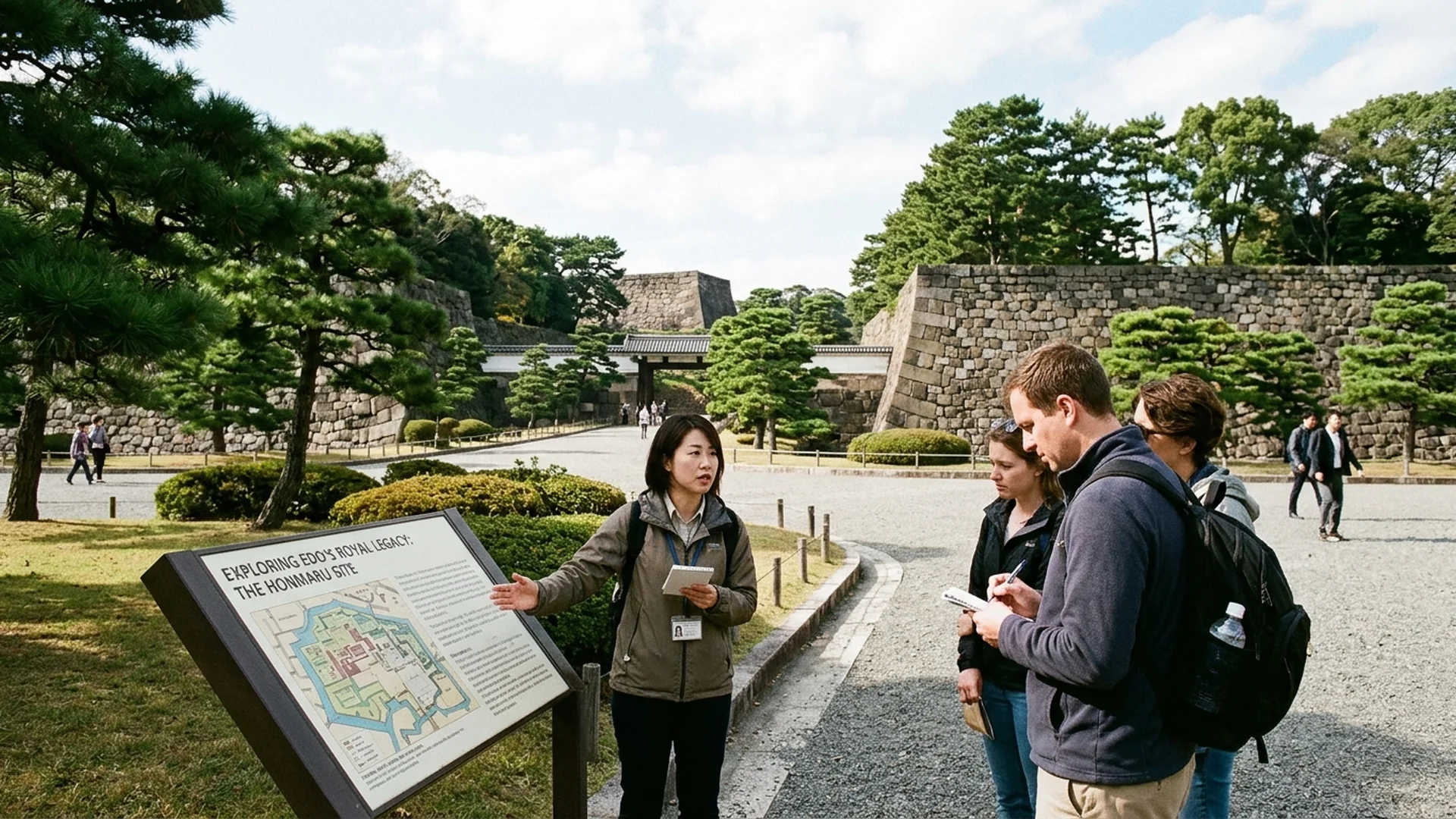
Crossing the threshold of the Otemon Gate into the imperial precinct, the restless hum of Tokyo’s modern metropolis slowly fades away, as though the towering granite fortification walls act as a formidable shield against the passage of time. Here lies the Imperial Palace East Gardens, a domain that is far more than a mere urban oasis. It is a profoundly hued canvas of Japanese history, once serving as the beating heart of Edo Castle and the formidable seat of power for the ruling Tokugawa shogunate.
To wander through these sacred grounds is to step across the threshold of centuries, retracing the footsteps of samurai through surviving architectural whispers. From soaring castle keep foundations to moat waters that mirror the sleek glass monoliths of the skyline beyond, the East Gardens offer an exquisite synthesis of bygone imperial glory and contemporary contemplative stillness. It invites the culturally attuned traveler to engage with its heritage through an open and reverent heart.
Monuments in Stone: The Enduring Legacy of Edo Castle’s Foundations
Beneath the pristine, manicured lawns of the East Gardens lies the formidable architectural heritage of Edo Castle. Though the grand wooden keep was lost to the ravages of fire long ago, its structural skeleton stands defiant against the elements. The focal point of this historic precinct is the Tenshudai—the stone foundation of the primary keep. Constructed from colossal boulders meticulously stacked without mortar, this masterpiece of ancient Japanese engineering reflects the defensive military prowess of the Edo period. Standing atop these ancient stones, one can readily envision the Shogun surveying his domain as crisp mountain winds sweep across centuries-old crevices.
Botanical Poetry: Ninomaru Garden and High Japanese Landscape Art
Tucked away in the southeastern quadrant lies the Ninomaru Garden, meticulously revived according to original Edo-period blueprints. Designed in the kaiyushiki style—a traditional strolling garden centered around a tranquil pond—it miniaturizes the natural world with miniature mountains, cascading waterfalls, and winding streams where koi glide with meditative grace. The garden is famed for its rotating seasonal floral displays and exquisite iris gardens. Nearby, the Suwacho Archive offers discerning visitors a curated glimpse into imperial artifacts and the intricate chronicles of the royal precinct.
The Art of Stillness: Perfect Vantage Points and Timing
To truly absorb the atmospheric gravity of the Imperial Palace East Gardens, timing is everything. The early morning hours, immediately following the opening of the gates, offer an ethereal tranquility. Soft morning light dances across the moat waters and venerable pine branches, casting elongated shadows upon dew-kissed lawns far from the tourist throngs. Strolling down these shaded paths provides a striking juxtaposition between ancient stone fortifications and the gleaming glass towers of Marunouchi—a powerful visual testament to Tokyo as a city where past and future exist in profound harmony.