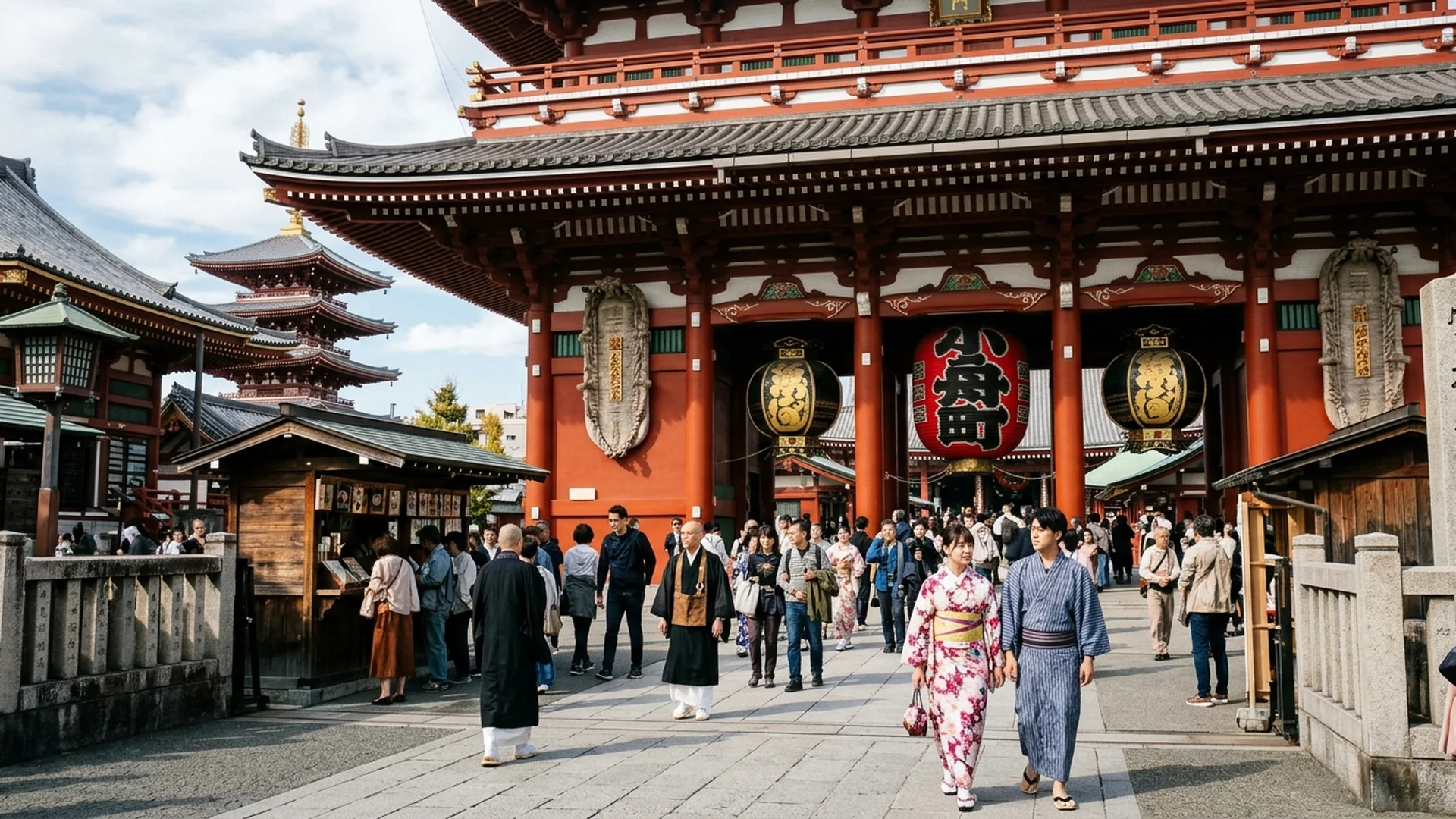
Amidst the ceaseless momentum of Tokyo, a sacred enclave endures as an effortless bridge between bygone eras and the present day. Senso-ji, affectionately known as Asakusa Temple, transcends the designation of a conventional landmark; it is the enduring spiritual core of the metropolis, boasting a history spanning more than fourteen centuries.
Crossing beneath the monumental crimson gates into this hallowed sanctuary feels akin to turning the pages of history back to the Edo period. The delicate scent of burning incense, the soft cadence of murmured chants, and an atmosphere thick with quiet devotion combine to weave a spell that draws pilgrims and discerning travelers alike. Here, one discovers a depth of meaning far beyond the surface of a casual snapshot.
Roots of Faith: The Legend of the Sumida River and Edo Architecture
The chronicle of Senso-ji commenced in the year 628, when two fisherman brothers, Hinokuma Hamanari and Takenari, cast their nets into the Sumida River and retrieved a golden statue of Kannon, the Bodhisattva of Compassion. Though they repeatedly returned the sacred image to the flowing waters, the statue miraculously reappeared. Recognizing its divine sanctity, the village elder consecrated his own home as the capital’s inaugural temple.
Though reconstructed through the centuries following historical tumult, the present architecture faithfully preserves the grandeur of classical Mahayana Buddhist design. The principal hall and the towering five-story pagoda reflect the exquisite precision of Japanese master carpenters, embodying an unbroken generational commitment to preserving cultural heritage amidst an ever-changing world.
Decoding Symbols: Kaminarimon, Nakamise-dori, and Tokyo’s Red Lantern
Entering the inner sanctum of Senso-ji is an immersive visual and sensory ritual. The journey begins at Kaminarimon, the ‘Thunder Gate,’ instantly distinguished by its massive red lantern weighing over 700 kilograms. Bearing the inscribed kanji for ‘Fu-rai-jin-mon’ (Gate of the Gods of Wind and Thunder), it is flanked by stalwart guardian deities.
Beyond the threshold lies Nakamise-dori, one of Japan’s oldest shopping promenades. Lined with century-old family merchants, it offers traditional crafts, age-old delicacies such as Ningyo-yaki (sweet red bean sponge cakes), and regional artisanal goods. This historic corridor gently calms the mind and focuses the spirit before one steps into the inner sacred grounds.
The Art of Devotion: A Guide to Sacred Rituals and Ancient Customs
To truly comprehend Senso-ji is to master the etiquette of reverence. The journey begins at the Chozuya, a bronze pavilion where visitors cleanse their hands and rinse their mouths to purify body and mind before approaching the altar.
Before the vast bronze incense burner, patrons gently wave the fragrant smoke toward areas needing healing or blessings, believing the sacred vapor possesses protective and restorative properties. Within the main hall, the revered image of Kannon rests in boundless mercy. Offering quiet prayers with a tranquil mind and engaging in Omikuji—the ancient art of drawing sacred fortune slips—offers a deeply reflective spiritual encounter that no traveler should bypass.