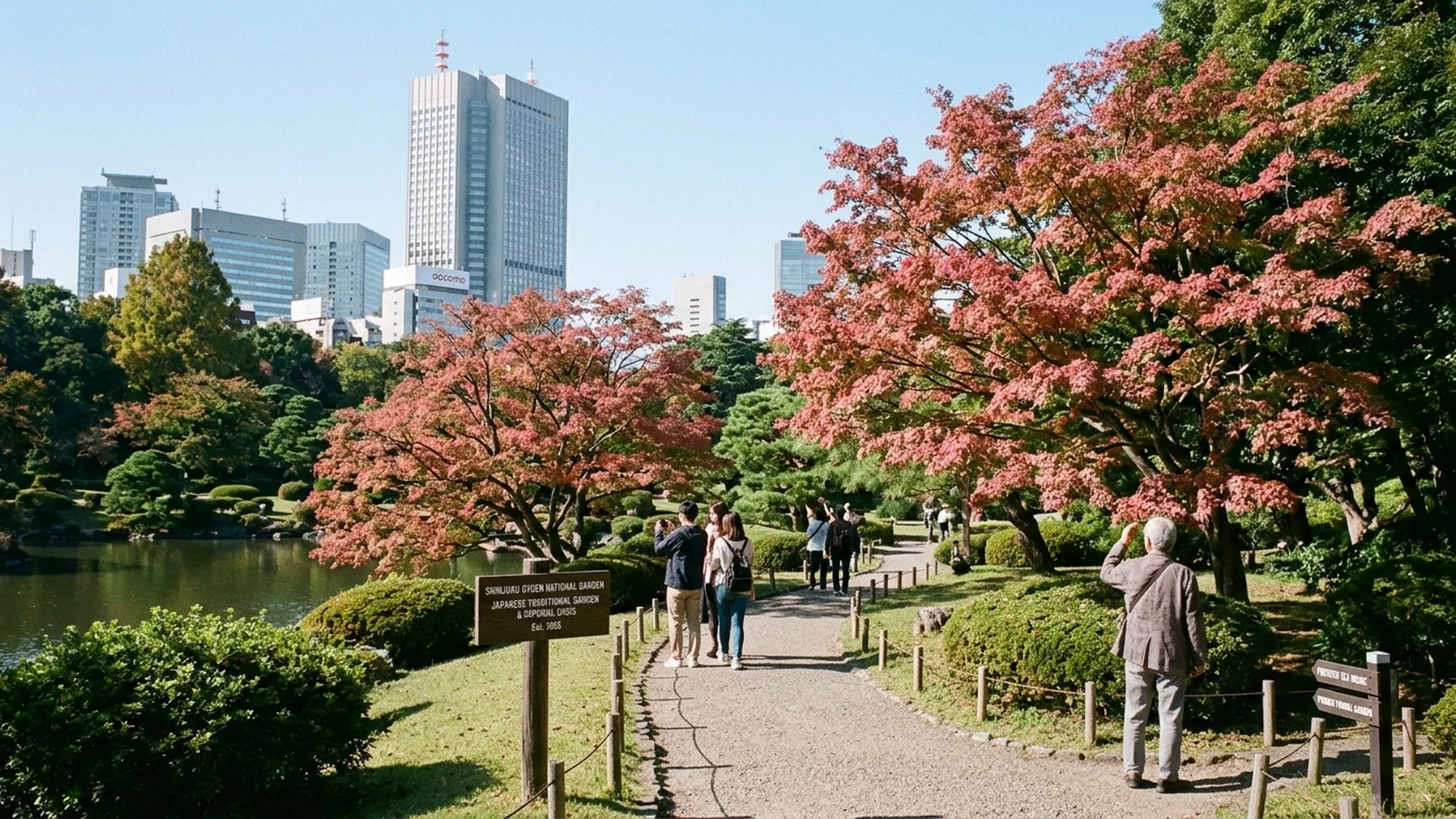
Amidst the soaring skyscrapers and relentless pulse of Shinjuku, Tokyo conceals a sanctuary where time itself appears to decelerate. Spanning more than 377 acres, this magnificent expanse functions not merely as the green lungs of the metropolis, but as a cherished landscape legacy once reserved exclusively for the Emperor. Crossing the threshold into Shinjuku Gyoen National Garden is akin to stepping away from the urban clamor into a realm of serene harmony, where Eastern aesthetics and Western landscape traditions blend in quiet perfection.
The enduring allure of Shinjuku Gyoen lies in its subtle architectural narrative, reflecting the evolution of modern Japan from the aristocratic estate of the Naito clan to an imperial botanical retreat, and finally to a sanctuary open to contemplative travelers. Here, world-class horticulture and historic design converge effortlessly, offering a refined, restorative experience across every changing season.
Architecture of Three Realms: The Convergence of Global Garden Styles
The defining distinction of Shinjuku Gyoen is its masterclass in landscape zoning, dividing the vast grounds into three distinct yet harmonious styles. The journey begins within the Traditional Japanese Garden, characterized by expansive tranquil ponds, arched wooden footbridges, and miniature islands capturing the essence of wild nature in miniature. Foliage is meticulously pruned according to ancient Zen principles, while historic pavilions overlook mirror-like waters that frame the distant, futuristic skyline of Shinjuku—a striking visual dialogue between antiquity and modernity.
Adjacent lies the Formal French Garden, defined by absolute symmetry and long gravel pathways flanked by meticulously trimmed plane trees. During autumn, these stately trees transform into a golden colonnade, evoking the timeless grace of Parisian parks. Completing the trio is the English Landscape Garden, an expansive, open lawn dotted with towering free-form trees such as Himalayan cedars and tulip poplars. This open expanse offers a sense of airy freedom, inviting travelers to pause and repose upon verdant lawns beneath cathedral-like canopies of ancient trees.
A Symphony of Seasons: From Millennial Blossoms to Fiery Autumn Canopies
As a premier destination for mindful exploration, Shinjuku Gyoen delivers an entirely transfigured sensory experience with the turning of the year. Spring here transcends ordinary viewing; the estate gathers over 65 varieties and upward of 1,000 cherry trees, extending the blooming season from late March through late April. Visitors move seamlessly from delicate pale pink Somei Yoshino blossoms to early-blooming Kawazu-zakura, and finally to late-blooming Yaezakura, whose dense, ruffled petals resemble fine porcelain.
By the arrival of autumn—typically spanning November through December—the gardens ignite in vibrant strokes of amber, crimson, and gold courtesy of Japanese maples (Momiji) and ancient ginkgo trees. The reflections cast upon the principal ponds double this chromatic brilliance, transforming the landscape into a living masterwork worthy of classic oil painting.
Aesthetics of Stillness: Historic Teahouses and Botanical Conservatories
Beyond the open lawns and winding paths, Shinjuku Gyoen harbors profound cultural encounters within the Rakuotei Teahouse. Here, discerning travelers are invited to partake in the quiet grace of a traditional Japanese tea ceremony, savoring rich, frothy matcha paired with seasonally crafted Wagashi confections. The ambient backdrop of bamboo water trickling against stone (shishi-odoshi) establishes an atmosphere of meditative calm.
For aficionados of rare botany, the contemporary Botanical Greenhouse offers an essential sanctuary. This climate-controlled pavilion houses thousands of tropical and subtropical species, including endangered flora native to the Ogasawara and Ryukyu archipelagos, marrying scientific preservation with aesthetic wonder.