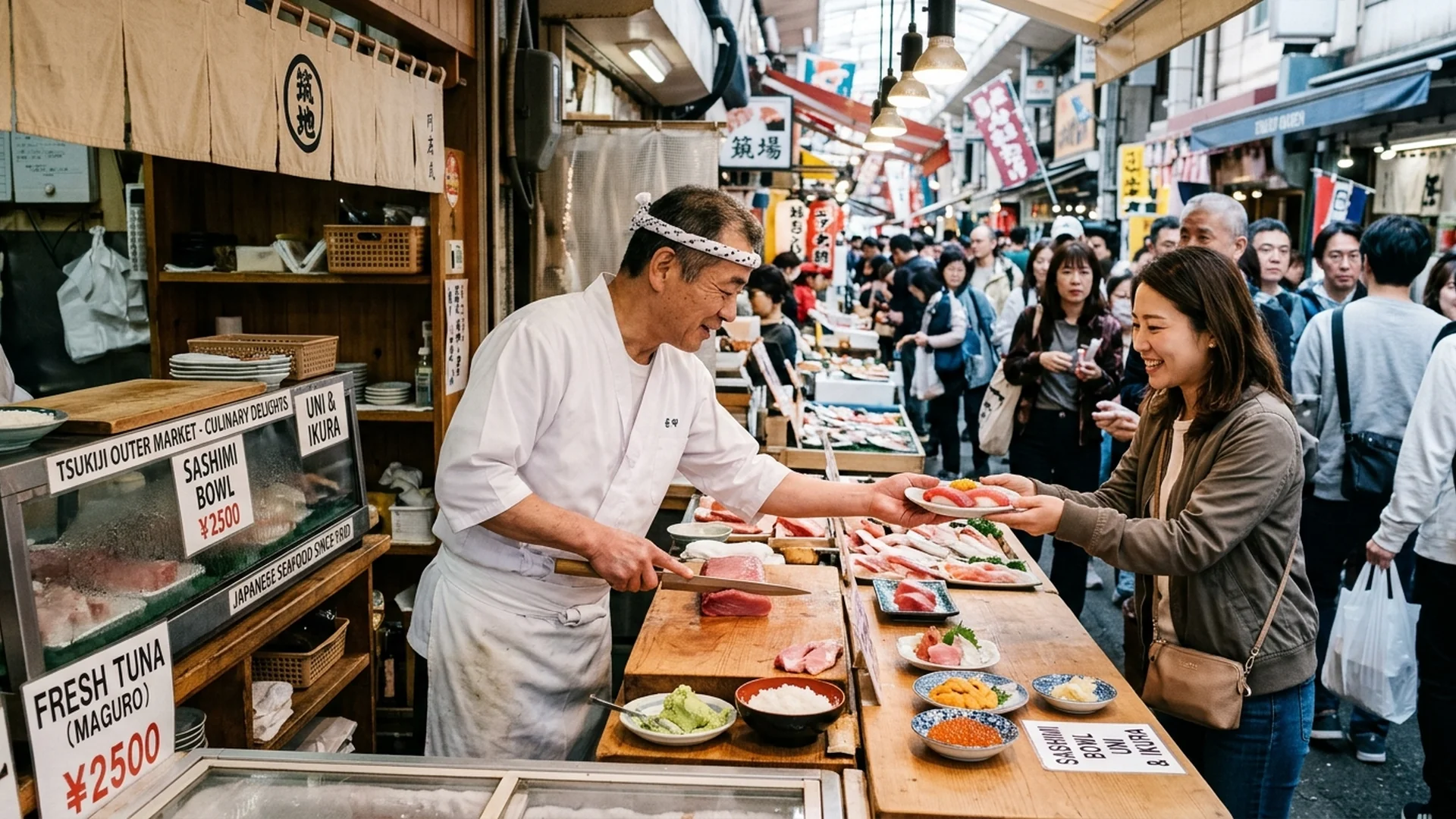
The moment you step into the narrow, labyrinthine alleys of the Tsukiji Outer Market, your senses instantly awaken. The rich, savory aroma of soy sauce sizzling over charcoal braziers mingles with the enthusiastic calls of merchants greeting morning patrons. Although the world-famous wholesale tuna auctions have relocated to modern facilities in Toyosu, Tokyo’s beating culinary heart and decades of seafood heritage remain resolutely rooted right here.
This is far more than a mere commercial marketplace; it is a living museum upholding the philosophy of the shokunin—the master artisan who dedicates a lifetime to absolute perfection. Every step through Tsukiji is an unhurried journey back to the timeless soul of Tokyo, where the pristine bounty of the ocean meets uncompromising culinary precision.
Decoding the Heritage: From Wholesale Roots to Outer Market Vitality
Comprehending the layout of Tsukiji today is essential for discerning travelers seeking unhurried gastronomic pleasure. When the wholesale trade transitioned to ultramodern Toyosu, the invaluable soul of the district remained firmly within the Tsukiji Outer Market. This historic quarter comprises a vibrant maze of retail stalls, intimate sushi counters, traditional knife purveyors, and heritage tea merchants.
Rather than losing its allure, the area has intensified its human connection. Generations of families continue to uphold world-class standards of ingredient curation, transforming this historic crossroads into an essential pilgrimage for Michelin-starred chefs and passionate epicures from across the globe.
Gastronomic Coordinates: Curated Bites and Premium Street Fare
When discussing the Tsukiji Outer Market, gastronomy is the unmistakable heartbeat that draws thousands of daily pilgrims. Begin with a magnificent kaisendon—a bowl of pristine, masterfully sliced sashimi featuring melt-in-the-mouth otoro tuna from renowned counters like Tsukiji Koromo Sushi, testifying to an unwavering devotion to quality.
Beyond raw delicacies, the street food offerings are equally transcendent. Enjoy freshly prepared tamagoyaki from Marutake, boasting a delicate sweetness and a fluffy texture akin to a fine Japanese soufflé. Alternatively, savor succulent tiger prawns and plump oysters grilled over binchotan charcoal, heightened by just a squeeze of fresh citrus. Every single bite is an exquisite symphony of the sea.
The Art of the Stroll: Golden Hours and Neighborhood Etiquette
Experiencing Tsukiji with true elegance requires careful timing. The golden window lies between 07:00 and 09:00, when shop shutters lift, pristine morning catches arrive fresh from the docks, and crowd densities remain manageable. This quiet interval invites intimate conversations with knowledgeable purveyors.
Culturally speaking, while the market maintains a welcoming spirit, walking while eating (aruki-gui) is discouraged in crowded lanes. Most culinary stalls provide designated standing areas directly beside their counters, allowing guests to enjoy their treats respectfully while preserving the immaculate standard of the district.