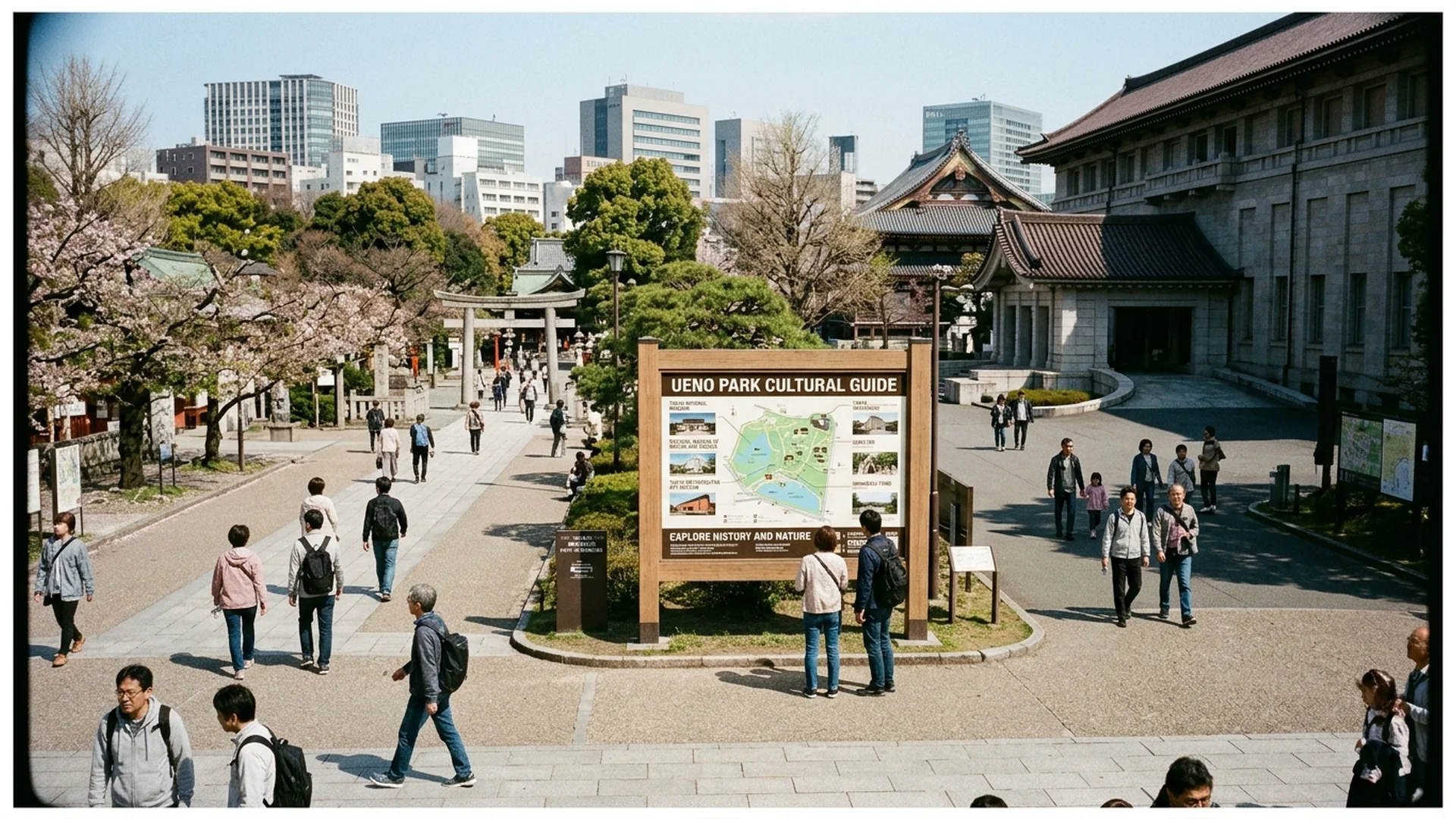
When crossing from the swift, towering concrete of modern Tokyo into the verdant sanctuary of Ueno Park, the discerning traveler immediately recognizes that this is far more than a conventional urban green space. It is an intellectual and cultural nexus of global significance, preserving layers of profound history that stretch back centuries. Once an integral expanse of Kan’ei-ji—the guardian temple safeguarding Edo Castle during the Tokugawa shogunate—these ancient groves and tranquil waters were later transformed into Japan’s very pioneering Western-style public park under the banner of modern architectural enlightenment.
Visiting Ueno Park is akin to turning the pages of a parallel history intertwined with aesthetic evolution. Beneath the canopy of centenarian trees, accompanied by the gentle chime of distant wind bells and the expansive expanse of Shinobazu Pond, Ueno serves as an immaculate bridge linking the spiritual essence of Edo with international artistic innovation. Join us on a journey along this refined path to experience Tokyo in a dimension of rare depth and intellectual grace.
Footprints of the Shogunate: Edo Architecture and the Toshogu Shrine
Beneath the tranquil canopy of Ueno Park lies the formidable foundation of the Tokugawa clan, the shogunal dynasty that governed Japan for over two centuries. This land was originally part of the sprawling grounds of Kan’ei-ji, established strategically to protect Edo Castle from malevolent spirits according to traditional geomancy.
Venturing deeper into the woodland paths reveals the Ueno Toshogu Shrine, one of the remarkably rare structures to endure historical conflicts and seismic upheavals unscathed. It is distinguished by its resplendent golden Chinese-style gate (Kara-mon) and a main sanctuary adorned with intricate lacquerwork and gold leaf, offering an authentic glimpse into early Edo master craftsmanship. Close by, an elegant five-story pagoda stands defiant against the passage of time, serving as a historic monument recalling past imperial grandeur.
Treasures of Intellect: World-Class Museums and UNESCO Architecture
Ueno is not merely a leafy retreat; it forms the densest cultural heartland in Asia, anchored by the Tokyo National Museum. Here, hundreds of thousands of antiquities and masterpieces are preserved, ranging from ancient samurai blades and ceremonial armor to priceless historic scrolls.
Nearby stands the National Museum of Western Art, holding profound distinction as the sole Asian work by modernist pioneer Le Corbusier. This landmark building is celebrated on the UNESCO World Heritage list, featuring pilotis (elevated ground-level columns) and a continuous interior layout known as the ‘Museum of Unlimited Growth.’ It harmoniously blends foundational brutalist concrete structures with world-renowned sculptures by Rodin and canvases by Monet.
Seasonal Aesthetics: From a Thousand Cherry Blossoms to Shinobazu Lotuses
Nature within Ueno Park moves with the cadence of a living poem. When spring arrives, the primary promenades transform into delicate pink tunnels canopied by over a thousand cherry trees, hosting the most celebrated Hanami (flower-viewing) traditions in the archipelago.
In the warmth of summer, the expansive surface of Shinobazu Pond becomes carpeted with vibrant green lotus pads and blossoms, contrasting sharply against the distant backdrop of the capital’s soaring skyscrapers. As autumn advances, golden ginkgo foliage and amber Japanese maples cast mesmerizing reflections upon the calm water, curating an atmosphere of deep contemplation amidst the city’s relentless pulse.