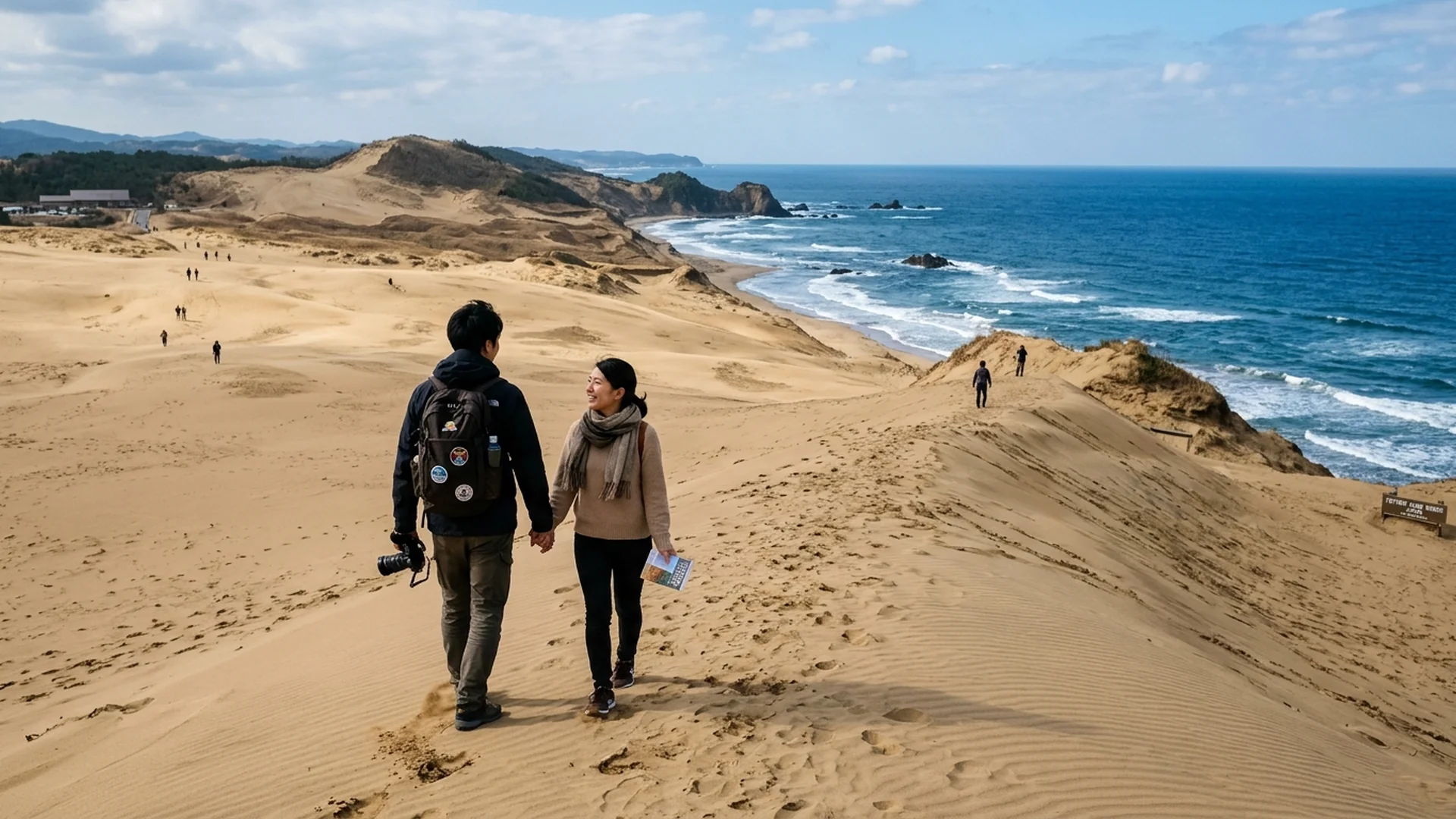
Cross the familiar thoroughfares of Honshu, and the frantic pulse of the modern metropolis dissolves into an expansive ocean of sand meeting the cerulean horizon of the Sea of Japan. Tottori, nestled quietly in the northwestern corner of the Chugoku region, reveals itself as a natural canvas painted with breathtaking dichotomies: the immense, wind-sculpted expanse of the desert colliding with the bountiful, icy depths of the deep sea. It is more than a mere geographical waypoint; it is an undiscovered sanctuary for discerning travelers seeking profound stillness, delicate culinary artistry, and the unhurried aesthetics of traditional Japanese hospitality.
Journeying to Tottori is an intentional retreat against the current of conventional tourism, offering direct passage to the beating heart of the Sanin region. Here, time noticeably decelerates, inviting every sensory faculty to awaken to the rhythmic percussion of waves against the shore, the whisper of maritime winds carving ephemeral ripples across golden dunes, and the restorative warmth of mineral springs welling from the earth’s ancient core.
Coastal Majesty: The Tottori Sand Dunes and the Artistry of Time
The beating heart of any pilgrimage to Tottori is its namesake sand dunes, a colossal sweep of undulating golden terrain stretching sixteen kilometers along the rugged coastline. Formed over millennia by volcanic sediment and relentless maritime winds, every single footstep across this fine, warm quartz sand feels akin to stepping into an ancient Arabian desert—until one turns to behold the stark, dramatic backdrop of deep sapphire waves and crashing winter swells. It is a singular landscape without parallel across East Asia.
Adjacent to this vast geological wonder stands The Sand Museum, the world’s pioneer indoor institution dedicated entirely to the ephemeral medium of sand and water. Master sculptors from around the globe converge here annually, carving colossal, intricate temporary monuments that reflect diverse global histories and civilizations. These breathtaking works of monumental detail serve as a quiet, profound reminder that even the humblest grains of earth can be elevated to immortal masterpieces of artistic expression.
The Sanin Gastronomic Tradition: Matsuba Crabs and Wagyu Legends
A transcendent journey remains incomplete without engaging the senses through haute cuisine, and Tottori stands as a clandestine treasure trove of peerless epicurean ingredients. Throughout the bracing winter months, the local ports vibrate with anticipation for the prized auction of Matsuba crab—fully matured male snow crabs harvested from the freezing, nutrient-rich trenches of the Sea of Japan. Their dense, inherently sweet meat and rich, buttery tomalley are elevated into transcendent multi-course omakase offerings or simmered gently in delicate nabegotchi broths that instantly warm the soul.
Beyond the bounties of the sea, Tottori cradles the ancient lineage of Japanese beef production, with historical records dating as far back as the Edo period. Today, Tottori Wagyu is globally celebrated for its exceptionally delicate marbling, yielding a buttery texture that melts effortlessly upon the palate alongside a distinct, aromatic complexity. Experiencing these culinary milestones within the tranquil confines of a traditional dining pavilion or a rarefied ryokan represents the absolute pinnacle of luxury for the cultured gourmet.
The Sanctuary of Stillness: Heritage Ryokans and Mineral Springs
To truly comprehend the depth of Tottori, one must surrender to the ancient art of the Japanese hot spring. The region is cradled by legendary thermal waters, most notably Misasa Onsen, renowned globally for harboring some of the highest concentrations of natural radon minerals, revered for centuries for their restorative, therapeutic properties.
To don a hand-spun cotton yukata, wandering the misty stone paths under a canopy of stars before immersing oneself in an open-air rotenburo carved directly into moss-draped rock gardens, is the ultimate expression of modern luxury. Following this with an exquisite, multi-course kaiseki dinner celebrating the micro-seasons provides a masterclass in mindfulness—where true extravagance lies not in opulence, but in uncompromising attention to detail and unhurried peace.