When discussing Japan’s Hokuriku region, travelers have long relegated Toyama to little more than a transit station or a brief gateway before pressing on toward the celebrated alpine snow corridors. Yet, behind this familiar stereotype, the coastal capital conceals masterpieces of time and design waiting to be unwrapped. Today, Toyama has quietly emerged as an unhurried luxury destination seamlessly blending contemporary architectural innovation with timeless traditions.
Like a vast canvas brushed by nature, the city unfurls against the dramatic backdrop of the Tateyama Kurobe Alpine Road and the deep blue expanse of Toyama Bay. Here, avant-garde glass structures sit in quiet dialogue with coastal waters, welcoming discerning global travelers who seek substance and aesthetic resonance far beyond ordinary sightseeing. To experience Toyama anew is to surrender to rhythm and reflection—from sunlight dancing across mirrored building facades to the hushed serenity of canal-side parks celebrated among Japan’s finest.
Contemporary Architecture and Glass Art: Where Light and Transparency Speak
The beating heart of Toyama’s appeal for design-conscious travelers is its masterful integration of public art into the urban fabric. In the city center stands the Toyama Glass Art Museum, housed within the magnificent TOYAMA KIRACI building—a signature creation by renowned architect Kengo Kuma. Inside, an intricate lattice of locally sourced timber mimics the delicate folds of origami, filtering natural daylight deep into the soaring central atrium and casting shifting shadows throughout the day. The galleries showcase exquisite glass sculptures from global masters, paying homage to the city’s rich industrial heritage in glass manufacturing.
Just a short distance away, Fugan Unga Kansui Park offers a masterclass in urban relaxation along a historic canal. Here, the elegant Tenmon Bridge serves as a favored vantage point for evening contemplation, flanked by minimalist architectural structures and a world-renowned specialty coffeehouse that merges effortlessly with the surrounding parkland.
Flavors of Toyama Bay: A Gastronomic Haven and Ocean Jewels
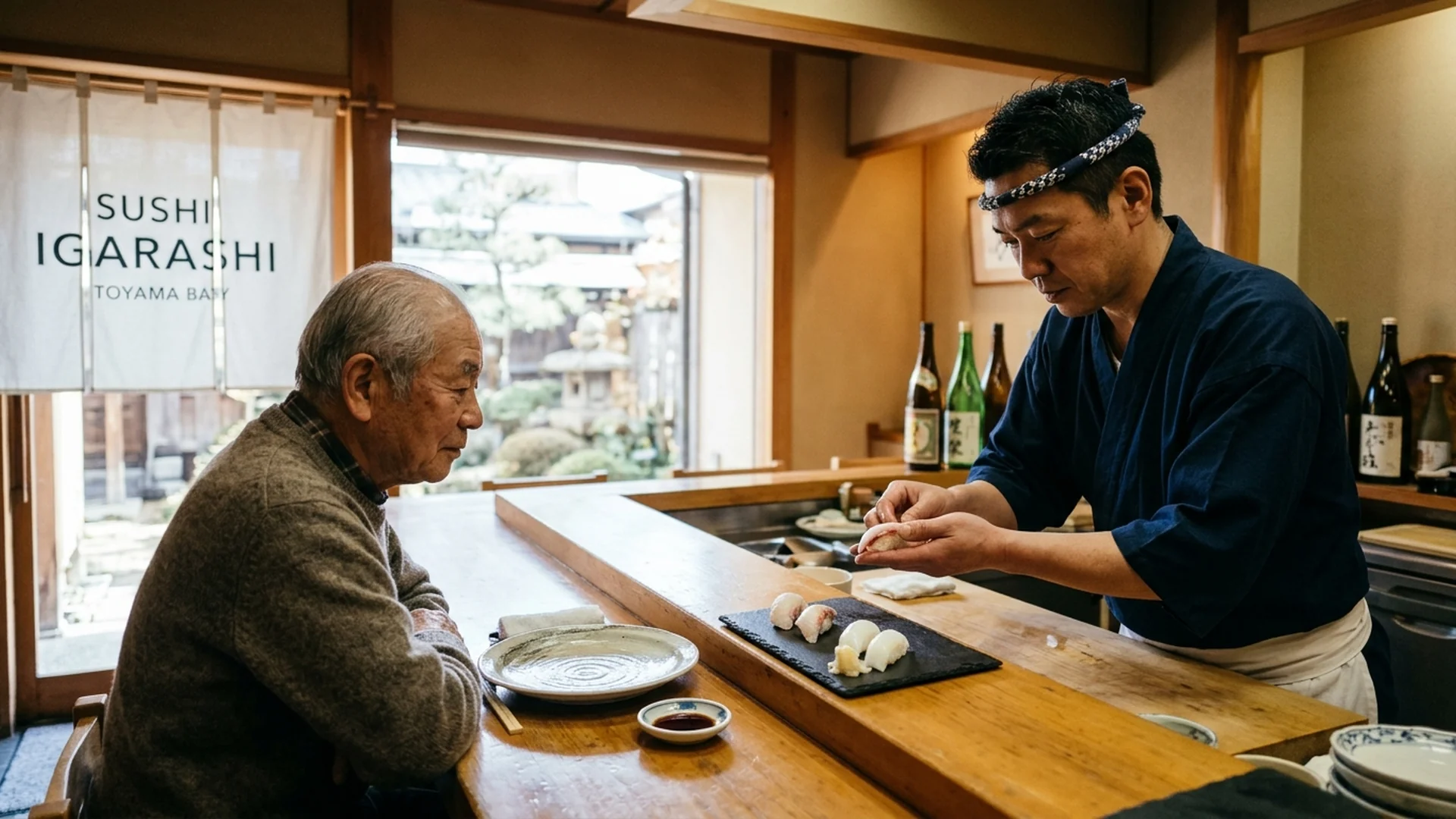
Toyama Bay is frequently celebrated as a natural aquarium of exceptional seafood, shaped by a unique topography of submarine canyons and mineral-rich glacial meltwater descending from the Northern Alps. This pristine environment yields culinary treasures found nowhere else on earth. The journey begins with Shiro-ebi—translucent glass shrimp often hailed as the ‘Jewel of Toyama Bay.’ Whether served atop pristine Edomae sushi or layered delicately over rice, their melt-in-the-mouth sweetness leaves an indelible impression.
Depending on the season, epicures may also encounter bioluminescent firefly squid (Hotaru-ika) shimmering against the dark coastal waters, or rich, buttery yellowtail (Buri) during the crisp winter months. Local master chefs approach these seasonal gifts with profound reverence, maintaining traditional culinary disciplines while elevating them for the modern table.
Slow Living and Timeless Landscapes: Bridging Past and Present
To truly know Toyama is to let the hands of the clock turn more slowly. Beyond the sleek downtown avenues, a short excursion to the historic port district of Iwase transports visitors back to the prosperous merchant days of the Edo period. Well-preserved wooden shipping houses and former salt storehouses now house quiet artisan boutiques, independent sake breweries, and intimate fine-dining destinations.
Pedaling a bicycle through the weathered alleyways or boarding the vintage streetcars that trace a lazy loop around the city provides an authentic connection to the warmth of the locals. Toyama embraces its guests not with fanfare, but with genuine hospitality and an exquisite attention to the quiet details of daily life.