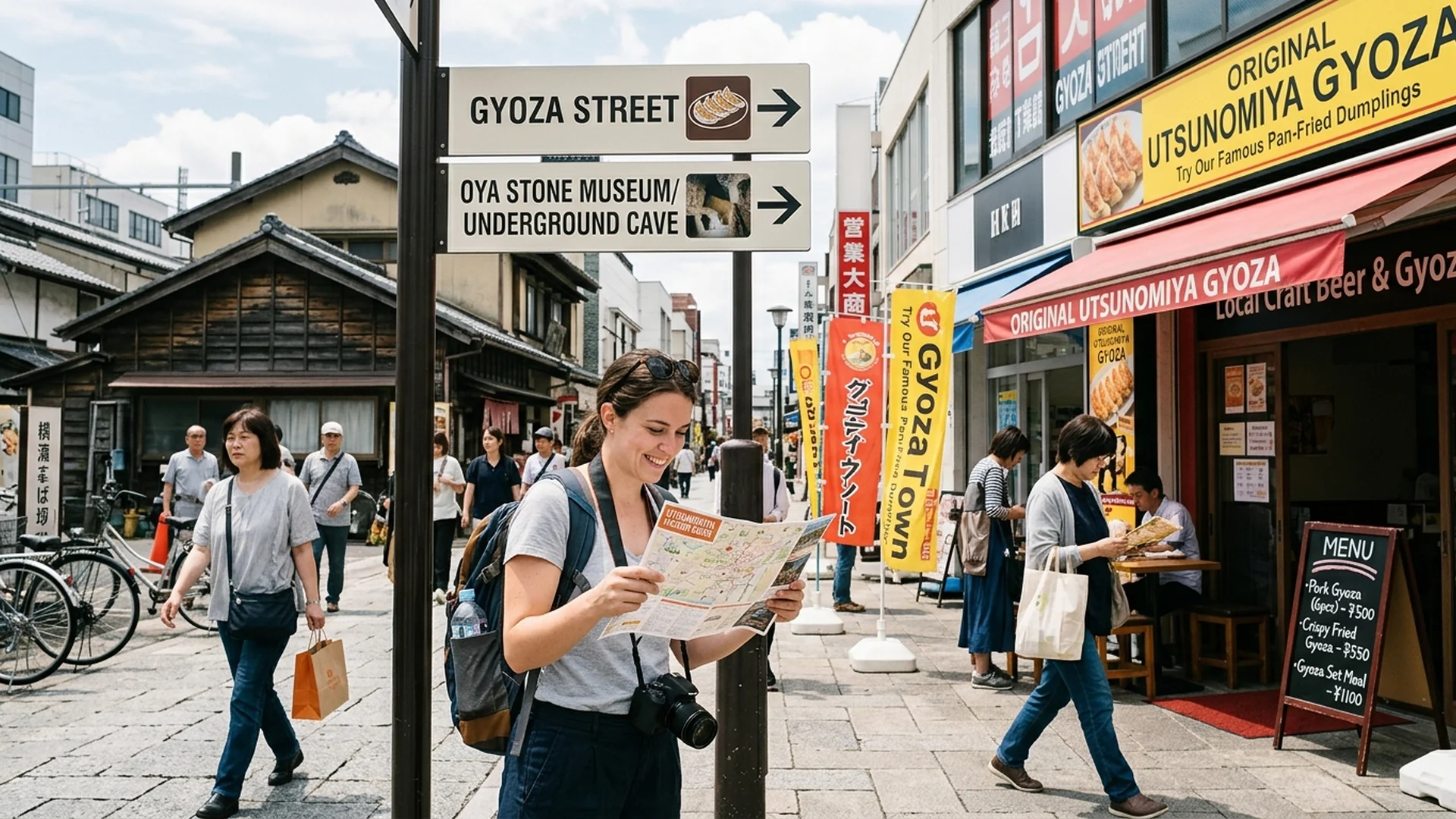
Too often, the journey through the Kantō region is reduced to a fleeting transition on the historic pilgrimage to Nikkō. Yet, for the discerning traveler willing to decelerate and alight at Utsunomiya station in Tochigi prefecture, an extraordinary revelation awaits. Far more than a mere waypoint, this city weaves subterranean secrets seamlessly with the refined arts of gastronomy. From ancient volcanic quarries reverently dubbed underground cathedrals to the savory, toasted aroma of artisanal gyoza drifting on evening breezes, Utsunomiya composes a fresh poetic ode for those who seek depth, subtlety, and distinct beauty.
The Subterranean Cathedral: Oya Stone Heritage and the Silence of Time
Deep beneath the surface of the Oya district lies a vast subterranean realm spanning over 20,000 square meters, carved continuously since the Nara period for its prized volcanic tufa, known as Oya stone. This pale grey stone, textured with natural porosities, serves as a grand canvas shaped jointly by nature and human endurance. Upon entering the Oya History Museum, the ambient temperature drops sharply into single digits, revealing a towering chamber reminiscent of a medieval cathedral. Low, dramatic lighting catches the chisel marks etched into towering pillars, whispering tales of bygone eras. The profound stillness enveloping the space has transformed it into a dramatic stage for classical concerts, avant-garde art exhibitions, and cinematic backdrops—a striking duality of raw industrial grit and serene, contemplative spirituality.
Stone Architecture and Sacred Tradition: Urban Echoes of Ancient Faith
Utsunomiya’s distinct character extends far beyond the underworld, expressing itself gracefully across the city’s surface architecture. The Matsugamine Catholic Church stands as a peerless testament to this craftsmanship. Built entirely from Oya stone, this twin-spired Romanesque sanctuary radiates a gentle, weathered grey hue that harmonizes effortlessly with the surrounding modern cityscape. Not far away, the 1,600-year-old Utsunomiya Futarasan Shrine serves as the spiritual anchor of the community, sheltering its citizens through the shifting tides of history. Strolling quietly past these sacred grounds offers the sensation of turning the pages of a living chronicle, where human devotion and geological legacy exist in perfect equilibrium.
The Art and Craft of Gyoza: From Street Food to Masterpiece
No exploration of Utsunomiya’s sensory identity is complete without experiencing its legendary gyoza. Garnering renown as Japan’s undisputed capital of dumplings, the city boasts remarkably high per-capita consumption paired with boundless culinary creativity. The distinction lies not merely in secret seasoning, but in a mastery of diverse cooking styles: yaki-gyoza featuring crisp, golden bottoms encasing succulent broths, delicate sui-gyoza served in clear, restorative consommés, and steamed varieties wrapped around farm-fresh seasonal vegetables or premium Kurobuta pork. Hundreds of establishments across town apply individual philosophies to dough and filling, with traditional houses occasionally swapping soy sauce for fragrant black vinegar infused with crushed peppercorns. By nightfall, these culinary dens blend seamlessly with hidden cocktail bars and craft microbreweries, effortlessly bridging heritage street fare with contemporary high-end lifestyle.