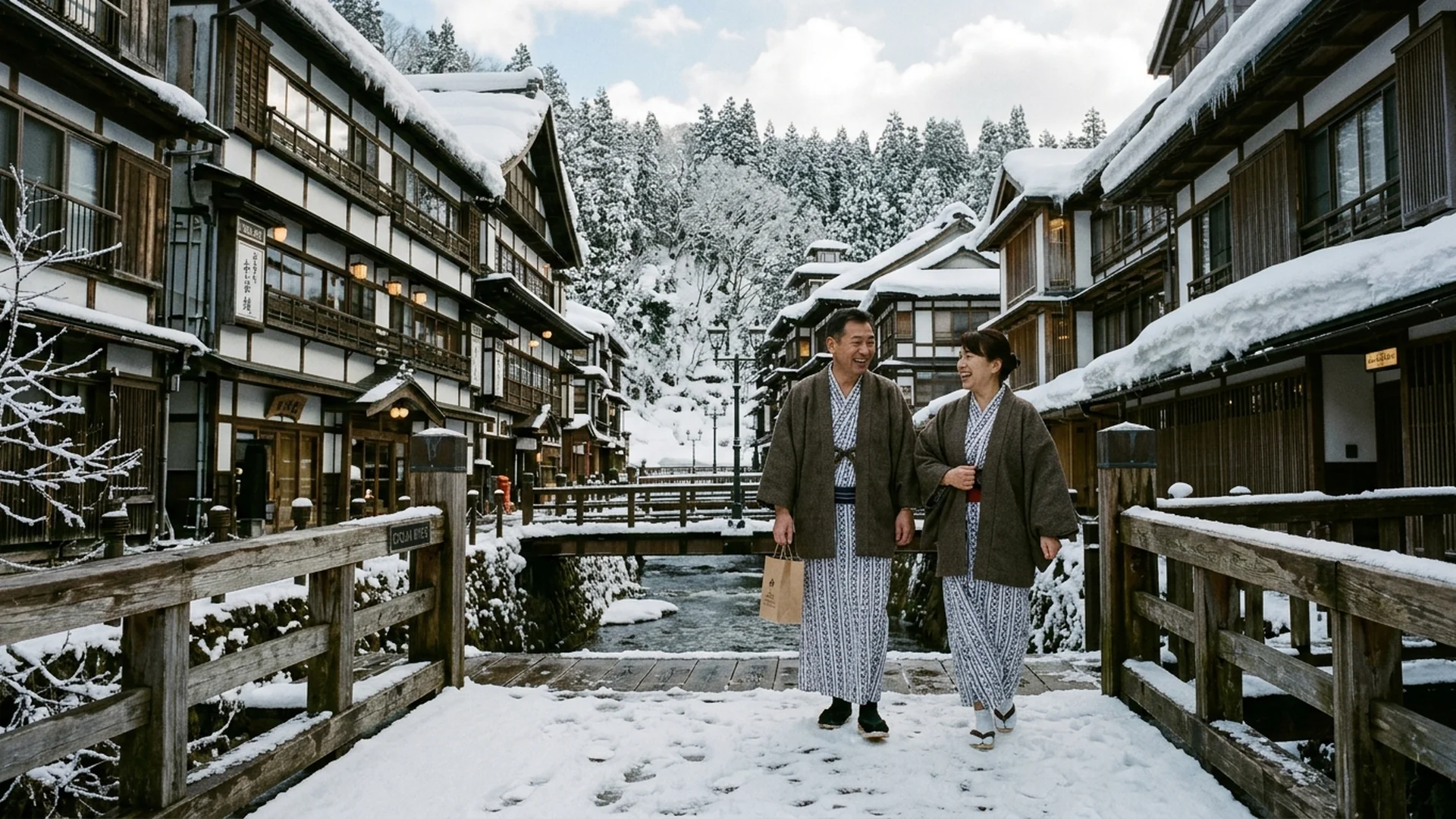
When the winter wind sweeps across the snow-draped cedar forests of the Tohoku region, Yamagata unfolds its powerful, hushed majesty. Here, nature and time appear to slow their relentless march, inviting discerning travelers to shed the frantic pace of modern life and surrender to the restorative breath of sacred mountains, pure thermal springs, and centuries of preserved heritage.
From the wind-carved ice monoliths crowning Mount Zao to the amber glow of historic timber inns reflecting off the gentle stream at Ginzan Onsen, Yamagata guards a quiet, transcendent beauty. This editorial journey explores the profound essence of Yamagata, weaving together magnificent alpine landscapes, timeless architecture, and the refined culinary arts of a deeply storied province.
Architecture Across Time: The Enchantment of Ginzan Onsen and Valley Solitude
Step into Ginzan Onsen, and you cross the threshold into a living cinematic frame. Multi-story timber ryokan, built in the ornate aesthetic of the Taisho period, line the crystalline stream in quiet harmony. As delicate snowflakes drift downward and warm lantern light shimmers against the dark waters, the valley awakens with a romantic intimacy impossible to find in metropolitan hubs. Once a bustling silver mining settlement before transforming into an legendary hot spring sanctuary, this enclave offers the ultimate luxury: soaking in mineral-rich waters while gazing out at a pristine, snow-blanketed landscape from the tranquility of your historic suite.
Winter’s Sculptures: The Realm of the Zao Juhyo and Alpine Wonders
High above the cloudline on the dramatic volcanic ridges of the Zao mountain range, nature performs an ephemeral masterpiece: the creation of the Zao Juhyo, universally celebrated as the Snow Monsters. Formed when supercooled water droplets carried by Siberian winds collide with endemic Aomori white fir trees, successive layers of ice and heavy snow encase the vegetation into colossal, prehistoric silhouettes. Ascending via the Zao Ropeway through shifting alpine mists to emerge above a golden-lit plateau of these frozen guardians offers a profoundly humbling visual experience that lingers in memory for a lifetime.
Mountain Spirituality and Culinary Mastery: Yamadera and Yonezawa Beef
No exploration of Yamagata is complete without making the pilgrimage to Risshakuji, universally revered as Yamadera. Clinging precariously to steep, sheer rock faces above ancient cedar groves, climbing its thousand stone steps serves as a moving meditation of purification. At the summit pavilion, panoramic vistas of deep river valleys and patchwork farming communities unfold in breathtaking breadth. As evening descends, the indulgence continues with Yonezawa Beef—one of Japan’s most elite wagyu selections, celebrated for its delicate fat marbling that melts effortlessly on the tongue, paired perfectly with locally brewed artisanal sake.