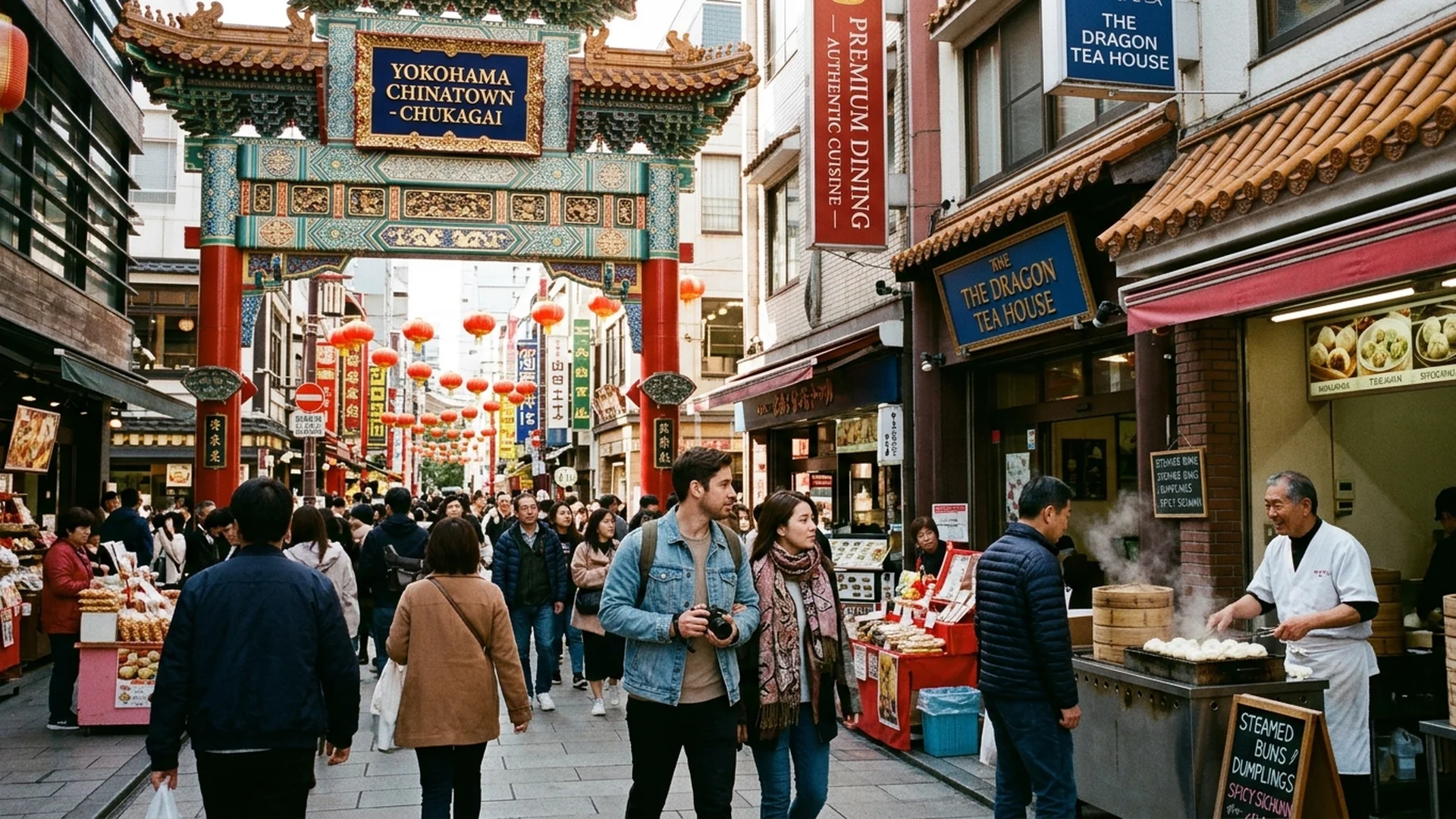
Crossing beneath the vibrant, intricately adorned ceremonial gates into the realm of Yokohama Chinatown, one is instantly embraced by the aromatic warmth of exotic spices, simmering broths, and the gentle steam rising from bamboo dim sum baskets. This is far more than a mere ethnic enclave or a collection of casual street food stalls; it is a living, breathing historical archive whose origins trace back to the opening of Yokohama port to the global maritime trade in 1859.
Over the span of a century and a half, this historic community has harmoniously fused the rich culinary traditions of Guangdong, Shanghai, and Sichuan with Japanese refinement, giving birth to the most powerful and expansive cultural ecosystem in the Land of the Rising Sun. From wandering narrow alleyways framed by classical Chinese architecture to tracking down masterclass restaurants and paying homage to guardian deities, Yokohama Chinatown engages all five senses with exceptional depth.
The Ten Auspicious Gates and the Spiritual Sanctity of Kanteibyo
Beneath the bustling energy of over two hundred and fifty shops and eateries, the urban layout of Yokohama Chinatown has been meticulously arranged according to ancient feng shui principles. This spatial philosophy is most vividly expressed through the ten vermilion and gold ceremonial gates that mark the boundaries of the district. Each gate bears an auspicious name and purpose, functioning as a symbolic guardian meant to deflect malevolent influences while inviting prosperity and peace to all who enter.
Venturing deeper into the core of the neighborhood reveals Kanteibyo, a breathtaking Chinese temple consecrated to Guan Yu, the legendary historical figure revered as the deity of loyalty, integrity, and commerce. The architectural facade is a masterpiece of craftsmanship, featuring intricate plaster dragon reliefs and gold-leafed timber carvings. Throughout the day, merchants and residents gather here to offer incense and quiet prayers, preserving an unbroken thread of spiritual devotion that anchors the modern community.
The Science of Flavor: From High Cantonese Banquets to Legendary Street Fare
The culinary legacy of Yokohama Chinatown possesses a level of sophistication and depth that transcends standard dining expectations. This enclave serves as a generational stage for master chefs, particularly masters of Cantonese cuisine who prioritize pristine seasonal ingredients and nuanced, balanced flavors. Discerning travelers can indulge in high-end dining experiences within historic, legendary banquet halls serving peerless crispy-skin Peking duck and double-boiled shark fin soup, alongside freshly steamed dim sum crafted basket by basket.
Equally compelling is the vibrant street food culture, epitomized by specialties such as pan-fried soup dumplings with crisp, golden exteriors concealing piping-hot, savory broth, and generously filled pork and mushroom steamed buns that have become iconic symbols of any pilgrimage to Yokohama.
Bridging Eras: Weaving Yokohama Chinatown into the Minato Mirai Horizon
Blessed with a premier waterfront location, Yokohama Chinatown integrates seamlessly into a comprehensive day of exploration. Mornings begin delightfully with a tranquil stroll along the bay at Yamashita Park, observing the historic ocean liner Hikawa Maru before stepping inland into the labyrinthine alleys of Chinatown for mid-morning sensory immersion and temple visits.
In the afternoon, travelers can easily transition across the urban landscape to the ultra-modern Minato Mirai district, taking in panoramic views of gleaming skyscrapers and the iconic Cosmo Clock 21 Ferris wheel. Concluding the evening with a view of city lights reflecting softly across Yokohama Bay creates an effortless synthesis of ancient heritage and contemporary futurism.