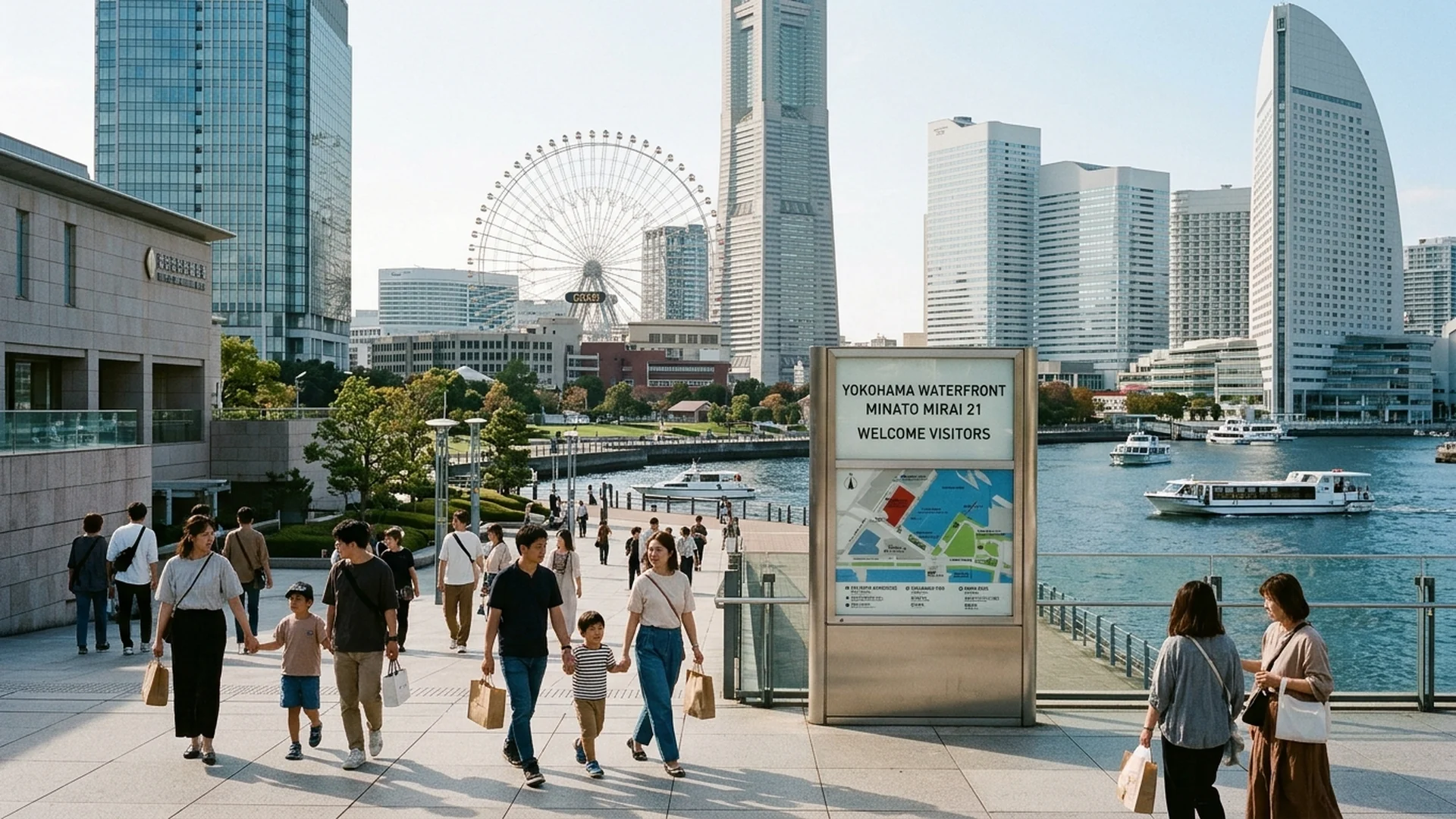
When the low thrum of a cruise liner’s horn echoes across Tokyo Bay, Yokohama—having long served as Japan’s primary gateway to Western horizons—unfolds a rich tapestry where maritime history meets futuristic ambition. This sophisticated port city is far more than an effortless day excursion from the capital; it is a refined destination steeped in understated romance. As dusk settles over the skyline of Minato Mirai, painting the rippling waters in hues of amber and violet, travelers are met with a quiet majesty that lingers long after the sun has dipped below the horizon.
Stepping away from the relentless kinetic energy of Tokyo into Yokohama’s breezy waterfront feels like entering an unhurried sanctuary. Here, the formidable black-iron beams of century-old red brick warehouses stand in deliberate contrast to sleek aerial gondolas gliding silently above the harbor. It is an invitation for the discerning traveler to slow their stride, surrendering to a rhythmic cadence where every architectural detail is steeped in profound craftsmanship.
Minato Mirai 21: A Symphony of Future Horizons and Waterfront Architecture
Translated literally as ‘Port of the Future in the 21st Century,’ Minato Mirai 21 pulses as the vibrant intellectual and architectural heartbeat of modern Yokohama. Reclaimed from former shipyards, this forward-thinking district is anchored by the soaring silhouette of the Landmark Tower, a monument to progressive urban design. An afternoon stroll along the pedestrian boardwalks—where sunlight dances across gentle harbor swells—reveals a deliberate harmony between manicured green expanses, open-air plazas, and immaculate retail spaces. Riding the Yokohama Air Cabin, which links Sakuragicho Station to Canal Park, offers both seamless mobility and an uninterrupted 360-degree panorama of the harbor’s shifting architectural geometry.
Echoes of Empire: Heritage Icons and the Red Brick Warehouses
If Minato Mirai speaks to tomorrow, the Akarenga Soko—or Red Brick Warehouse—serves as an eloquent archive of yesterday. Constructed during the late Meiji and Taisho eras to serve as the port’s primary customs facilities, these robust crimson structures have been meticulously restored into vibrant cultural salons, housing curated artisan boutiques, independent design galleries, and sunlit vintage cafés. To run a hand along their weathered, salt-kissed masonry while watching maritime vessels glide across the bay is to experience a deep, contemplative stillness rarely found in modern metropolises. Nearby, Yamashita Park stretches serenely along the shoreline, canopied by venerable pine trees and guarded by the historic Hikawa Maru, a gleaming ocean liner frozen in the golden age of transatlantic travel.
Flavors of the Peninsula: From Chinatown Heritage to Haute Harbor Dining
Yokohama’s cultural narrative is written just as vividly through its culinary arts. The expansive Yokohama Chinatown, guarded by four ornate ceremonial gates facing the cardinal directions, hums with the legacy of multigenerational culinary masters who have refined their crafts over a century. Yet for an evening of formal elegance, the city answers with high-concept French fusion restaurants and artisan steakhouses situated atop luxury waterfront hotels. Here, paired with an exceptional vintage, diners can watch the luminous petals of the Cosmo Clock 21 Ferris wheel shift colors against the distant span of the Bay Bridge, anchoring an unforgettable evening.