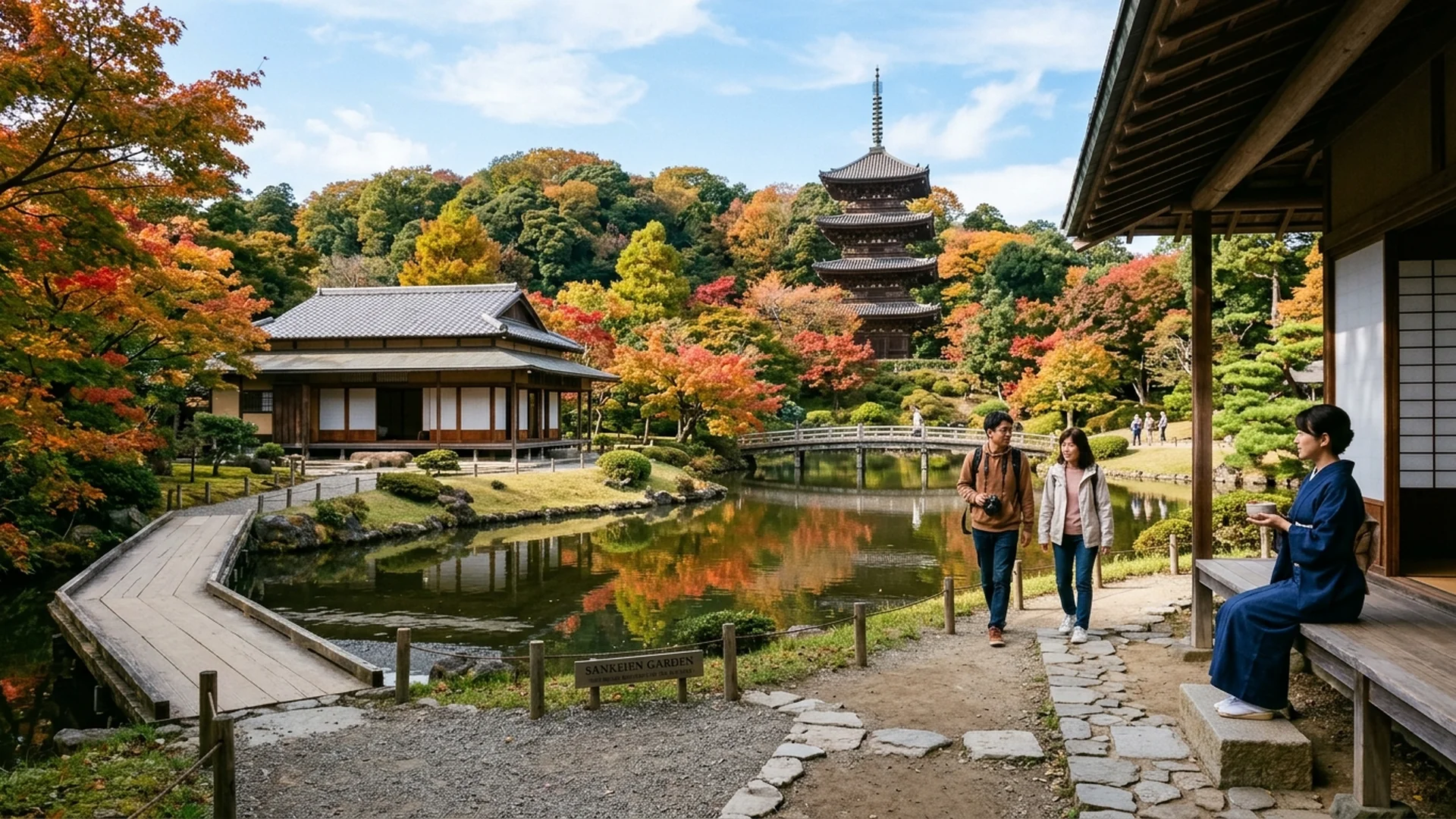
As the restless hum of Yokohama’s industrial metropolis recedes, it is replaced by the susurration of ancient pines, the gentle murmur of natural streams, and the quiet reflection of centuries-old wooden pagodas upon crystal waters. Beyond its modern maritime facade, Japan preserves a profound stillness across the sprawling 180,000-square-meter expanse of Sankeien Garden. This traditional Japanese landscape is far more than a verdant retreat; it functions as a prestigious living architectural museum where history, national heritage, and Zen spirituality are meticulously interwoven through the visionary curation of a master silk merchant devoted to the arts.
The Vision of Hara Sankei: From Silk Magnate to Guardian of National Heritage
The narrative of Sankeien originates in the profound reverence for antique arts held by Tomijiro Hara, widely known as Hara Sankei, who amassed immense wealth through the early-20th-century silk export trade. Rather than confining his acquisitions within private, closed galleries, Sankei chose to construct a living home for these artistic treasures within a natural environment honoring traditional Japanese garden design. He acquired crumbling or endangered historic edifices across Japan, commissioning master craftsmen to dismantle and reassemble them using authentic, time-honored techniques. The result is a seamless synthesis of sacred shrines, aristocratic villas, and rustic farmhouses harmonized flawlessly with a meticulously sculpted natural topography.
A Register of Ancient Architecture: From Kyoto to Yokohama
An exploration through Sankeien feels remarkably akin to traversing the architectural history of Japan. The most commanding visual anchor is the three-storey pagoda relocated from Tomyoji Temple in Kyoto, originally erected in 1457 and perched upon a verdant knoll that brings the sacred atmosphere of the ancient capital directly into the Kanto region. Within the grounds lies Rinshunkaku, a waterfront leisure villa built in 1649 for the Kishu branch of the Tokugawa clan, celebrated for its refined woodwork and sliding paper door (fusuma) paintings by the Kano school. Nearby stands the Yanohara House, an authentic gassho-zukuri (steep thatched-roof) farmhouse originating from the snowy UNESCO World Heritage village of Shirakawa-go, offering an evocative glimpse into rural vernacular warmth.
Four-Season Aesthetics and Zen Philosophy in the Japanese Garden
Sankeien remains far from static, pulsing instead with the rhythmic cycles of the natural world. From late January through February, more than six hundred plum trees blossom, releasing a delicate fragrance to welcome the opening light of the year, followed by hundreds of cherry trees encircling the grand pond in spring and the verdant expanse of lotus leaves in summer. The visual crescendo arrives in autumn when the deciduous canopy turns to incandescent golds and crimsons, contrasting sharply against the dark patinas of ancient timber framing. Every stone path is thoughtfully arranged to invite visitors into a meditative cadence, encouraging the release of worldly distractions and an intimate immersion into wabi-sabi—the quiet beauty found in imperfection and rustic natural simplicity.