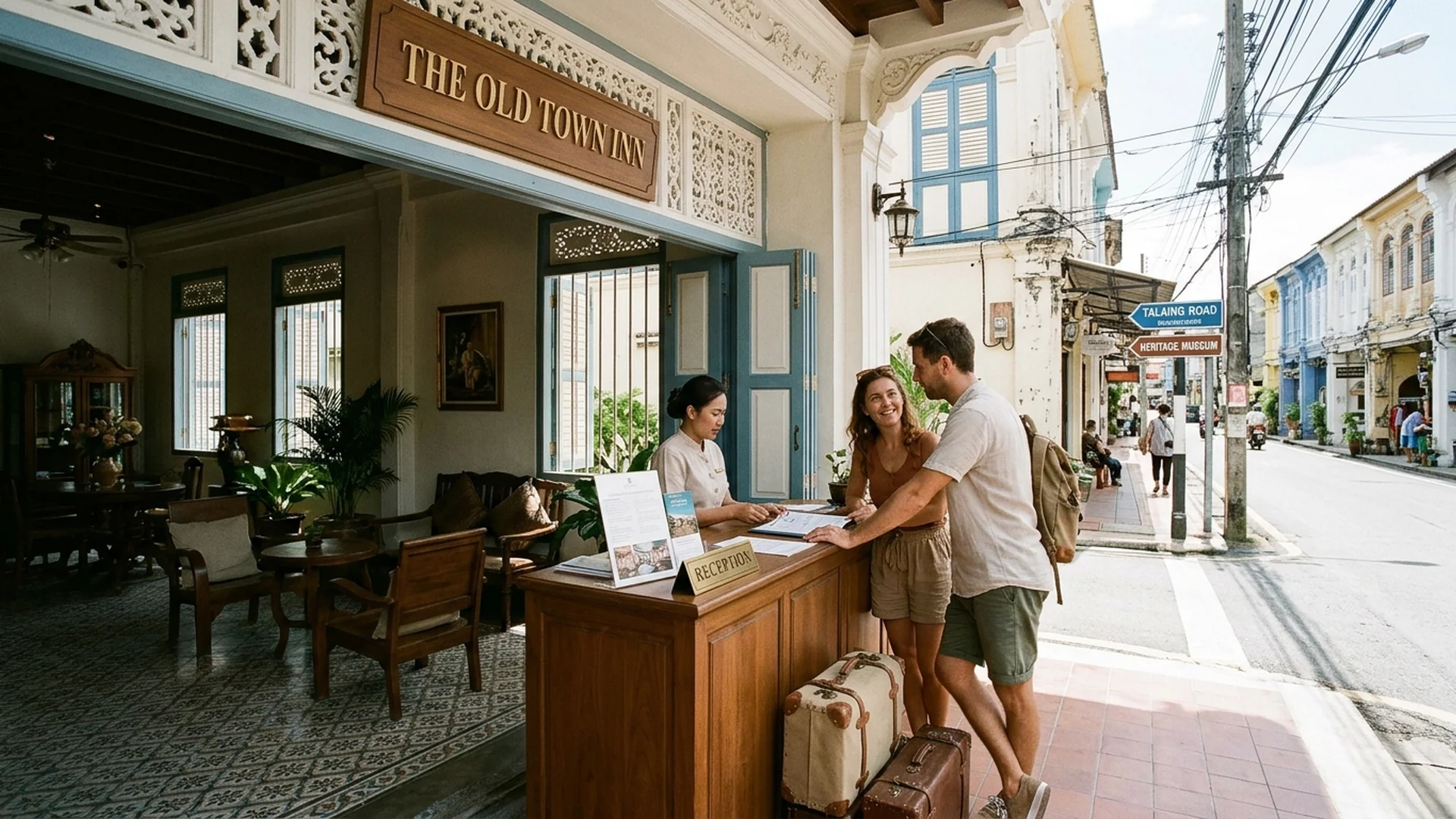
When time leaves its delicate patina upon golden teak beams, weathered plaster walls, and intricate carved wooden shutters, these are not signs of decay, but architectural legacies waiting to be awakened. Through the philosophy of adaptive reuse, historic shophouses, aristocratic mansions, and centenarian residences are being lovingly transformed into sanctuaries of rare character and narrative depth.
To journey into historic quarters such as Phra Nakhon, Talat Noi, Chinatown, or Thalang Road in Phuket Old Town is never merely about sightseeing. It is an invitation to close one’s eyes inside a living page of history, awakening to sunlight filtering through antique louvers and breathing in an atmosphere sustained by contemporary design sensibility. Here lies the true synthesis of memory and luxury lifestyle, offering discerning travelers an unhurried connection to the soul of the destination.
Architecture That Breathes: The Art of Reviving Historic Structures
The essence of exceptional boutique hotels in Bangkok’s old districts and beyond lies not in building anew from a blank slate, but in listening to the voice of the structure. Architects and preservationists work in quiet concert to preserve foundational frameworks, hardwood beams, exposed brickwork, and traces of original pigments. These are elements that modern technology can never artificially replicate. Renovating a heritage building demands immense sensitivity: routing discreet electrical and plumbing systems without marring historic integrity, managing natural ventilation, and honoring the passage of time. The result is a restorative space alive with historic resonance—soaring ceilings, arched windows that welcome river breezes, and central courtyards that act as the emotional heart of the property.
From Chinatown to Phuket: Two Distinct Canvases of Memory
If Bangkok’s historic quarter pulses with the vibrant heritage of maritime trade along the Chao Phraya River—where ancient shophouses in Chinatown, Talat Noi, and Phraeng Phuthon whisper tales of commerce—then Phuket offers an entirely different visual cadence. Along Thalang Road and Krabi Road, the enduring elegance of Sino-Portuguese architecture unfolds through narrow-frontage, deep-plan merchant mansions, five-foot pedestrian arcades, antique floor tiles, and muted pastel palettes that reflect the rich Peranakan cultural synthesis. Stepping past weathered folding wooden doors in either destination often reveals surprisingly serene sanctuaries complete with modern dipping pools, artisanal minibars, and guest rooms framing tiered terracotta roofs or temple spires.
The Aesthetics of Storytelling Through Interior Nuance
The singular magic of residing in a heritage design hotel rests within its beautiful imperfections—a philosophy akin to wabi-sabi interpreted through Southeast Asian craftsmanship. Because original structural constraints dictate the footprint, no two guest rooms are identical. This asymmetry cultivates profound individuality. Grand beds rest beneath meticulously polished timber beams, complemented by classic brass lighting fixtures and curated local touches such as hand-thrown ceramic tea sets and crisp, custom-woven linens. The neighborhood’s culinary spirit similarly extends to the morning table, where rare regional delicacies—traditional dim sum, heritage coconut custard cakes, or dark-roast local coffee sourced from adjacent alleyways—invite travelers to taste the unhurried rhythm of local life.