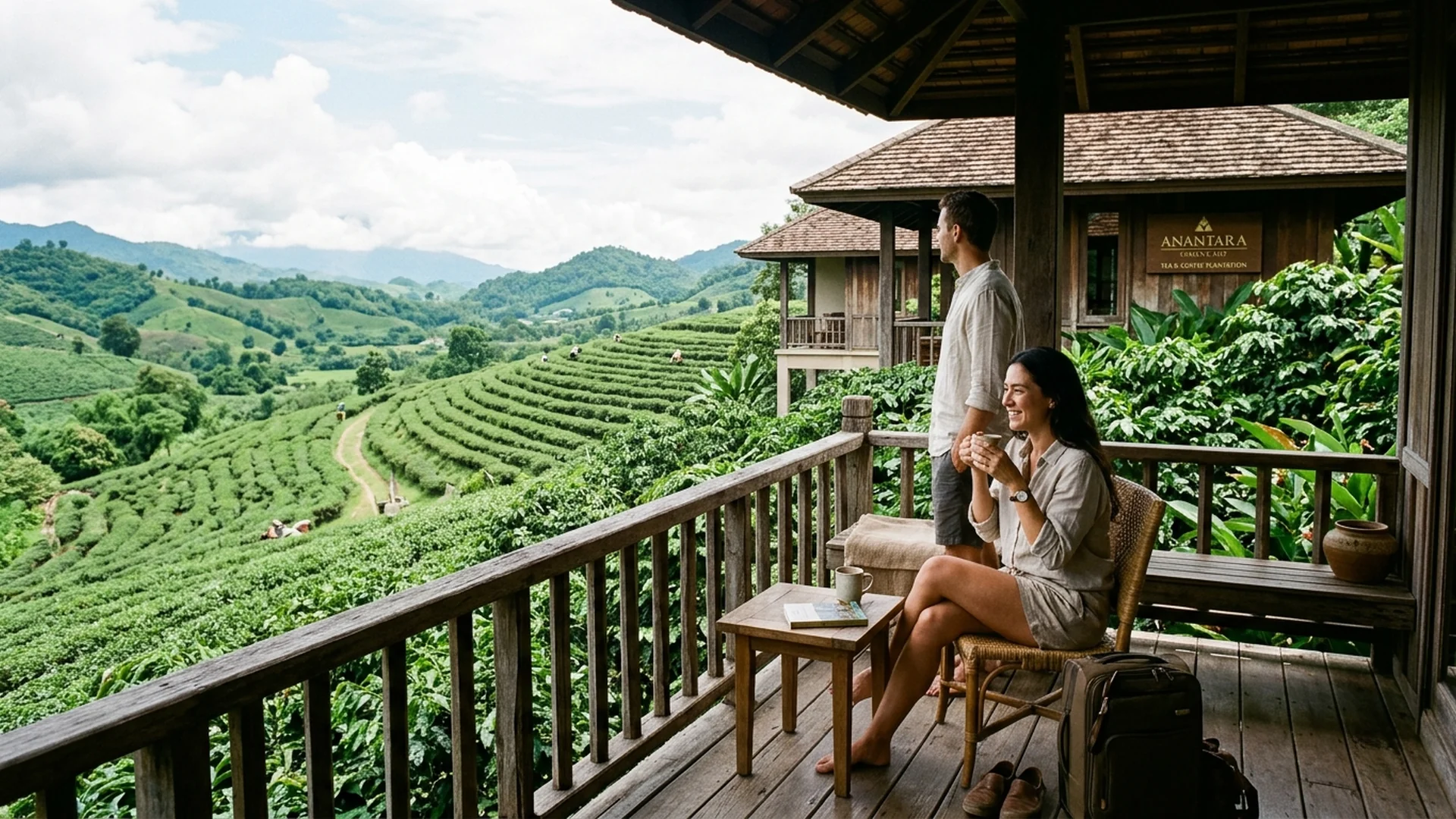
As the morning mist gradually lifts, it reveals cascading terraces of vibrant green tea leaves clinging to the contours of the rolling hills, while the rich, comforting aroma of freshly roasted coffee beans drifts softly on the crisp mountain breeze. This is the new paradigm of high-altitude agritourism in Northern Thailand, where true luxury is no longer defined by overt opulence, but by the profound privilege of syncing one’s breath with the unhurried rhythm of the earth.
Journeying into the plantation luxury lodges of the Lanna kingdom—whether amid the majestic tea terraces of Doi Mae Salong, the artisanal coffee heritage of Doi Chang, or the sequestered valley sanctuaries of Nan—invites travelers into a deeply contemplative dimension of retreat. Here, one intimately experiences the living cycle of the soil, from morning dew pooling upon tender tea leaves to the precise pour-over crafted by master local growers. Every thoughtful detail is curated to resonate with the refined sensibilities of peace-seekers, specialty coffee connoisseurs, and those yearning for uncompromised, quiet elegance.
Architectural Harmony: Structures That Bow to Nature
The defining hallmark of luxury plantation lodges is an architectural philosophy of profound deference to the surrounding topography. Buildings are thoughtfully contoured to follow the natural curves of the hillsides, utilizing weathered timber, quarried mountain stone, and indigenous basketry woven by local artisans. Expansive floor-to-ceiling glass invites panoramic frames of thick pine mists and dense upland canopies inward. Every architectural threshold is designed to dissolve the boundary between interior sanctum and pristine wilderness, allowing the gentle rustle of wind through tea shrubs and the calls of distant forest birds to compose an ambient soundtrack of absolute serenity.
The Art of Terroir: From Soil to Cup through Craft
At the heart of the plantation lodge experience lies an intimate encounter with terroir—the distinct, unrepeatable character imparted by the land. In the chill of early morning, guests are invited to step into the role of tea masters, hand-harvesting delicate organic leaves from the misty slopes before learning traditional artisanal withering and roasting methods. Meanwhile, coffee aficionados partake in the ritualistic roasting and extraction of specialty Arabica cultivated beneath the shade of towering canopy trees. This dedication to craft culminates in farm-to-table dining experiences where resident chefs craft seasonal menus from organic village harvests, perfectly paired with exceptional estate-grown infusions.
Sanctuaries of Grace Across Northern Heights
Northern Thailand’s dramatic geography provides an ideal sanctuary for these botanical treasures. On Doi Mae Salong in Chiang Rai, sculptural tea terraces sweep down the slopes in breathtaking emerald steps, while Doi Chang has earned international acclaim as a premier pilgrimage point for coffee lovers, its high altitude and cool microclimate yielding beans of extraordinary distinction. Further east, the quiet valleys of Nan harbor intimate coffee groves and pocket-sized tea gardens dedicated to absolute privacy. While each destination offers a distinct geographical soul, all share an unwavering commitment to profound quietude, supreme isolation, and arresting natural beauty.