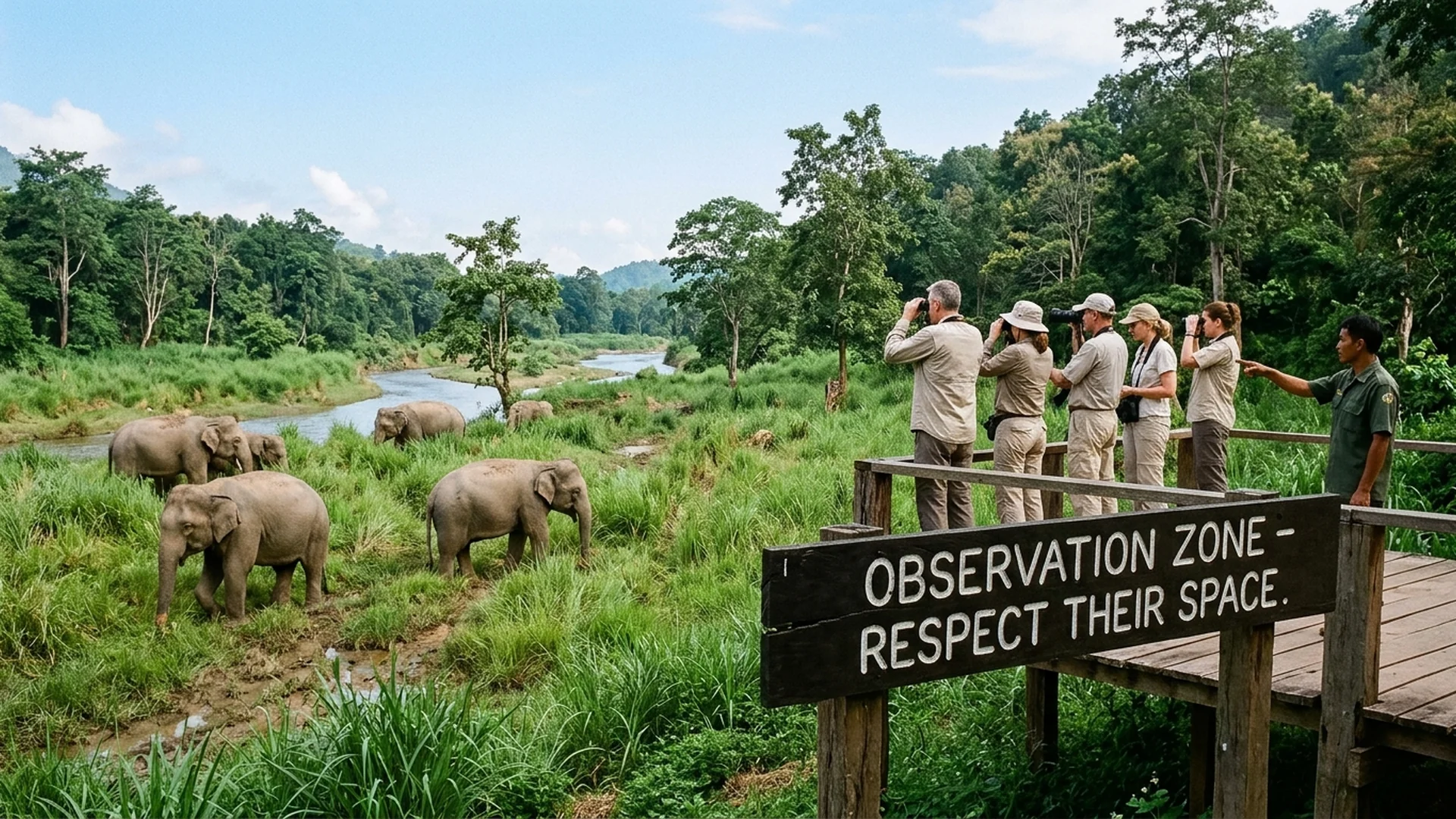
When the silent yet powerful footsteps of Thailand’s elephants brush through the damp rainforest, their eyes no longer reflect the anxiety of the past. Instead, they project a profound sense of freedom conveyed through calm, unhurried breaths. Contemporary conservation travel is no longer measured by superficial proximity, fleeting touches, or orchestrated performances. True value now lies in standing at a respectful distance to witness their magnificent existence in peace.
The rise of conscious travel has completely transformed the landscape of elephant stewardship in Thailand, evolving from commercial entertainment into dedicated sanctuaries that restore natural rights and autonomy to these gentle giants. This journal explores international standards for selecting ethical conservation centers, offering discerning travelers an exclusive, emotionally resonant encounter that honors both wildlife and ecosystem.
Decoding Ethical Standards: The Fine Line Between Exploitation and True Conservation
Distinguishing ethical sanctuaries from commercial operations requires deep observation that goes far beyond surface-level marketing. A genuinely ethical sanctuary strictly prohibits tourist riding, close-range bathing, or forcing elephants to perform human-like behaviors such as painting, dancing, or playing sports. These activities rely on early conditioning methods that inflict severe physical and psychological trauma.
Conversely, internationally standardized sanctuaries allow elephants to live out their instincts as fully as possible. They enjoy the freedom to forage, wallow in mud, and socialize within their herds at will. Visitors shift from being mere entertainers to honored observers, reflecting a sophisticated understanding of authentic animal welfare.
A New Horizon of Travel: World-Class Sanctuaries from Chiang Mai to Phuket and Kanchanaburi
Thailand is home to several internationally acclaimed conservation sanctuaries. Beginning in Chiang Mai, Elephant Nature Park—pioneered by Saengduean Chailert—serves as a warm retirement haven for rescued elephants, allowing them to roam freely across lush green valleys.
Further south, the Phuket Elephant Sanctuary, nestled within the rainforest near the Khao Phra Thaeo National Park, offers elevated canopy walkways so visitors can observe retired elephants wandering below without disrupting the terrain or their natural routines. In the west, ElephantsWorld in Kanchanaburi specializes in caring for elderly and disabled elephants, inviting travelers to assist veterinary teams in preparing easily digestible herbal meals tailored to individual dietary needs.
Premium Conservation Experiences: When Mindfulness Deepens Connection
Exclusive conservation travel focuses on intellectual and spiritual enrichment. Highlights begin with learning about elephant nutrition and preparing herbal compresses—such as medicinal balls mixed with sticky rice and ripe bananas—designed to aid elderly elephants with dental challenges. This meticulous attention to detail extends and elevates their quality of life.
This is followed by guided observation walks through the forest alongside experienced mahouts. Travelers learn to interpret body language, vocalizations, and herd communication dynamics. Maintaining a respectful distance allows you to watch elephants mud-bathe, dust themselves for skin protection, and scratch against ancient trees in absolute contentment. This unscripted freedom is the ultimate gift for the conscious traveler.