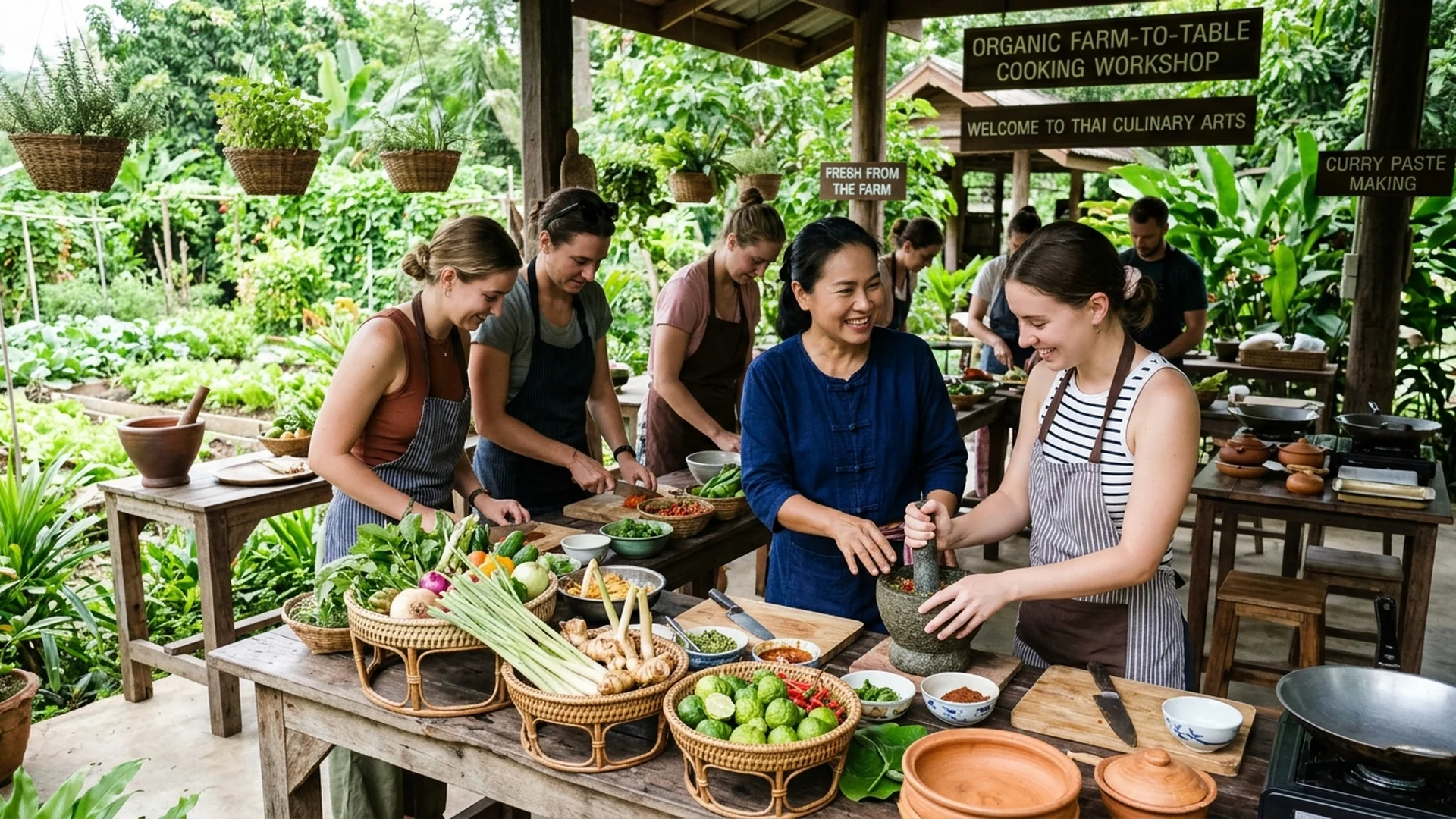
When the profound richness of Thai culinary heritage converges with the mindful philosophy of sustainability, the art of cooking transcends the confines of a sterile kitchen. It unfolds instead into an intimate journey across fertile earth, guided by the crisp, bright aroma of freshly severed lemongrass, the gentle warmth of morning sunlight filtering across organic fields, and the delicate rustle of foliage in the breeze. This is the contemporary opening movement that discerning gastronomes increasingly seek.
Today, mastering Thai cuisine is no longer merely about standing before a stove in the metropolis; it is a deliberate return to roots through the farm-to-table ethos. This movement invites lovers of authentic flavor to press their fingers into rich soil, harvest native herbs directly from the stalk, and develop an intimate understanding of natural cycles before transforming these pristine elements into exquisite Thai banquets under the tutelage of master chefs.
From Earth to Plate: Decoding Indigenous Ingredients
The heart of an organic farm-to-table Thai culinary workshop beats from the very first step placed upon cultivated soil. Unlike sourcing pre-packaged ingredients from standard urban markets, meandering through local plots—encountering wild galangal, pea eggplants, and betel leaves—grants participants an entirely new appreciation for absolute freshness. The sharp, evocative fragrance of a freshly plucked kaffir lime leaf or the crisp, sweet crunch of seasonal shoots tells a silent story of weather, climate, and ancestral cultivation wisdom.
Furthermore, participants are introduced to traditional coconut milk extraction. From selecting mature coconuts and hand-grating the flesh to pressing and gently simmering the cream over low heat, these foundational steps reveal the velvety secret behind historic Thai curries—a depth of flavor utterly unattainable through commercial substitutes.
The Science of Curry Paste and Complex Flavor Balancing
Once the ingredients are gathered, the cooking process resembles a refined orchestral performance. Expert chefs guide learners through the complex yet harmonious architecture of Thai flavor profiling: balancing the fiery punch of bird’s eye chilies, the bright tang of tamarind or garcinia, the natural umami of artisanal fish sauce, and the subtle sweetness of pure coconut palm sugar.
Pounding the curry paste meticulously in a stone mortar allows the essential oils of galangal, lemongrass, and citrus peel to fuse into absolute perfection. This mindful, physical process demands both physical engagement and meditative focus, reflecting the profound attention to detail inherent in traditional Thai dining culture.
Sustainability Through the Lens of Zero-Waste Culinary Arts
Beneath the exquisite flavors of the modern Thai table lies an unwavering commitment to ecological sustainability. Leading workshops integrate zero-waste principles throughout their operations—returning organic vegetable scraps to garden compost systems, utilizing natural banana leaf packaging, and designing recipes that honor every single component of an ingredient without excess.
These practices do not merely mitigate environmental impact; they cultivate a heightened perspective among students, inspiring a more conscious and responsible approach to consumption.