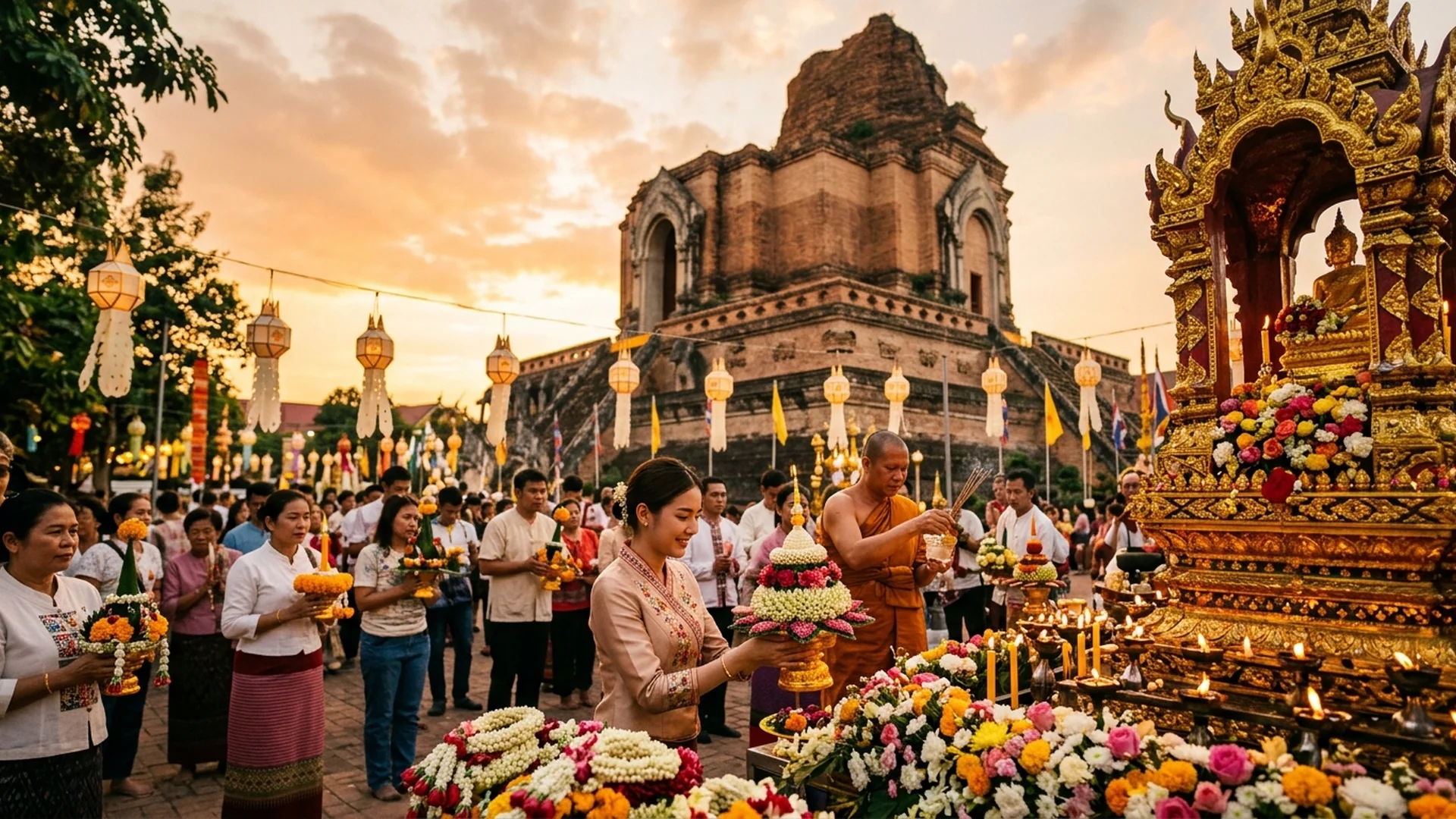
When the first monsoon breezes sweep across the ancient valleys of Lanna, an intoxicating fragrance of nocturnal jasmine and damp earth drifts through the grounds of Wat Chedi Luang in the heart of Chiang Mai. The quiet yet purposeful footsteps of the faithful mark the beginning of the annual Inthakin festival—a living thread connecting the modern world with the kingdom’s distant spiritual ancestry.
Deep beneath the sacred earth, the Inthakin, or Chiang Mai’s city pillar, rests within a sealed sanctuary, its doors opening to the public for just eight days and eight nights between May and June. During this brief window, the city seems to pause, channeling collective prayers toward guardian spirits and ancestral protectors to secure peace, harmony, and prosperity for the community amidst timeless devotion.
The Legend of the Inthakin Pillar and the Guardian Giants
The roots of the Inthakin tradition stretch deep into the founding era of Nopphuri Si Nakhon Phing Chiang Mai. According to local lore, the settlement was once plagued by turbulence and malevolent spirits until the deity Indra intervened, sending down a pillar formed of stone and sacred wood to anchor the city’s destiny. Entrusted to the care of two guardian giants known as the Kumphand, this sacred axis mundi requires continuous reverence; should the populace neglect its worship or allow civic morality to wane, turmoil threatens to return.
This enduring belief is visibly embodied by the formidable giant statues flanking the sanctuary entrance. The city pillar is far more than a geographical marker; it represents the delicate yet resilient pact between humanity, nature, and the divine. Honoring the pillar is an act of renewing the spiritual vitality of the city and safeguarding the longevity of its inhabitants.
The Symbolism of the Twenty-Eight Flower Offerings
At the heart of the festival lies the sacred practice of ‘Sai Khan Dok,’ or the presentation of floral tribute bowls. Central to this observance is the arrangement of twenty-eight distinct bowls, representing the twenty-eight Buddhas who have graced the cosmic universe. These offerings are meticulously arranged with auspicious blooms, fragrant champak, and jasmine, reflecting centuries of refined Lanna artisanal heritage.
As devotees step onto the temple grounds, the delicate botanical aromas gently quiet the mind before the flower bowls are placed at designated shrines with silent prayers for health, peace, and auspicious blessings. Under the evening sky, the flickering glow of countless candles reflecting off ancient brick stupas amplifies the solemn, mesmerizing atmosphere.
Sacred Etiquette and Centuries-Old Traditions
Preserving the Inthakin festival requires strict adherence to centuries-old monastic customs. Most notably, traditional Lanna jurisprudence maintains that women do not enter the inner sanctum housing the actual city pillar, a custom rooted in ancient esoteric concepts of sacred geography and energetic boundaries. To ensure universal participation, the temple designates expansive outer verandas and courtyards where all visitors can complete their flower offerings with equal reverence.
Observing these ancestral guidelines demonstrates a profound respect for local heritage and spiritual integrity. Discerning travelers are encouraged to dress modestly with shoulders and knees covered, allowing them to engage with Chiang Mai’s living sacred history with grace and cultural awareness.