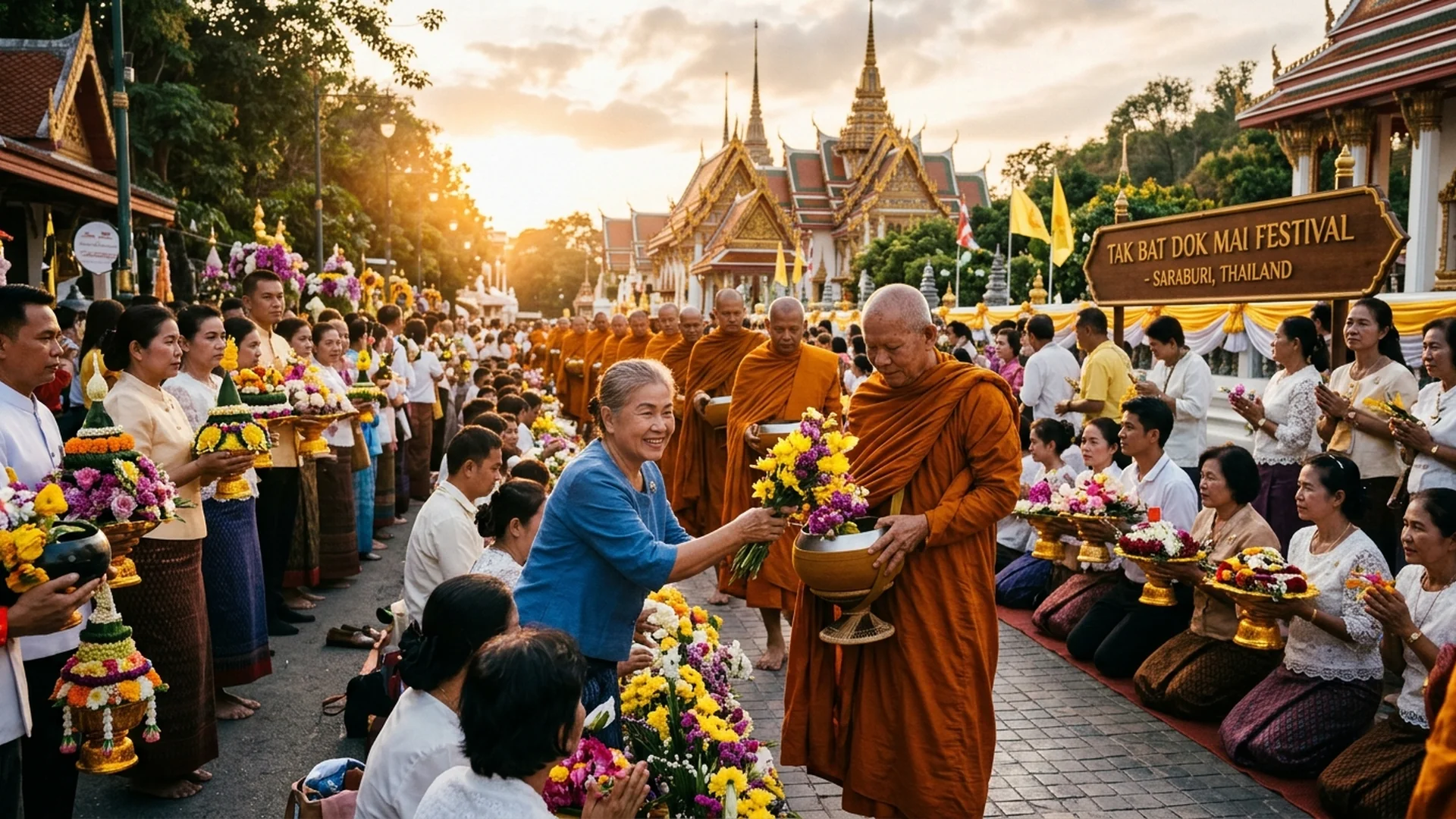
When the seasonal monsoon rains sweep across the emerald slopes of the Phra Phutthabat mountain range, the arrival of Khao Phansa (Buddhist Lent) is heralded not merely by the resonant tolling of temple bells or the amber glow of wax tapers, but by a breathtaking botanical phenomenon. Erupting from the damp earth just once a year, the wild ginger species known locally as Dok Khao Phansa—or poetically, the ‘dancing swan flower’—bursts into vibrant hues, unfurling delicate petals that mimic flocks of swans taking flight. This miraculous annual blossoming marks the commencement of the Tak Bat Dok Mai Festival at Wat Phra Phutthabat Ratchaworamahawihan in Saraburi Province. Far beyond a conventional merit-making rite, this profound spiritual observance serves as a living tapestry of pure devotion, karmic purification, and exquisite cultural heritage found nowhere else on earth.
Buddhist Legend and Botanical Devotion: From Wild Forest Gems to Monastic Offerings
The roots of the Tak Bat Dok Mai tradition run deep into ancient Buddhist lore, echoing the tale of Sumana Mala-kara, a resident of Rajagriha entrusted with offering eight pitchers of jasmine daily to King Bimbisara. Sumana famously risked his life to present his floral tribute directly to the Buddha during his alms round, an act of supreme faith that earned the enlightened one’s highest praise. In the sacred geography of Thailand, this narrative converged harmoniously with the indigenous wonders of the Saraburi landscape. When local villagers observed that wild Globba flowers—the endemic ‘Khao Phansa’ blooms—flourished along the verdant ridges of Mount Bodhilinga and the neighboring hills precisely as the rains arrived, a sacred custom was born. Gathering these forest blossoms to weave with incense and candles as offerings to monastics entering their seasonal rains retreat became an unbroken lineage of pious artistry passed down through generations.
The Alchemy of Color: Symbolism and Merit in Floral Offerings
The extraordinary nature of the Khao Phansa flower extends far beyond its ephemeral seasonality, carrying profound symbolic resonance through its palette. Radiant yellow blossoms evoke the flourishing light of the Dhamma, pristine white represents the unblemished purity of a tranquil mind, and rare purple blooms—prized for their scarcity—are believed to generate the highest accumulation of spiritual merit. As devotees gently place these botanical treasures into the brass alms bowls of thousands of monks descending the grand staircase from the shrine of the Holy Buddha Footprint, the collected flowers are ultimately carried upward to sanctify the sacred footprint itself and venerate the celestial Chulamani Chedi. In the traditional worldview, offering blossoms to the Triple Gem nurtures the inner landscape of the soul, ensuring a future graced with wisdom, luminous clarity, and steadfast mindfulness.
The Sacred Foot-Washing: Cleansing Defilements with Waters Infused with Dok Phikun
Perhaps the most spiritually potent and emotionally stirring moment of the festival is the sacred foot-washing ceremony. As the monks complete their alms rounds and descend the magnificent Naga-guarded staircases of Wat Phra Phutthabat, rows of devoted pilgrims wait in quiet, reverent contemplation. Using pristine water infused with fragrant Dok Phikun and other auspicious petals, the faithful wash the feet of the monastics with utmost humility. This profound gesture operates as a powerful skillful means (upaya) to dissolve ego and dismantle stubborn attachments. Much like the rushing monsoon waters, the ritual washes away past transgressions and spiritual impurities, allowing the traveler and local alike to step across the threshold of Buddhist Lent with a renewed, immaculate spirit.